Review
. 2014 Aug:73:34-42.
doi: 10.1016/j.yjmcc.2013.12.032. Epub 2014 Jan 9.

Monoamine oxidases as sources of oxidants in the heart

Affiliations
Review

Monoamine oxidases as sources of oxidants in the heart

Nina Kaludercic et al. J Mol Cell Cardiol. 2014 Aug.

Abstract

Oxidative stress can be generated at several sites within the mitochondria. Among these, monoamine oxidase (MAO) has been described as a prominent source. MAOs are mitochondrial flavoenzymes responsible for the oxidative deamination of catecholamines, serotonin and biogenic amines, and during this process they generate H2O2 and aldehyde intermediates. The role of MAO in cardiovascular pathophysiology has only recently gathered some attention since it has been demonstrated that both H2O2 and aldehydes may target mitochondrial function and consequently affect function and viability of the myocardium. In the present review, we will discuss the role of MAO in catecholamine and serotonin clearance and cycling in relation to cardiac structure and function. The relevant contribution of each MAO isoform (MAO-A or -B) will be discussed in relation to mitochondrial dysfunction and myocardial injury. Finally, we will examine both beneficial effects of their pharmacological or genetic inhibition along with potential adverse effects observed at baseline in MAO knockout mice, as well as the deleterious effects following their over-expression specifically at cardiomyocyte level. This article is part of a Special Issue entitled "Redox Signalling in the Cardiovascular System".

Keywords: Heart failure; Ischemia/reperfusion injury; Mitochondrial dysfunction; Monoamine oxidase; Oxidative stress.


Figures

Figure 1
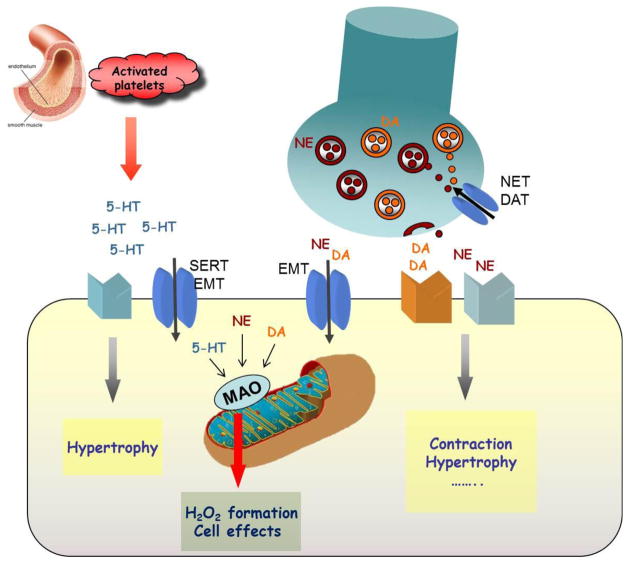
Figure 1. Possible effects of serotonin or catecholamines on cardiac myocytes
Serotonin (5-HT), released from the activated platelets, and catecholamines (NE, DA) released from the intracardiac nerves, interact with their receptors present at the level of the sarcolemma to exert their effects. Once this interaction is over, the majority of the neurotransmitter is rapidly re-uptaken through the transporter present in the membrane of the nerve terminal (NET, DAT) and only small percent escapes into the circulation or is uptaken through the extraneuronal monoamine transporter (EMT), present in the cardiomyocyte membrane. Once in the cytoplasm, these neurotransmitters are degraded by monoamine oxidases (MAO) and generate H2O2 that, in turn, might affect cellular processes even in the physiological conditions.
Figure 2
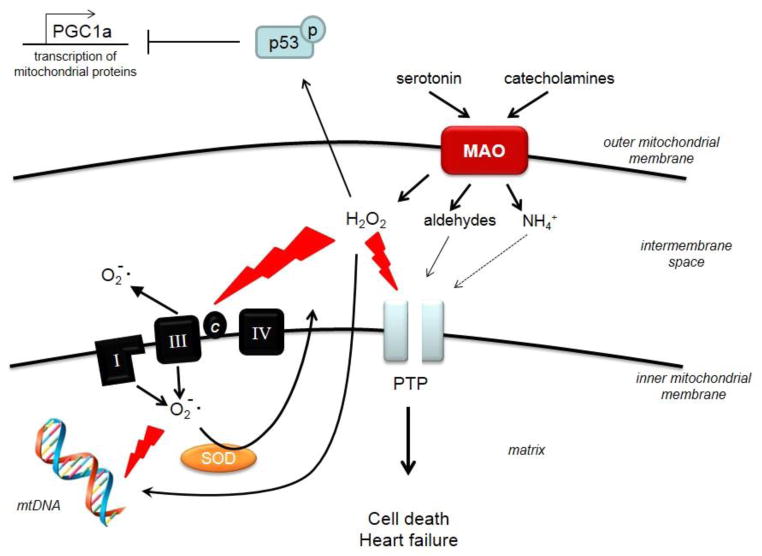
Figure 2. Deleterious effects of MAO activation on mitochondrial function
Up-regulation of monoamine oxidase activity (MAO) due to higher substrate availability results in enhanced formation of H2O2 and aldehyde intermediates that can directly affect the transfer of the electrons across the respiratory chain and the opening of the permeability transition pore (PTP), leading to cardiomyocyte death, oxidative damage of mitochondrial DNA (mtDNA) and heart failure. Furthermore, MAO-generated oxidative stress triggers p53 activation that, in turn, leads to down-regulation of peroxisome proliferator-activated receptor-gamma coactivator 1α (PGC-1α), a master regulator of mitochondrial biogenesis.

References

    1. Balaban RS, Nemoto S, Finkel T. Mitochondria, oxidants, and aging. Cell. 2005;120:483–95. - PubMed
    1. Droge W. Free radicals in the physiological control of cell function. Physiol Rev. 2002;82:47–95. - PubMed
    1. Murphy MP. How mitochondria produce reactive oxygen species. Biochem J. 2009;417:1–13. - PMC - PubMed
    1. Turrens JF. Mitochondrial formation of reactive oxygen species. J Physiol. 2003;552:335–44. - PMC - PubMed
    1. Brand MD. The sites and topology of mitochondrial superoxide production. Exp Gerontol. 2010;45:466–72. - PMC - PubMed

Publication types

LinkOut - more resources