. 2014 Mar 6;507(7490):99-103.
doi: 10.1038/nature12923. Epub 2014 Jan 12.

Cell-autonomous correction of ring chromosomes in human induced pluripotent stem cells

Affiliations

Cell-autonomous correction of ring chromosomes in human induced pluripotent stem cells

Marina Bershteyn et al. Nature. .

Abstract

Ring chromosomes are structural aberrations commonly associated with birth defects, mental disabilities and growth retardation. Rings form after fusion of the long and short arms of a chromosome, and are sometimes associated with large terminal deletions. Owing to the severity of these large aberrations that can affect multiple contiguous genes, no possible therapeutic strategies for ring chromosome disorders have been proposed. During cell division, ring chromosomes can exhibit unstable behaviour leading to continuous production of aneuploid progeny with low viability and high cellular death rate. The overall consequences of this chromosomal instability have been largely unexplored in experimental model systems. Here we generated human induced pluripotent stem cells (iPSCs) from patient fibroblasts containing ring chromosomes with large deletions and found that reprogrammed cells lost the abnormal chromosome and duplicated the wild-type homologue through the compensatory uniparental disomy (UPD) mechanism. The karyotypically normal iPSCs with isodisomy for the corrected chromosome outgrew co-existing aneuploid populations, enabling rapid and efficient isolation of patient-derived iPSCs devoid of the original chromosomal aberration. Our results suggest a fundamentally different function for cellular reprogramming as a means of 'chromosome therapy' to reverse combined loss-of-function across many genes in cells with large-scale aberrations involving ring structures. In addition, our work provides an experimentally tractable human cellular system for studying mechanisms of chromosomal number control, which is of critical relevance to human development and disease.


Figures
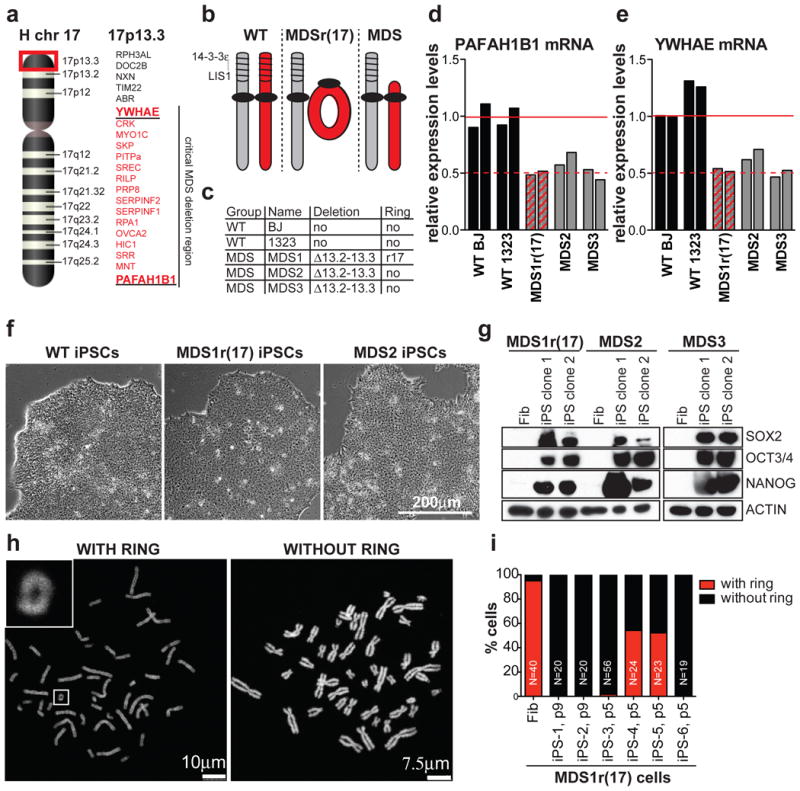
Figure 1
Figure 1. Reprogramming from fibroblasts with ring(17) produces multiple iPSC clones that do not have the ring chromosome
a, Schematic of human chromosome 17, highlighting band 17p13.3, which is deleted in MDS. Encoded genes, including minimal critical MDS deletion are listed on the right. b, Schematic of chr17 status in wild type (WT), MDS patients. c, List of fibroblast lines used in this study. d, e, RT-qPCR for PAFAH1B1 (d) and YWHAE (e) mRNA levels in fibroblasts. f, Images of WT, MDS1r(17) and MDS2 iPSCs. g, Western blot for pluripotency markers in fibroblasts and two iPSC clones. h, Examples of metaphase spreads with or without the ring chromosome. i, Percentage of mitotic cells with or without the ring chromosome in fibroblasts or MDS1r(17) iPSC clones.
Figure 2
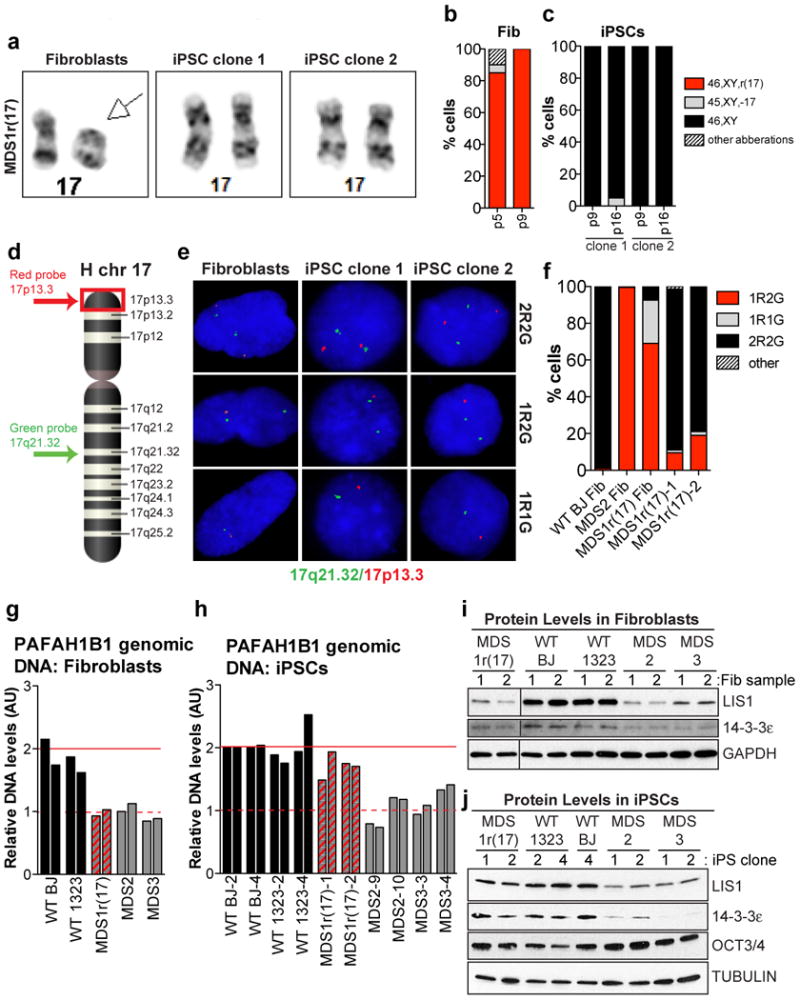
Figure 2. Karyotypically normal cells predominate in early passage iPSC clones derived from MDS1r(17) fibroblasts
a, Images of chr17 pairs in MDS1r(17) fibroblasts and iPSC clones. b, c, Proportion of MDS1r(17) fibroblasts (b) and iPSC clones 1 & 2 (c) with various karyotypes (n=20 each). d, Approximate position of FISH probes on chr17. e, Signal patterns obtained with FISH probes in (d). f, Proportions of cells with various signal patterns (n=200 each). g, h, qPCR for genomic PAFAH1B1 DNA in fibroblasts (g) and iPSCs (h). i,j, Western blot for LIS1 and 14-3-3ε in fibroblasts (i) (2 samples/fibroblast line collected on different days) and iPSCs (2 clones/line) (j).
Figure 3
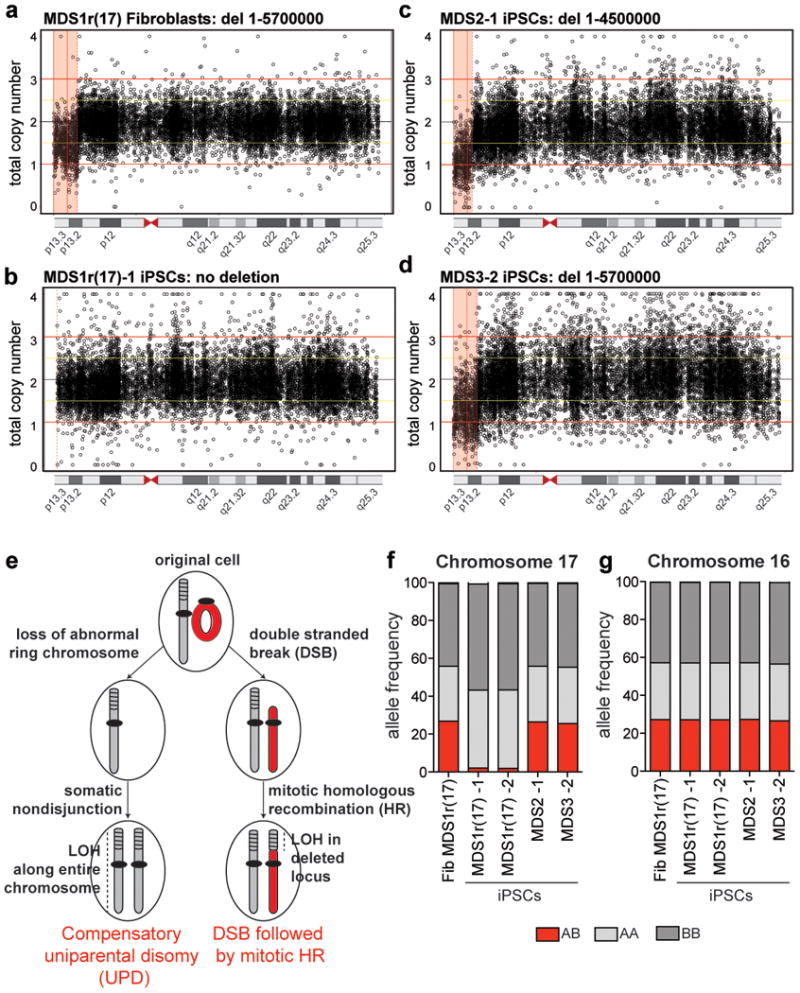
Figure 3. Rescue of MDS-associated deletion in iPSCs derived from ring(17) fibroblasts through compensatory uniparental isodisomy (UPD)
a-d, Total copy number of SNPs across chr17 in MDS1r(17) fibroblasts (a), MDS1r(17) iPSC clone 1 (b), MDS2 iPSC clone 1 (c), and MDS3 iPSC clone 2 (d). The pink shaded areas represent the deletions. e, Proposed mechanisms for how cells with ring(17) end up with two intact chromosomes 17 after reprogramming. f, g, Frequency of heterozygous (red) or homozygous (shades of gray) SNPs on chr17 (f) or chr16 (g).
Figure 4
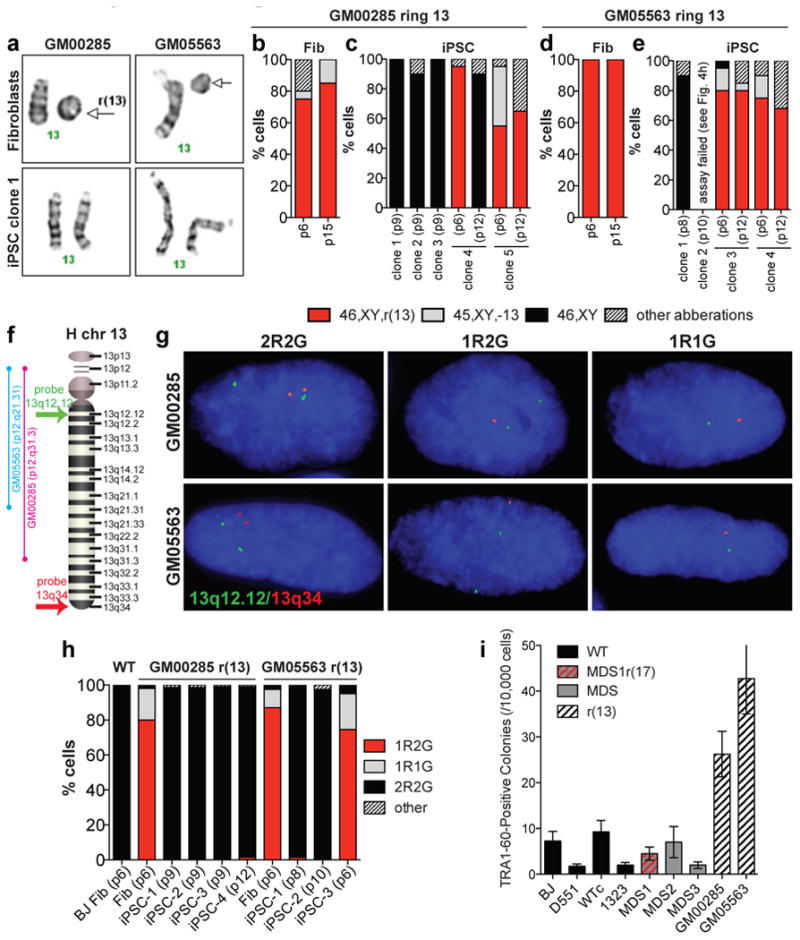
Figure 4. Derivation of iPSC clones with a normal karyotype from fibroblasts with ring(13)
a, Images of chr13 pairs in fibroblasts and repaired iPSCs from two individuals with ring(13). b-e, Proportions of fibroblasts and iPSCs with various karyotypes (n=20 each). f, Schematic of chr13 showing approximate position of FISH probes used in (g). g, Examples of signal patterns obtained with FISH probes. h, Proportions of cells with various signal patterns (n=200 each). i, Number of TRA-1-60-positive colonies on day 25 per 10,000 electroporated cells. Results are mean±s.e.m., (N = 4).

Comment in

References

    1. Cote GB, et al. The cytogenetic and clinical implications of a ring chromosome 2. Ann Genet. 1981;24:231–235. - PubMed
    1. Kosztolanyi G. Does “ring syndrome” exist? An analysis of 207 case reports on patients with a ring autosome. Hum Genet. 1987;75:174–179. - PubMed
    1. McClintock B. The production of homozygous deficient tissues with mutant characteristics by means of the aberrant mitotic behavior of ring-shaped chromosomes. Genetics. 1938;23:315–376. - PMC - PubMed
    1. Kistenmacher ML, Punnett HH. Comparative behavior of ring chromosomes. Am J Hum Genet. 1970;22:304–318. - PMC - PubMed
    1. Tommerup N, Lothe R. Constitutional ring chromosomes and tumor suppressor genes. Med Genet. 1992;29:879–882. - PMC - PubMed

Publication types

MeSH terms

Associated data