. 2014 Jan 8;9(1):e85544.
doi: 10.1371/journal.pone.0085544. eCollection 2014.

Nitrite reductase activity and inhibition of H₂S biogenesis by human cystathionine ß-synthase

Affiliations

Nitrite reductase activity and inhibition of H₂S biogenesis by human cystathionine ß-synthase

Carmen Gherasim et al. PLoS One. .

Abstract

Nitrite was recognized as a potent vasodilator >130 years and has more recently emerged as an endogenous signaling molecule and modulator of gene expression. Understanding the molecular mechanisms that regulate nitrite metabolism is essential for its use as a potential diagnostic marker as well as therapeutic agent for cardiovascular diseases. In this study, we have identified human cystathionine ß-synthase (CBS) as a new player in nitrite reduction with implications for the nitrite-dependent control of H₂S production. This novel activity of CBS exploits the catalytic property of its unusual heme cofactor to reduce nitrite and generate NO. Evidence for the possible physiological relevance of this reaction is provided by the formation of ferrous-nitrosyl (Fe(II)-NO) CBS in the presence of NADPH, the human diflavin methionine synthase reductase (MSR) and nitrite. Formation of Fe(II)-NO CBS via its nitrite reductase activity inhibits CBS, providing an avenue for regulating biogenesis of H₂S and cysteine, the limiting reagent for synthesis of glutathione, a major antioxidant. Our results also suggest a possible role for CBS in intracellular NO biogenesis particularly under hypoxic conditions. The participation of a regulatory heme cofactor in CBS in nitrite reduction is unexpected and expands the repertoire of proteins that can liberate NO from the intracellular nitrite pool. Our results reveal a potential molecular mechanism for cross-talk between nitrite, NO and H₂S biology.


Conflict of interest statement

Competing Interests: The authors have declared that no competing interests exist.

Figures

Figure 1
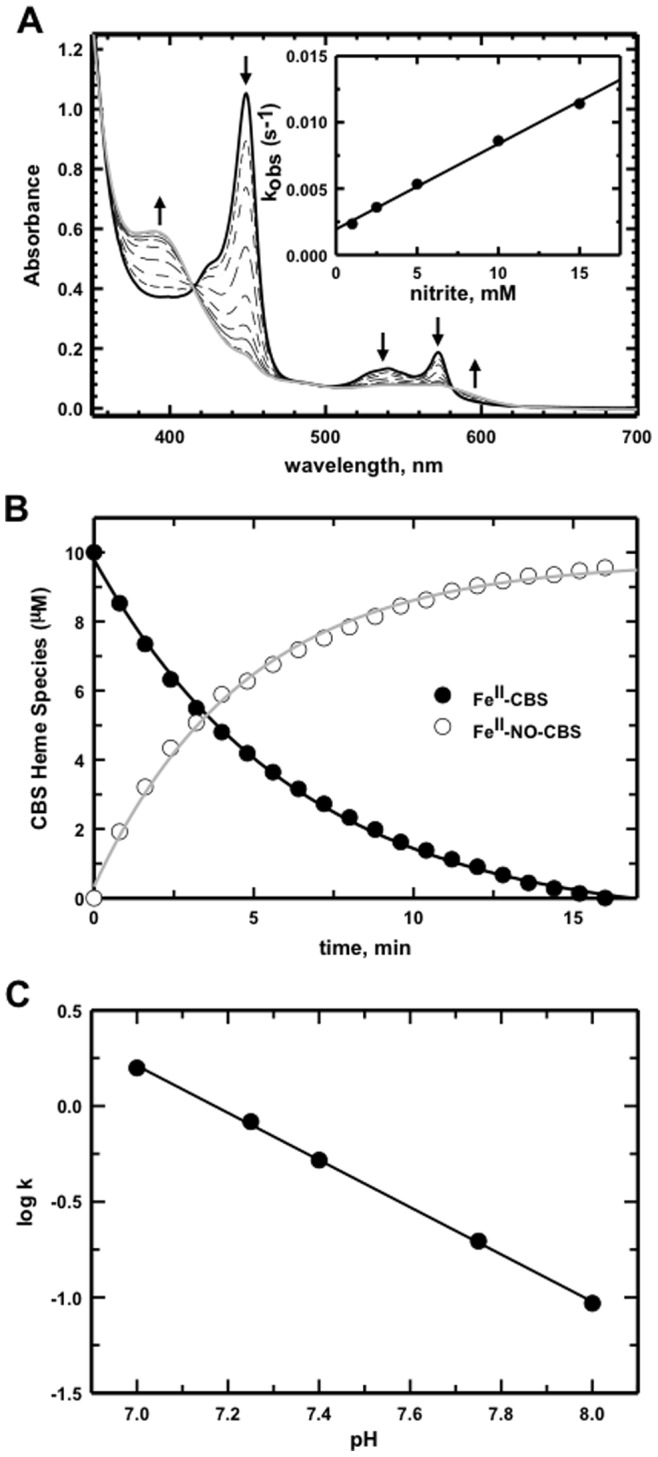
Figure 1. Nitrite reduction by FeII-CBS.
(A) UV-visible spectra recorded every minute under anaerobic conditions for the reaction between FeII-CBS (10 µM, generated by reduction of FeIII-CBS with 3 mM dithionite) and nitrite (10 mM) in 0.1 M HEPES buffer, pH 7.4, at 37°C. (Inset) The observed reaction rate for CBS-catalyzed reaction as a function of nitrite concentration. (B) The disappearance of FeII-CBS (formed by reduction of FeIII-CBS (10 µM) with dithionite (3 mM)) was monitored at 449 nm (filled circles) and paralleled the formation of FeII-NO-CBS in the presence of 10 mM nitrite (open circles) monitored at 394 nm. The solid lines represent single exponential fits to the experimental data points. (C) Dependence of nitrite reduction by FeII-CBS on pH. Reaction of FeII-CBS (10 µM) generated by the reduction of FeIII-CBS with dithionite (3 mM) in 0.1 M HEPES pH 7.0, 7.25, 7.4, 7.75 and 8.0 at 37°C with nitrite (10 mM) was monitored at 449 nm. Reaction rates corrected for the percentage of reduced protein at each pH were plotted as a function of pH. The slope obtained from a linear fit was 1.2±0.03.
Figure 2
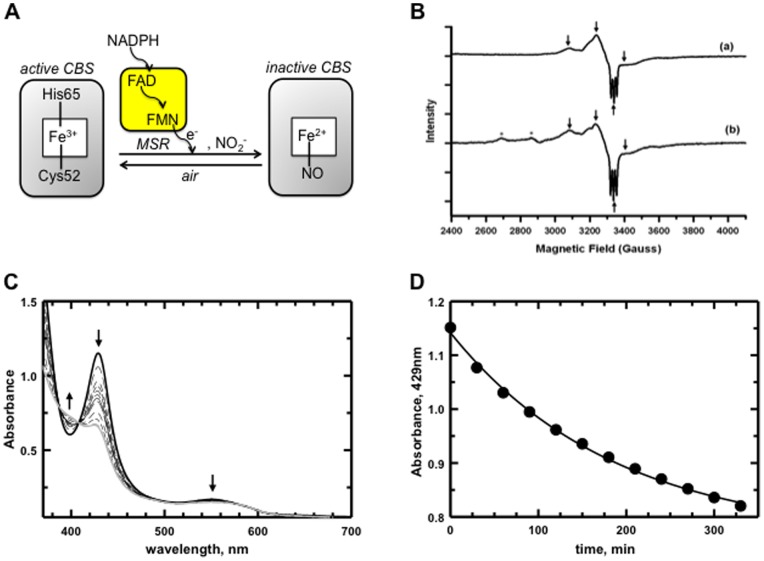
Figure 2. Model for and spectroscopic evidence of formation of FeII-NO CBS in the presence of MSR/NADPH.
(A) FeIII-CBS catalyzes the condensation of cysteine (Cys) and homocysteine (Hcy) to give H2S and cystathionine (Cyst). The latter is subsequently cleaved to give cysteine, which is utilized for glutathione (GSH) synthesis. In the presence of NADPH/MSR and nitrite, FeII-NO CBS is formed, rendering CBS inactive. (B) EPR spectra of FeII-NO CBS, obtained with FeIII-CBS (65 µM), treated with dithionite (6 mM) (upper) or NADPH (2 mM)/MSR (20 µM) (lower) and sodium nitrite (10 mM) in 0.1 M HEPES buffer, pH 7.4 at 37°C. The spectra were recorded using the conditions described previously . The arrows indicate g values of 2.17, 2.076, 2.008 and 1.97, respectively. The presence of additional EPR signals in the spectrum of NADPH/MSR-dependent CBS-catalyzed nitrite reduction can be attributed to the incomplete reduction of paramagnetic FeIII-CBS. (C) UV-visible spectra were recorded every 10 min under anaerobic conditions for the reaction between FeII-CBS (generated by reduction of FeIII-CBS (10 µM) with MSR (2 µM)/NADPH (1 mM)) and nitrite (10 mM) in 0.1 M HEPES buffer, pH 7.4, at 37°C. (B) Time-dependent conversion of FeIII-CBS (429 nm) to FeII-NO-CBS (394 nm).
Figure 3
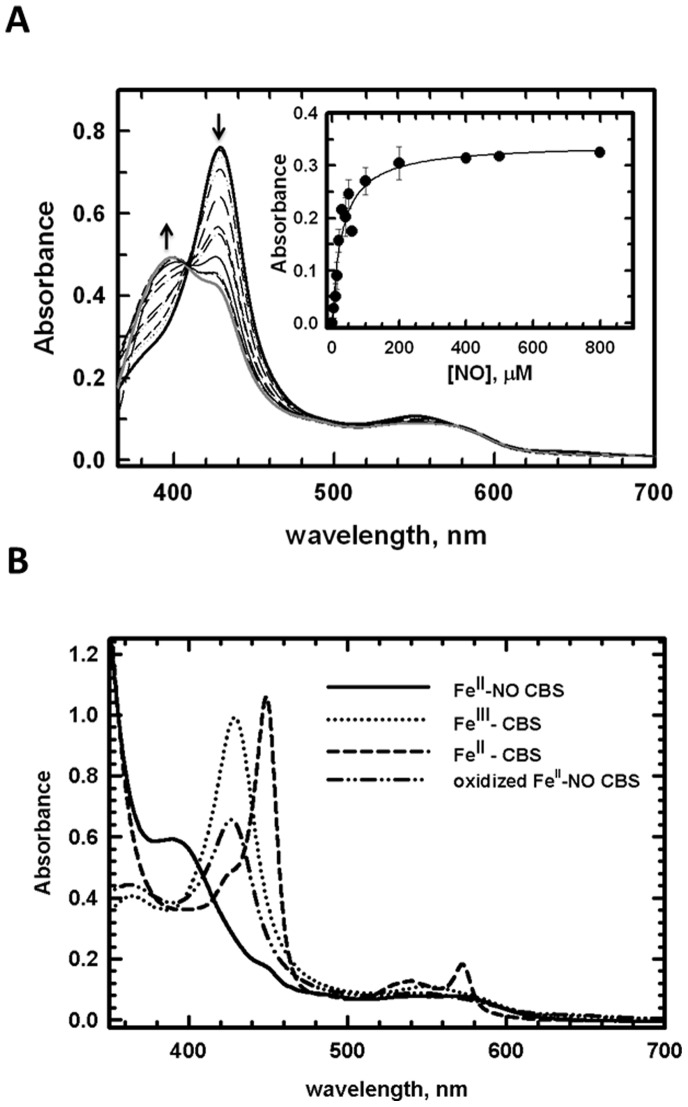
Figure 3. Spectral analysis of reversible NO binding to CBS.
(A) An anaerobic solution of CBS (10 µM) in 0.1 M HEPES, pH 7.4, was mixed with 250 µM NADPH and 5 µM MSR and varying concentrations (0–533 µM) of diethylamine NONOate in 10 mM NaOH. A sample containing 5 µM MSR and 250 µM NADPH was used as a blank to clarify the region of the spectrum between 350–400 nm. The inset shows the change in absorbance at 428 nm as a function of NO concentration. (B) Reversible generation of FeII-NO-CBS by nitrite reduction. Reduction of FeIII-CBS (10 µM) (….) with dithionite (3 mM) yields FeII-CBS (–). Reaction of the FeII-CBS form with nitrite yields FeII-NO-CBS (–), which can be re-oxidized to FeIII-CBS (−.−).
Figure 4
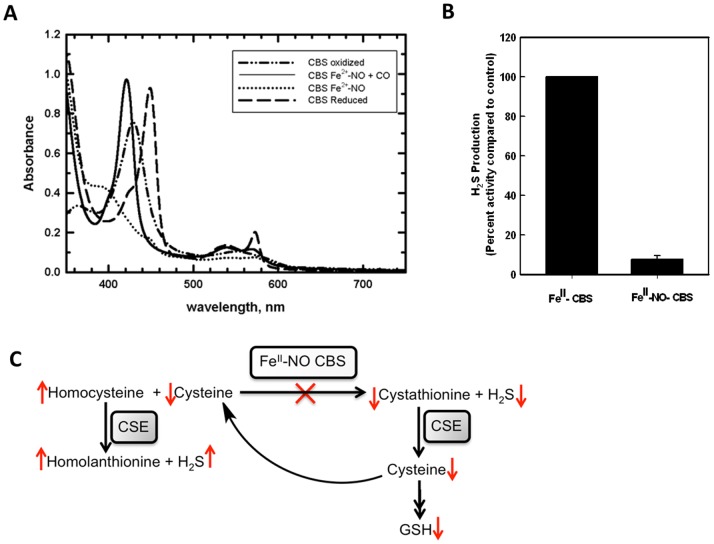
Figure 4. Reversible generation and metabolic consequences of FeII-NO CBS.
(A) Reduction of FeIII-CBS (10 µM) in 0.1 M HEPES buffer, pH 7.4, (-••-) with dithionite (3 mM) yields FeII-CBS (–). The latter reacts with 10 mM nitrite to give FeII-NO CBS (….). The NO ligand is exchanged for CO upon incubation of the reaction mixture for 10–15 min with CO (––). (B) Effect of NO binding to FeII-CBS on H2S production was measured in 0.1 M HEPES buffer, pH 7.4 using cysteine (10 mM) and homocysteine (10 mM) as substrates. H2S generation was assesed using the lead sulfide precipitation assay. (C) Predicted metabolic consequences of FeII-NO CBS formation. Inhibition of CBS by its nitrite reductase activity is predicted to decrease CBS-dependent H2S formation while increasing cystathionase (CSE)-dependent H2S formation due to homocysteine accumulation. The concentration of the antioxidant glutathione (GSH), is also predicted to decrease.

References

    1. Ignarro LJ (2000) Nitric Oxide: Biology and Pathobiology. San Diego: Academic Press.
    1. Moncada S, Higgs A (1993) The L-arginine-nitric oxide pathway. N Engl J Med 329: 2002–2012. - PubMed
    1. Benarroch EE (2011) Nitric oxide: A pleiotropic signal in the nervous system. Neurology 77: 1568–1576. - PubMed
    1. Pryor WA, Houk KN, Foote CS, Fukuto JM, Ignarro LJ, et al. (2006) Free radical biology and medicine: it’s a gas, man! Am J Physiol Regul Integr Comp Physiol. 291: R491–511. - PubMed
    1. Cosby K, Partovi KS, Crawford JH, Patel RP, Reiter CD, et al. (2003) Nitrite reduction to nitric oxide by deoxyhemoglobin vasodilates the human circulation. Nat Med 9: 1498–1505. - PubMed

Publication types

MeSH terms