


Reward processing in neurodegenerative disease
- PMID: 24417286
- PMCID: PMC4301575
- DOI: 10.1080/13554794.2013.873063
Reward processing in neurodegenerative disease
Abstract
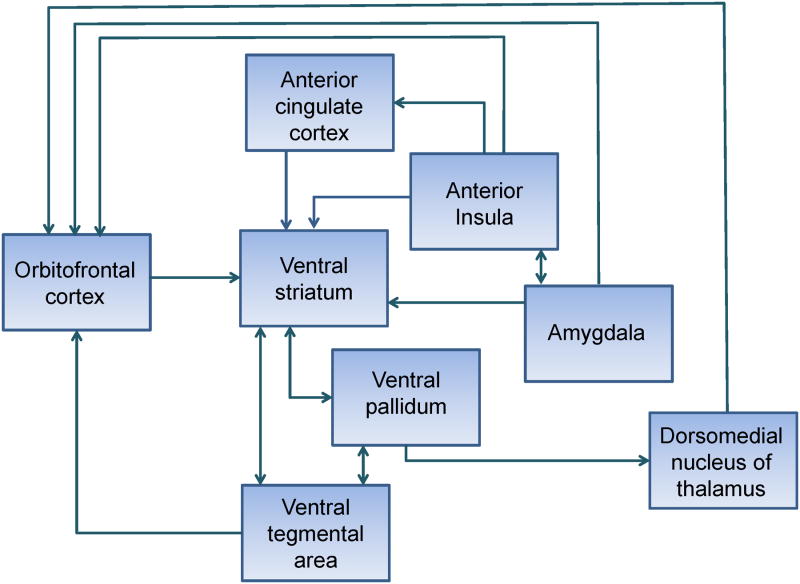
Representation of reward value involves a distributed network including cortical and subcortical structures. Because neurodegenerative illnesses target specific anatomic networks that partially overlap with the reward circuit, they would be predicted to have distinct impairments in reward processing. This review presents the existing evidence of reward processing changes in neurodegenerative diseases including mild cognitive impairment (MCI), Alzheimer's disease, frontotemporal dementia, amyotrophic lateral sclerosis (ALS), Parkinson's disease, and Huntington's disease, as well as in healthy aging. Carefully distinguishing the different aspects of reward processing (primary rewards, secondary rewards, reward-based learning, and reward-based decision-making) and using tasks that differentiate the stages of processing reward will lead to improved understanding of this fundamental process and clarify a contributing cause of behavioral change in these illnesses.
Keywords: dementia; neurodegenerative disease; reward.
Figures
References
-
- Bechara A, Damasio AR, Damasio H, Anderson SW. Insensitivity to future consequences following damage to human prefrontal cortex. Cognition. 1994;50(1-3):7–15. - PubMed
-
- Bechara A, Damasio H, Tranel D, Damasio AR. Deciding advantageously before knowing the advantageous strategy. Science (New York, N Y) 1997;275(5304):1293–1295. - PubMed
Publication types
MeSH terms
Grants and funding
LinkOut - more resources
Full Text Sources
Other Literature Sources
Medical
Miscellaneous
