


Nicotine enhances operant responding for qualitatively distinct reinforcers under maintenance and extinction conditions
- PMID: 24422211
- PMCID: PMC3898615
Nicotine enhances operant responding for qualitatively distinct reinforcers under maintenance and extinction conditions
Abstract
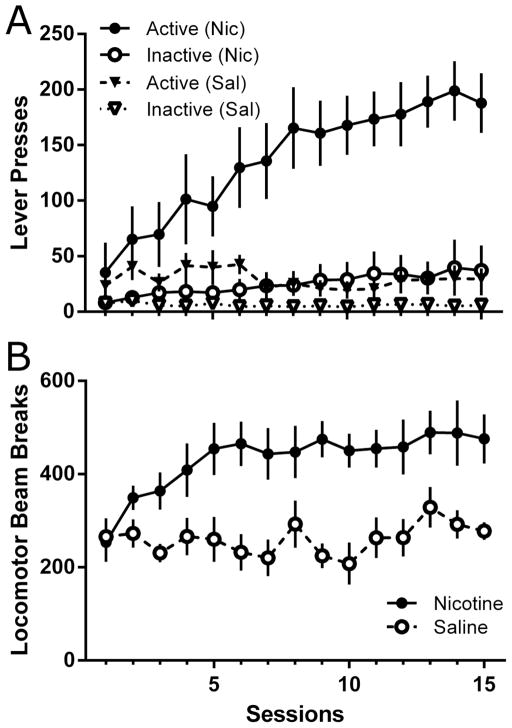
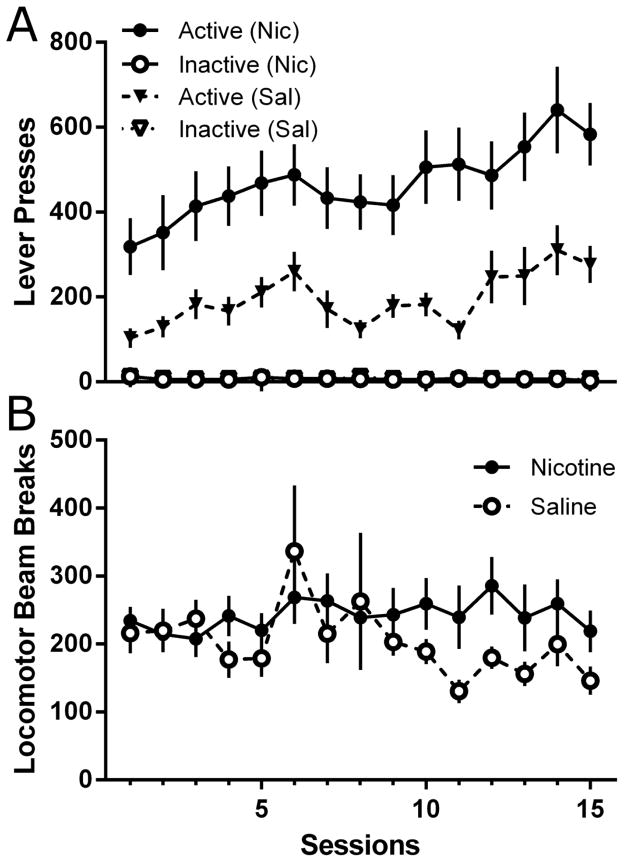
Rationale: Nicotine enhancement of reward has been implicated as an important contributor to tobacco addiction. Despite the attention that reward enhancement has received, the behavioral mechanisms whereby nicotine enhances operant responding remain largely unknown. The present study sought to extend previous work by evaluating the effects of nicotine on responding for two qualitatively different rewards (visual stimulation (VS) and 4% sucrose solution) under fixed-ratio (FR) maintenance and extinction conditions.
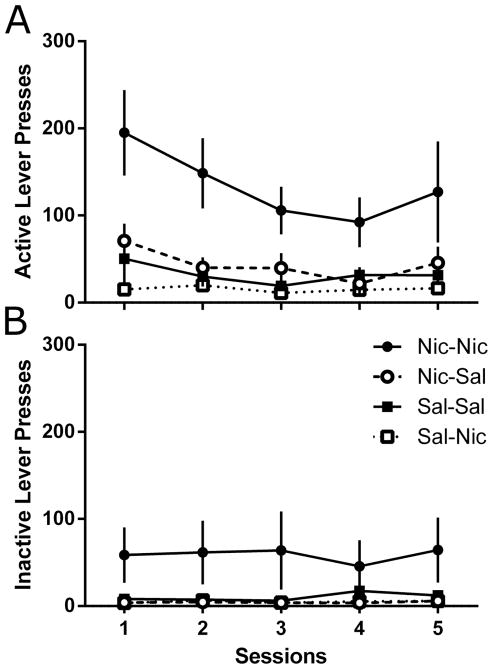
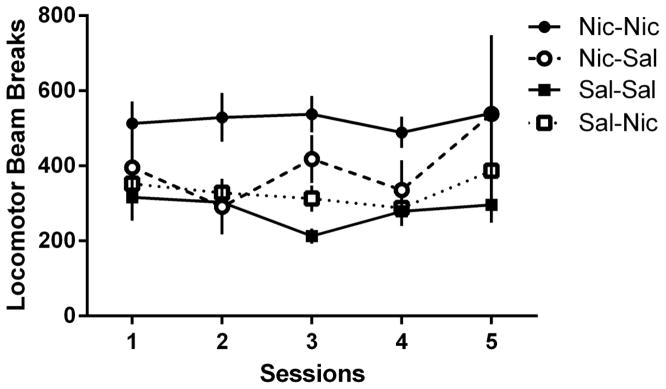
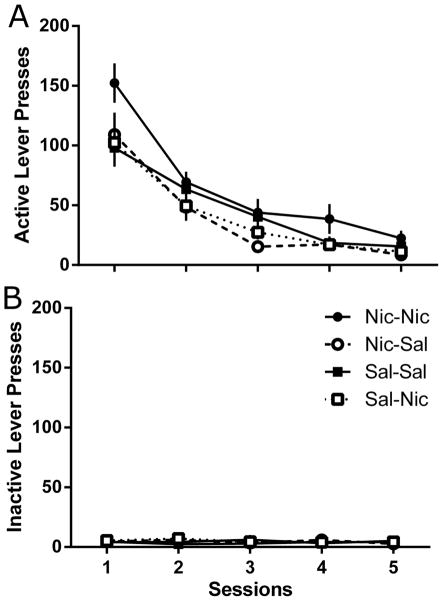
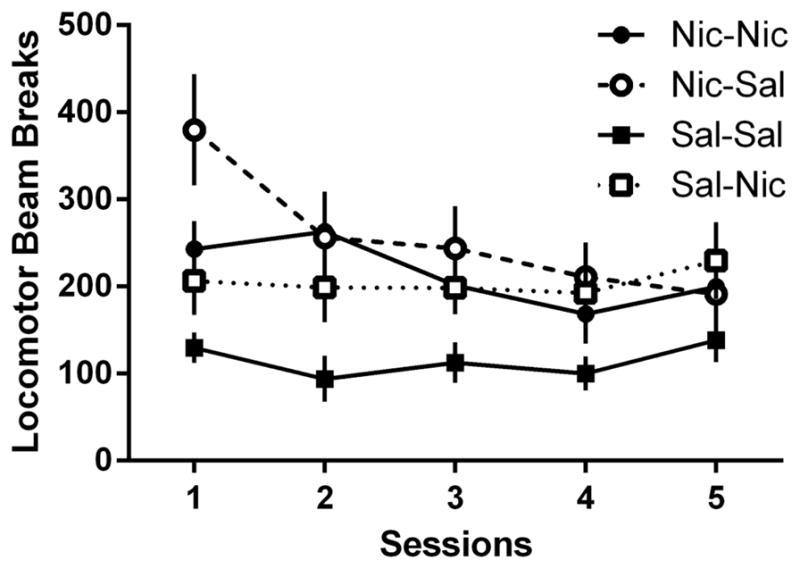
Method: Sprague–Dawley rats were trained to press an active lever for VS (Experiment 1) or 4% sucrose solution (Experiment 2) and evaluated over 15 sessions on a FR5 schedule of reinforcement. Nicotine (0.4 mg base/kg, SC) or saline were administered 5 min before each session; the alternate solution was given in the home cage after the session. The effects of nicotine on extinction responding were then assessed over 5 sessions and rats were divided into 4 groups based on drug of injection received during FR-maintenance and extinction phases (maintenance–extinction): Nic–Nic, Nic–Sal, Sal–Sal, and Sal–Nic.
Results: Nicotine increased active lever response rates for both VS and 4% sucrose under FR5 maintenance conditions. Nicotine also increased response rates in the Nic–Nic group relative to all other groups under extinction conditions in both experiments, though this effect had greater longevity following VS maintenance conditions than sucrose. Enhancement of responding during extinction does not appear dependent upon locomotor activation by nicotine.
Figures
References
-
- Barrett ST, Odum AL. The effects of repeated exposure on the reward-enhancing effects of nicotine. Behavioural Pharmacology. 2011;22:283–290. - PubMed
-
- Bevins RA, Besheer J. Individual differences in rat locomotor activity are dminished by nicotine through stimulation of central nicotine acetylcholine receptors. Physiology and Behavior. 2001;72:237–244. - PubMed
-
- Bevins RA, Besheer J, Pickett KS. Nicotine-conditioned locomotor activity in rats: Dopaminergic and GABAergic influences on conditioned expression. Pharmacology, Biochemistry and Behavior. 2001;68:135–145. - PubMed
-
- Bevins RA, Palmatier MI. Extending the role of associative learning processees in nicotine addiction. Behavioral and Cognitive Neuroscience Reviews. 2004;3:143–158. - PubMed
Publication types
MeSH terms
Substances
Grants and funding
LinkOut - more resources
Full Text Sources
Other Literature Sources
