


Invasive lobular carcinoma cell lines are characterized by unique estrogen-mediated gene expression patterns and altered tamoxifen response
- PMID: 24425047
- PMCID: PMC3955299
- DOI: 10.1158/0008-5472.CAN-13-2779
Invasive lobular carcinoma cell lines are characterized by unique estrogen-mediated gene expression patterns and altered tamoxifen response
Abstract
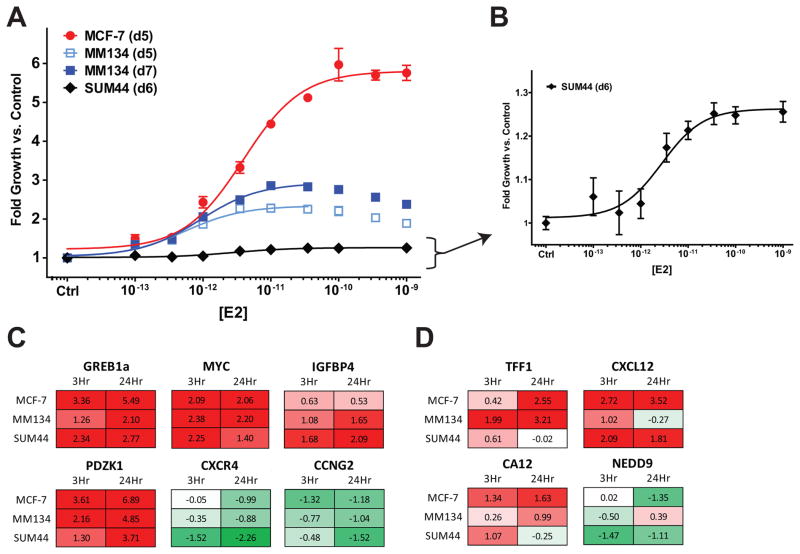
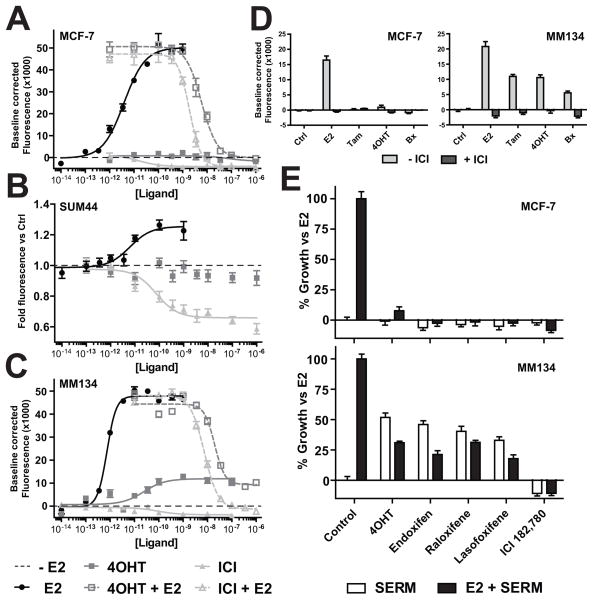
Invasive lobular carcinoma (ILC) is a histologic subtype of breast cancer that is frequently associated with favorable outcomes, as approximately 90% of ILC express the estrogen receptor (ER). However, recent retrospective analyses suggest that patients with ILC receiving adjuvant endocrine therapy may not benefit as much as patients with invasive ductal carcinoma. On the basis of these observations, we characterized ER function and endocrine response in ILC models. The ER-positive ILC cell lines MDA MB 134VI (MM134) and SUM44PE were used to examine the ER-regulated transcriptome via gene expression microarray analyses and ER ChIP-Seq, and to examine response to endocrine therapy. In parallel, estrogen response was assessed in vivo in the patient-derived ILC xenograft HCI-013. We identified 915 genes that were uniquely E2 regulated in ILC cell lines versus other breast cancer cell lines, and a subset of these genes were also E2 regulated in vivo in HCI-013. MM134 cells were de novo tamoxifen resistant and were induced to grow by 4-hydroxytamoxifen, as well as other antiestrogens, as partial agonists. Growth was accompanied by agonist activity of tamoxifen on ER-mediated gene expression. Though tamoxifen induced cell growth, MM134 cells required fibroblast growth factor receptor (FGFR)-1 signaling to maintain viability and were sensitive to combined endocrine therapy and FGFR1 inhibition. Our observation that ER drives a unique program of gene expression in ILC cells correlates with the ability of tamoxifen to induce growth in these cells. Targeting growth factors using FGFR1 inhibitors may block survival pathways required by ILC and reverse tamoxifen resistance.
©2014 AACR
Conflict of interest statement
Conflicts of Interest: None to disclose.
Figures




References
-
- Fisher ER, Gregorio RM, Fisher B, Redmond C, Vellios F, Sommers SC. The pathology of invasive breast cancer. A syllabus derived from findings of the National Surgical Adjuvant Breast Project (protocol no. 4) Cancer. 1975;36:1–85. - PubMed
-
- Cristofanilli M, Gonzalez-Angulo A, Sneige N, Kau S-W, Broglio K, Theriault RL, et al. Invasive lobular carcinoma classic type: response to primary chemotherapy and survival outcomes. J Clin Oncol. 2005;23:41–8. - PubMed
-
- Pestalozzi BC, Zahrieh D, Mallon E, Gusterson BA, Price KN, Gelber RD, et al. Distinct clinical and prognostic features of infiltrating lobular carcinoma of the breast: combined results of 15 International Breast Cancer Study Group clinical trials. J Clin Oncol. 2008;26:3006–14. - PubMed
-
- Sikora MJ, Jankowitz RC, Dabbs DJ, Oesterreich S. Invasive lobular carcinoma of the breast: patient response to systemic endocrine therapy and hormone response in model systems. Steroids. 2013;78:568–75. - PubMed
Publication types
MeSH terms
Substances
Grants and funding
LinkOut - more resources
Full Text Sources
Other Literature Sources
Molecular Biology Databases
Research Materials
Miscellaneous
