. 2014 Jan 10;9(1):e84203.
doi: 10.1371/journal.pone.0084203. eCollection 2014.

Characterization of the tomato ARF gene family uncovers a multi-levels post-transcriptional regulation including alternative splicing

Affiliations

Characterization of the tomato ARF gene family uncovers a multi-levels post-transcriptional regulation including alternative splicing

Mohamed Zouine et al. PLoS One. .

Abstract

Background: The phytohormone auxin is involved in a wide range of developmental processes and auxin signaling is known to modulate the expression of target genes via two types of transcriptional regulators, namely, Aux/IAA and Auxin Response Factors (ARF). ARFs play a major role in transcriptional activation or repression through direct binding to the promoter of auxin-responsive genes. The present study aims at gaining better insight on distinctive structural and functional features among ARF proteins.

Results: Building on the most updated tomato (Solanum lycopersicon) reference genome sequence, a comprehensive set of ARF genes was identified, extending the total number of family members to 22. Upon correction of structural annotation inconsistencies, renaming the tomato ARF family members provided a consensus nomenclature for all ARF genes across plant species. In silico search predicted the presence of putative target site for small interfering RNAs within twelve Sl-ARFs while sequence analysis of the 5'-leader sequences revealed the presence of potential small uORF regulatory elements. Functional characterization carried out by transactivation assay partitioned tomato ARFs into repressors and activators of auxin-dependent gene transcription. Expression studies identified tomato ARFs potentially involved in the fruit set process. Genome-wide expression profiling using RNA-seq revealed that at least one third of the gene family members display alternative splicing mode of regulation during the flower to fruit transition. Moreover, the regulation of several tomato ARF genes by both ethylene and auxin, suggests their potential contribution to the convergence mechanism between the signaling pathways of these two hormones.

Conclusion: All together, the data bring new insight on the complexity of the expression control of Sl-ARF genes at the transcriptional and post-transcriptional levels supporting the hypothesis that these transcriptional mediators might represent one of the main components that enable auxin to regulate a wide range of physiological processes in a highly specific and coordinated manner.


Conflict of interest statement

Competing Interests: The authors have declared that no competing interests exist.

Figures

Figure 1
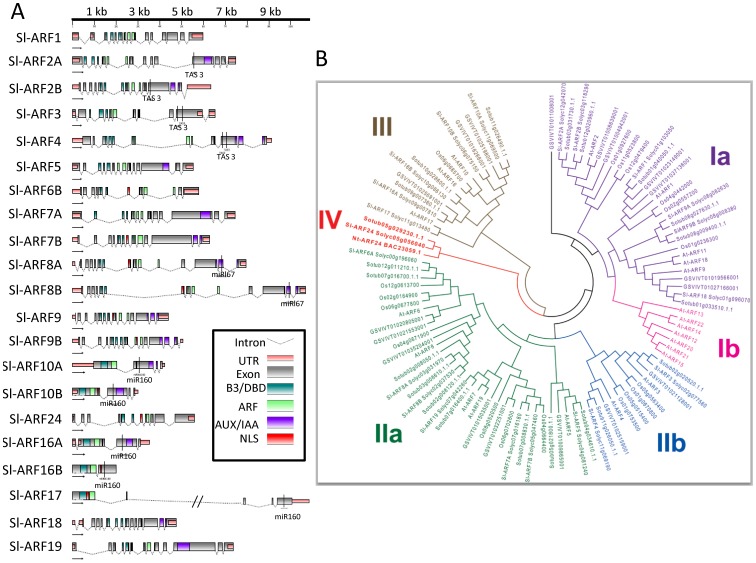
Figure 1. The ARFfamily structures in tomato and phylogenetic relationship between rice, potato, tomato, grape and Arabidopsis.
(A) The generic structures of Sl-ARF family except Sl-ARF6A. The gene size (kb) is indicated in the upper panel. The domain of Sl-ARF gene is indicated by different colours. The marker in Sl-ARF family showsSl-ARF2A, 2B, 3 and 4genes are spliced by TAS 3, Sl-ARF8A and 8B spliced by miRl67, and Sl-ARF10A, 10B, 16A, 16B and 17 spliced by miR160.(B) The unrooted tree was generated using MEGA4 program by neighbor-joining method. Bootstrap values (above 50%) from 1000 replicates are indicated at each branch. All Sl-ARFs contain a DBD (brown). Most of the Sl-ARF proteins except Sl-ARF3, 10, 24, 16 and 17 contain a carboxy-terminal domain related to the domains III and IV found in the Aux/IAA proteins (blue).Sl-ARF5, 6A, 7, 8A, 8B, 19 contains a middle region that corresponds to the predicted activation domain (green) found in some AtARFs. The remaining Sl-ARFs contains a predicted repression domain (red). Sl-ARF-6B and AtARF23 contain only a truncated DBD (B3 domain).
Figure 2
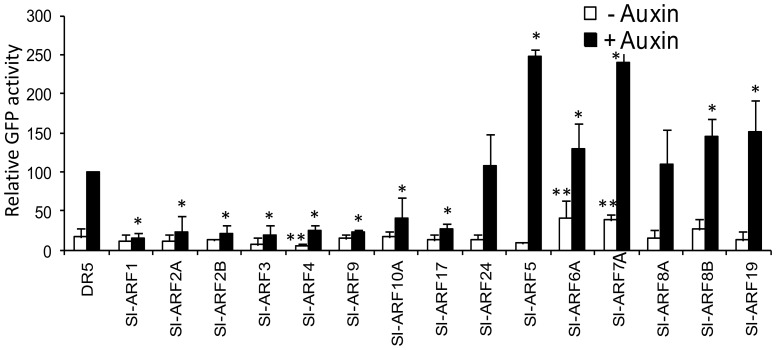
Figure 2. Sl-ARF factors differentially regulate the expression of reporter genes driven by synthetic and native auxin-responsive promoters.
Sl-ARF factors were challenged with a synthetic auxin-responsive promoter called DR5, consisting of seven tandem copies of the AuxREtgtctc element. A transient expression using a single cell system was performed to measure the reporter gene activity. The fluorescence was measured by flux cytometry. Because of the very low basal activity of the DR5 promoter without auxin treatment, the auxin inducible fluorescence obtained by co-transformation with the promoter fused to the reporter gene and with the empty vector was standardized to 100 and taken as reference. Biological triplicates were averaged and analysed statistically using Student's t-test at (P<0.05). (*) indicates significant changes corresponding to co-transformation with effector Sl-ARF and reporter DR5-GFP constructs compared to basal activity of DR5 promoter in the absence of auxin treatment. (**) indicates significant changes for the same experiment carried out in the presence of auxin Bars indicate the SEM.
Figure 3
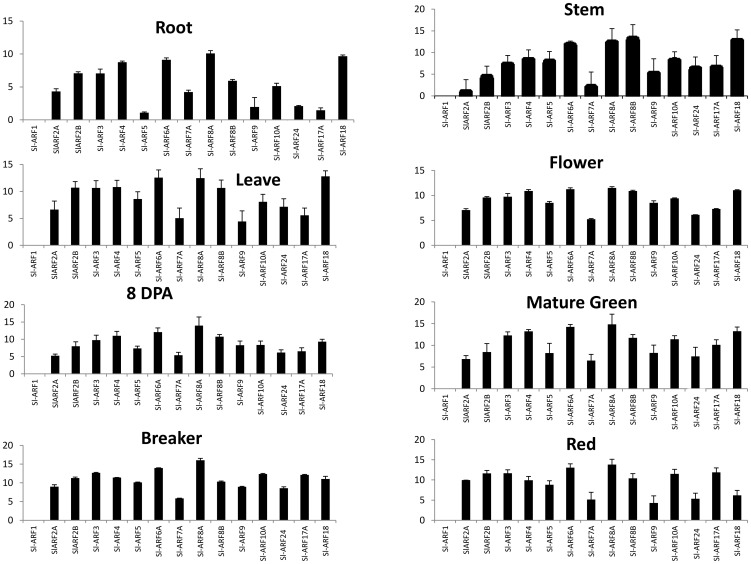
Figure 3. Real-time PCR expression profiles of individual Sl-ARF genes.
Total of 15 Sl-ARFgenes were performed in different tomato organs (root, stem, leaf, flower, 8DPA, Mature Green, Breaker and Red). X-axis represents different Sl-ARF genes, while Y-axis represents three relative expressions of those genes. 8DPA: 8 days after pollination, Mature Green, Breaker and Red represent different stage of the fruit development.
Figure 4
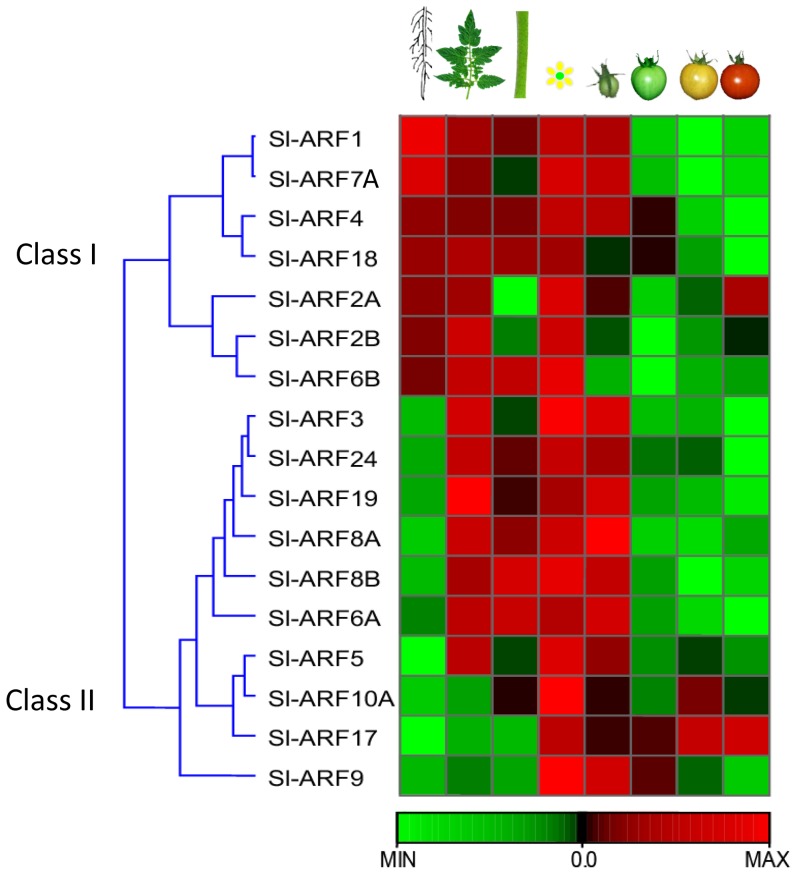
Figure 4. Heatmap showing Sl-ARF gene expression in different tomato tissues.
Changes in RNA accumulation in different tomato tissues (Roots, Leaves, Stems, Flowers, Early Immature Green (8 DPA), Mature Green, Breaker, Red (Breaker + 7 days) as schematically depicted above the displayed array data, are shown relative to the RNA accumulation levels in roots. Levels of down expression (green) or up expression (red) are shown on a log2 scale from the high to the low expression of each Sl-ARF gene.
Figure 5
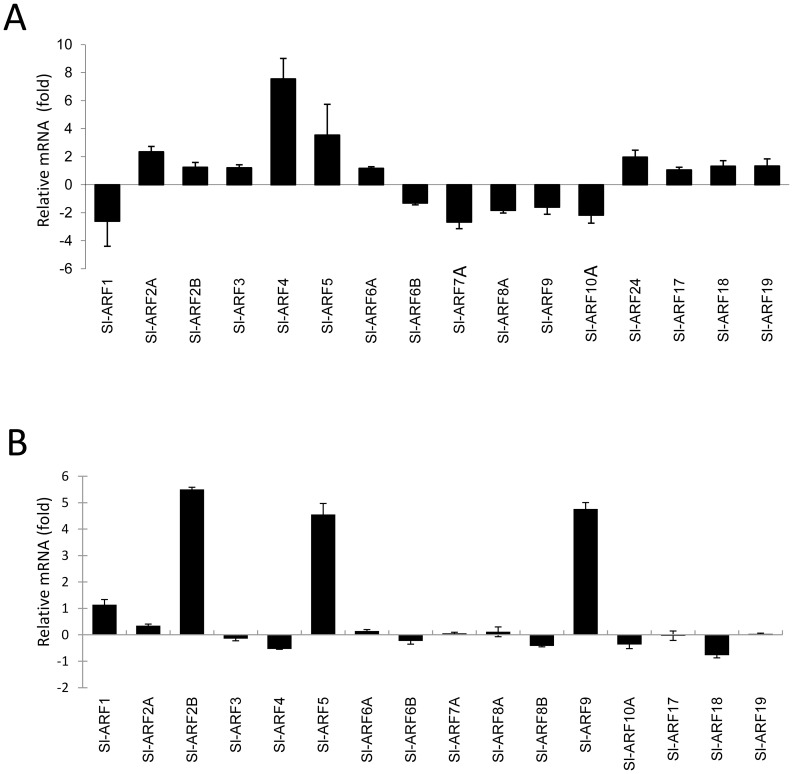
Figure 5. The expression of Sl-ARF family genes in response to auxin and ethylene.
(A) Auxin induction of Sl-ARF genes on light grown seedlings. Quantitative RT-PCR of Sl-ARF transcripts in RNA samples extracted from 12-day-old tomato seedlings soaked in liquid MS medium with 10 µM IAA for 2 hours. ΔΔCT refers to the fold of difference in Sl-ARF expression to the untreated seedlings. The SAUR gene was used as control to validate the auxin treatment.(B) Ethylene regulation of Sl-ARF genes on dark grown seedlings. Quantitative RT-PCR of Sl-ARF transcripts in RNA samples extracted from5-days dark-grown tomato seedlings treated 5 hours with ethylene (50 µL/L). ΔΔCT refers to fold differences in Sl-ARF expression relative to untreated seedlings. The E4 gene was used as control for efficient ethylene treatment.
Figure 6
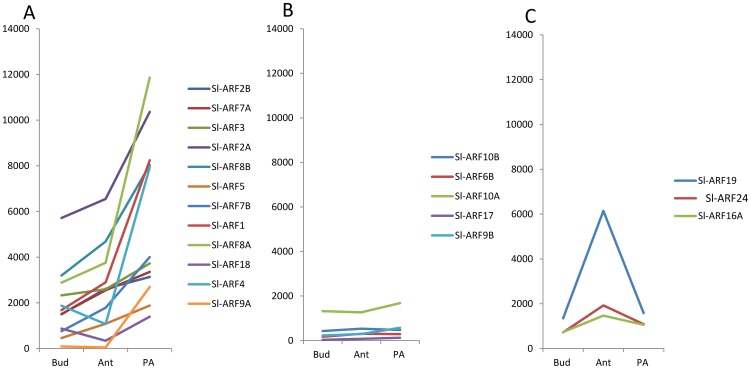
Figure 6. The expression profile of Sl-ARF family genes in tomato fruit set.
(A)12 Sl-ARF genes are over-expressed after pollination and fertilization (4DPA), which are Sl-ARF9A, 4, 18, 8A, 1, 7B, 5, 8B, 2A, 3, 7A and 2B genes in turn according to the log change of P/A (Post-anthesis/Anthesis). (B) 5 Sl-ARF genes keep stable expression from flower bud to post-anthesis, includingSl-ARF10A, 10B, 6B, 9B, 17 genes.(C) 3 Sl-ARF genes are up-regulated from flower bud to anthesis and down-regulated after pollination and fertilization (4DPA), including Sl-ARF24, 19, and 16A genes. The expression values are taken from RNA-sequencing data and the colors represent different Sl-ARF genes.
Figure 7
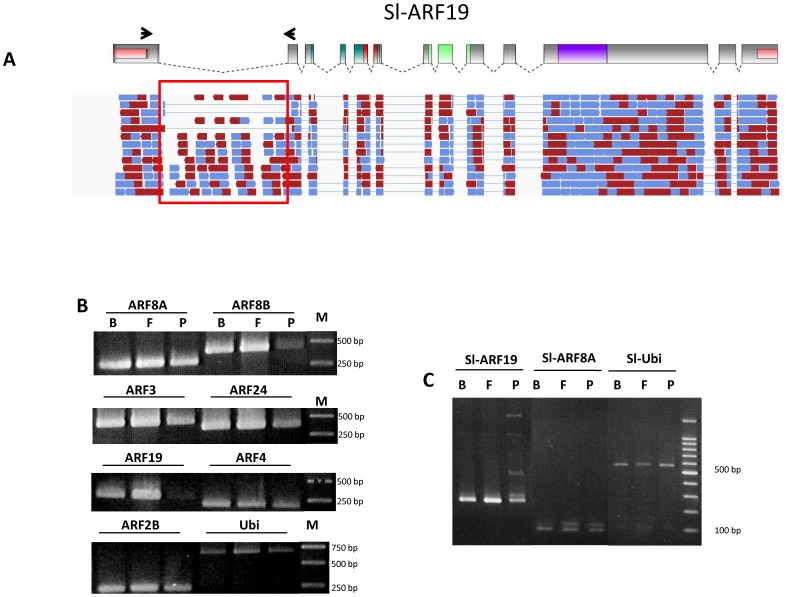
Figure 7. The ARF family genes showed alternative spilcing mode of regulation in tomato fruit set.
(A) RNA-seq reads generated during the fruit-set and mapped on Sl-ARF19 gene structure showing one alternative spicing that can be generated in the Intron 1. Reads are represented by red and blue rod arrows (B) The RT-PCR was carried out using pairs of primers designed within the introns of 7 Sl-ARF genes highlighted in Figures S3.1 to S3.6 in File S1, such as Sl-ARF8A_Intron 6, Sl-ARF8B_Intron 11, Sl-ARF3_Intron 9, Sl-ARF24_Intron 3, Sl-ARF19_Intron 1, Sl-ARF4_Intron 6 and Sl-ARF2B_Intron 11. The ubiquitin gene was used as the reference. (C) The RT-PCR was performed using pairs of primers nested in the two exons encompassing the intron of target Sl-ARF genes, such as Exon1-Exon2 in Sl-ARF19 and Exon6-Exon7 in Sl-ARF8A. The cDNAs generated from flower bud (B), flower at anthesis (F) and young fruit 4 days post-pollination (P) tissues were used as the template. The ubiquitin was used as the reference.

References

    1. Quint M, Gray WM (2006) Auxin signaling. Curr Opin Plant Biol 9: 448–453. - PMC - PubMed
    1. Teale WD, Ditengou FA, Dovzhenko AD, Li X, Molendijk AM, et al. (2008) Auxin as a model for the integration of hormonal signal processing and transduction. Mol Plant 1: 229–237. - PubMed
    1. Wang H, Schauer N, Usadel B, Frasse P, Zouine M, et al. (2009) Regulatory features underlying pollination-dependent and -independent tomato fruit set revealed by transcript and primary metabolite profiling. Plant Cell 21: 1428–1452. - PMC - PubMed
    1. Sagar M, Chervin C, Mila I, Hao Y, Roustan JP, et al. (2013) SlARF4, an auxin response factor involved in the control of sugar metabolism during tomato fruit development. Plant Physiol 161: 1362–1374. - PMC - PubMed
    1. Sagar M, Chervin C, Bouzayen M, Zouine M (2013) Under-expression of the Auxin Response Factor Sl-ARF4 improves post-harvest behavior of tomato fruits. Plant Signal Behav 8.. - PMC - PubMed

Publication types

LinkOut - more resources