


Efficacy and safety of mepivacaine compared with lidocaine in local anaesthesia in dentistry: a meta-analysis of randomised controlled trials
- PMID: 24428507
- PMCID: PMC9376404
- DOI: 10.1111/idj.12087
Efficacy and safety of mepivacaine compared with lidocaine in local anaesthesia in dentistry: a meta-analysis of randomised controlled trials
Abstract
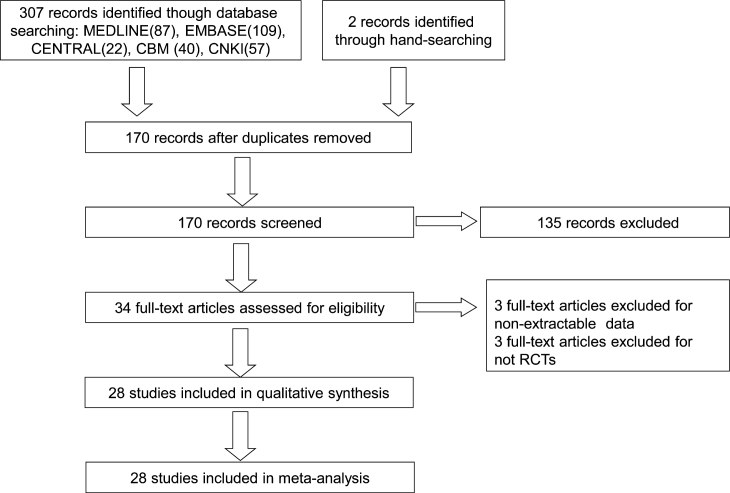
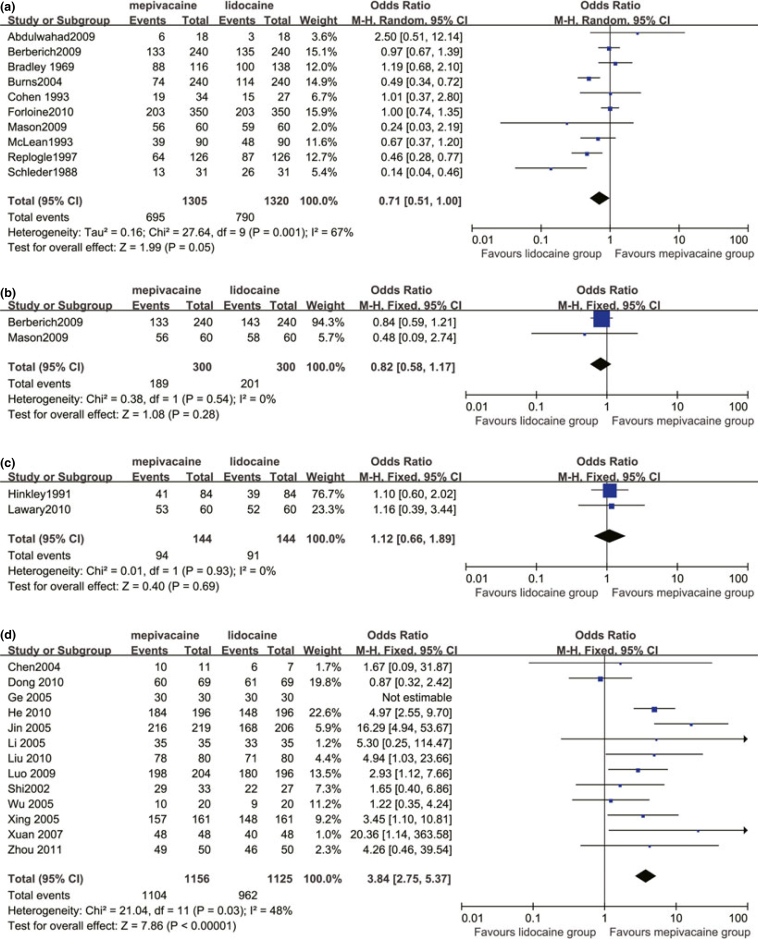
The objective of the study was to assess the efficacy and safety of mepivacaine compared with lidocaine used in local anaesthesia in dentistry. Medline, Cochrane Central Register of Controlled Trials, EMBASE, Chinese BioMedical Literature Database, China National Knowledge Infrastructure and WHO International Clinical Trials Registry Platform were searched electronically. Relevant journals and references of studies included were hand-searched for randomised controlled trials comparing mepivacaine with lidocaine in terms of efficacy and safety. Twenty-eight studies were included, of which 15 had low risk of bias and 13 had moderate risk of bias. In comparison with 2% lidocaine with 1:100,000 adrenaline, 3% mepivacaine showed a lower success rate (P = 0.05), a shorter onset time of pulpal anaesthesia (P = 0.0005), inferior pain control during injection phase and superior inhibition of heart rate increase (P < 0.0001). In contrast, 2% mepivacaine with 1:100,000 adrenaline gave a higher success rate (P < 0.00001), a similar onset time of pulpal anaesthesia (P = 0.34) and superior pain control during injection phase (P < 0.0001); 2% mepivacaine with 1:20,000 levonordefrin had the same success rate (P = 0.69) and similar onset time of pulpal anaesthesia (P = 0.90). In addition, 3% mepivacaine had shorter onset time (P = 0.004), same level of success rate (P = 0.28) and similar pain control during injection and postinjection compared with 2% lidocaine with 1:50,000 adrenaline. Given the efficacy and safety of the two solutions, 2% mepivacaine with vasoconstrictors is better than 2% lidocaine with vasoconstrictors in dental treatment. Meanwhile, 3% plain mepivacaine is better for patients with cardiac diseases.
Keywords: Mepivacaine; dentistry; lidocaine; local anaesthesia; meta-analysis.
© 2014 FDI World Dental Federation.
Figures

References
-
- Hargreaves KM, Cohen S, Berman LH. 10th ed. Mosby; Saint Louis: 2011. Pathways of the Pulp; pp. 691–705.
-
- Peretz B, Moshonov J. Dental anxiety among patients undergoing endodontic treatment. J Endod. 1998;24:435–437. - PubMed
-
- Claffey E, Reader A, Nusstein J, et al. Anesthetic efficacy of articaine for inferior alveolar nerve blocks in patient with irreversible pulpitis. J Endod. 2004;30:568–571. - PubMed
-
- Berge TM, Veerkamp JS, Hoogstraten J, et al. Childhood dental fear in the Netherlands: prevalence and normative data. Community Dent Oral Epidemiol. 2002;30:101–107. - PubMed
-
- Abdulwahab M, Boynes S, Moore P, et al. The efficacy of six local anesthetic formulations used for posterior mandibular buccal infiltration anesthesia. JADA. 2009;140:1018–1024. - PubMed
Publication types
MeSH terms
Substances
LinkOut - more resources
Full Text Sources
Other Literature Sources
Medical
