


Prevalence of developmental dysplasia of the hip in children with clubfoot
- PMID: 24432085
- PMCID: PMC3799929
- DOI: 10.1007/s11832-013-0523-6
Prevalence of developmental dysplasia of the hip in children with clubfoot
Abstract
Purpose: The relationship between congenital talipes equinovarus (CTEV) and developmental dysplasia of the hip (DDH) remains uncertain. The role of routine hip screening in children with CTEV is debated. A recent study has found a high incidence of DDH in patients with CTEV. The aim of our study was to determine the true prevalence of radiographic hip dysplasia and identify the need for routine hip screening in patients treated for CTEV.
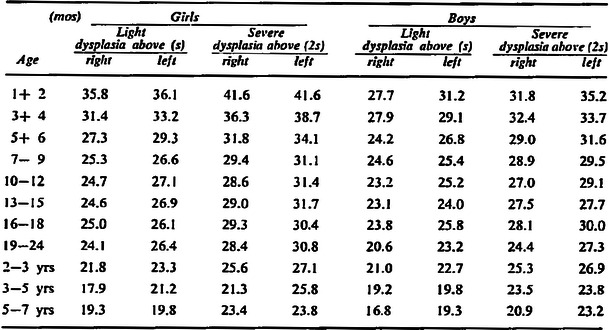
Methods: From a single centre database of 165 children consisting of 260 CTEV, a prospective radiological prevalence study of 101 children was performed over a period of 3 months. A single anterior-posterior pelvic radiograph was performed at a minimum age of 5 months. The DDH was determined by a single senior investigator based on the age-adjusted acetabular index (AI) as described by Tonnis.
Results: There were no dislocations or subluxations. According to the age-adjusted AI, 16 children had 'light' dysplasia and one child had 'severe' dysplasia. The child with severe dysplasia was known to have DDH and had already undergone treatment. The 16 children with light dysplasia did not require any form of treatment.
Conclusion: Out of one hundred and one children with CTEV, only one had DDH requiring treatment. This is consistent with the majority of the literature supporting the premise that there is no true association between CTEV and DDH. We, therefore, feel that routine hip screening for children with CTEV is not supported by current evidence and cannot be recommended.
Keywords: Club foot; Congenital talipes equinovarus; Developmental dysplasia of the hip; Hip dysplasia; Hip screening.
Figures
References
-
- Dunn PM. Perinatal observations on the etiology of congenital dislocation of the hip. Clin Orthop Relat Res. 1976;119:11–22. - PubMed
-
- Wynne-Davies R. Family studies and the cause of congenital club foot. Talipes equinovarus, talipes Calcaneo-Valgus and Metatarsus Varus. J Bone Joint Surg Br. 1964;46:445–463. - PubMed
-
- Westberry DE, Davids JR, Pugh LI. Clubfoot and developmental dysplasia of the hip: value of screening hip radiographs in children with clubfoot. J Pediatr Orthop. 2003;23(4):503–507. - PubMed
LinkOut - more resources
Full Text Sources
Other Literature Sources
Research Materials
