


Antiobesity and vasoprotective effects of resveratrol in apoE-deficient mice
- PMID: 24433070
- PMCID: PMC3961783
- DOI: 10.1089/jmf.2013.2885
Antiobesity and vasoprotective effects of resveratrol in apoE-deficient mice
Abstract
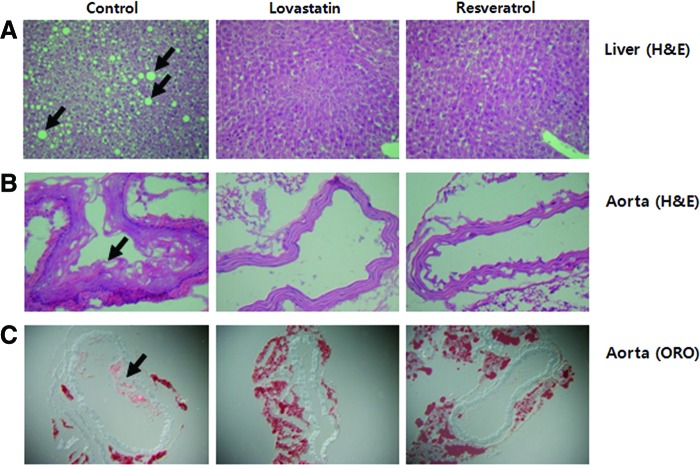
This study was performed to investigate the hypolipidemic, antiobese, and antiatherogenic effects of resveratrol in apoE-deficient mice fed an atherogenic diet (20% fat and 1% cholesterol). These animals were fed an atherogenic diet containing 0.02% lovastatin (w/w) or 0.02% resveratrol (w/w) for 12 weeks. Resveratrol and lovastatin supplementation significantly reduced either the body weight or epididymal fat weight without altering the food intake and food efficiency ratio. Resveratrol significantly decreased the plasma total cholesterol (total-C), low-density lipoprotein cholesterol (LDL-C), non-high-density lipoprotein cholesterol (non-HDL-C) concentrations, apoB/apoA-I ratio, hepatic cholesterol, and triglyceride (TG) contents, whereas significantly it increased the plasma HDL-C concentration compared with the control and lovastatin groups. Plasma and hepatic TG and plasma apoB levels were significantly lower in both the lovastatin and resveratrol groups than in the control group without altering the plasma apoA-I concentration. Both resveratrol and lovastatin significantly decreased hepatic fatty acid and TG synthesis, whereas they increased fatty acid oxidation (β-oxidation) except for the carnitine palmitoyltransferase activity compared with the control group. However, there was no difference in hepatic 3-hydroxyl-3-methylglutaryl-CoA reductase activity among the groups, although hepatic acyl-CoA: cholesterol acyltransferase activity was significantly lower in the lovastatin groups than in the control group. In epididymal adipose tissue, resveratrol supplementation led to an increase in β-oxidation and decrease in TG synthesis, compared with the control group. Tissue morphology revealed that there were dramatic decreases in hepatic lipid droplets and aortic fatty streaks by resveratrol and lovastatin supplementation. This study demonstrates that resveratrol exerts not only antiobesity and hypolipidemic effects, but also protective effects for the liver and aorta through the modulation of lipid metabolism in both the liver and white adipose tissues.
Figures
References
-
- Gylling H: Cholesterol metabolism and its implications for therapeutic interventions in patients with hypercholesterolaemia. Int J Clin Pract 2004;58:859–866 - PubMed
-
- Walldius G, Jungner I, Holme I, et al. : High apolipoprotein B, low apolipoprotein A-I, and improvement in the prediction of fatal myocardial infarction (AMORIS study): a prospective study. Lancet 2001;358:2026–2033 - PubMed
-
- Srinivasan SR, Berenson GS: Apolipoproteins B and A-I as predictors of risk of coronary artery disease. Lancet 2001;358:2012–2013 - PubMed
-
- Jeon SM, Park YB, Choi MS: Antihypercholesterolemic property of naringin alters plasma and tissue lipids, cholesterol-regulating enzymes, fecal sterol and tissue morphology in rabbits. Clin Nutr 2004;23:1025–1034 - PubMed
-
- Woo MN, Jeon SM, Kim HJ, et al. : Fucoxanthin supplementation improves plasma and hepatic lipid metabolism and blood glucose concentration in high-fat fed C57BL/6N mice. Chem Biol Interact 2010;186:316–322 - PubMed
Publication types
MeSH terms
Substances
LinkOut - more resources
Full Text Sources
Other Literature Sources
Medical
Miscellaneous
