


Oropharyngeal Dysphagia after anterior cervical spine surgery: a review
- PMID: 24436882
- PMCID: PMC3854602
- DOI: 10.1055/s-0033-1354253
Oropharyngeal Dysphagia after anterior cervical spine surgery: a review
Abstract
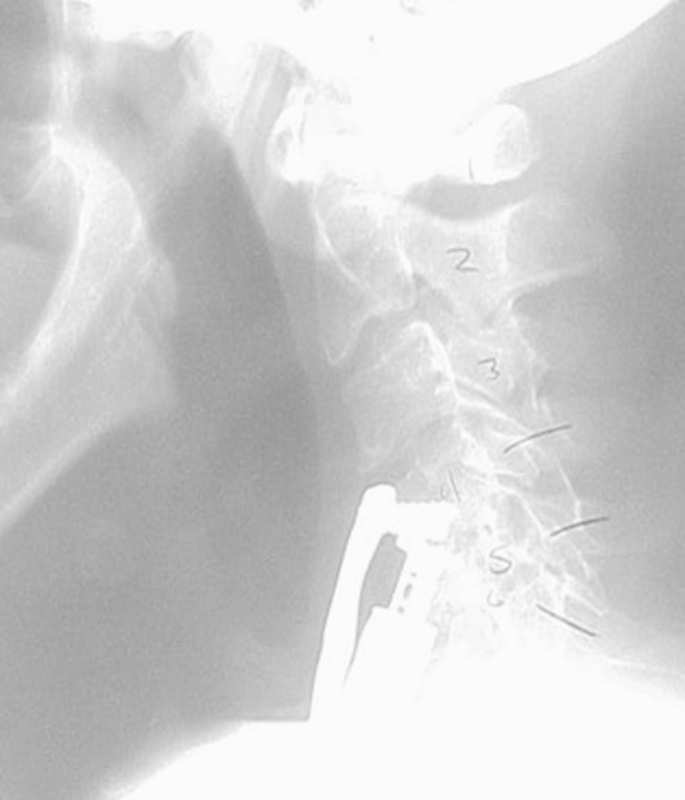
Study Design Review. Objective Postoperative oropharyngeal dysphagia is one of the most common complications following anterior cervical spine surgery (ACSS). We review and summarize recent literature in order to provide a general overview of clinical signs and symptoms, assessment, incidence and natural history, pathophysiology, risk factors, treatment, prevention, and topics for future research. Methods A search of English literature regarding dysphagia following anterior cervical spine surgery was conducted using PubMed and Google Scholar. The search was focused on articles published since the last review on this topic was published in 2005. Results Patients who develop dysphagia after ACSS show significant alterations in swallowing biomechanics. Patient history, physical examination, X-ray, direct or indirect laryngoscopy, and videoradiographic swallow evaluation are considered the primary modalities for evaluating oropharyngeal dysphagia. There is no universally accepted objective instrument for assessing dysphagia after ACSS, but the most widely used instrument is the Bazaz Dysphagia Score. Because dysphagia is a subjective sensation, patient-reported instruments appear to be more clinically relevant and more effective in identifying dysfunction. The causes of oropharyngeal dysphagia after ACSS are multifactorial, involving neuronal, muscular, and mucosal structures. The condition is usually transient, most often beginning in the immediate postoperative period but sometimes beginning more than 1 month after surgery. The incidence of dysphagia within one week after ACSS varies from 1 to 79% in the literature. This wide variance can be attributed to variations in surgical techniques, extent of surgery, and size of the implant used, as well as variations in definitions and measurements of dysphagia, time intervals of postoperative evaluations, and relatively small sample sizes used in published studies. The factors most commonly associated with an increased risk of oropharyngeal dysphagia after ACSS are: more levels operated, female gender, increased operative time, and older age (usually >60 years). Dysphagic patients can learn compensatory strategies for the safe and effective passage of bolus material. Certain intraoperative and postoperative techniques may decrease the incidence and/or severity of oropharyngeal dysphagia after ACSS. Conclusions Large, prospective, randomized studies are required to confirm the incidence, prevalence, etiology, mechanisms, long-term natural history, and risk factors for the development of dysphagia after ACSS, as well as to identify prevention measures. Also needed is a universal outcome measurement that is specific, reliable and valid, would include global, functional, psychosocial, and physical domains, and would facilitate comparisons among studies. Results of these studies can lead to improvements in surgical techniques and/or perioperative management, and may reduce the incidence of dysphagia after ACSS.
Keywords: anterior approach; cervical spine surgery; complication; dysphagia; oropharyngeal.
Conflict of interest statement
Figures
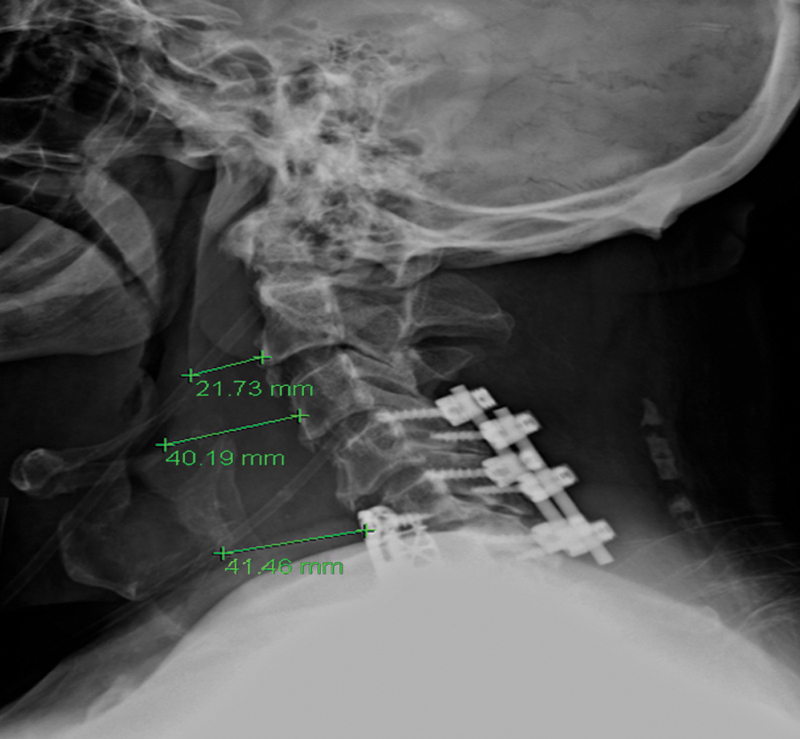
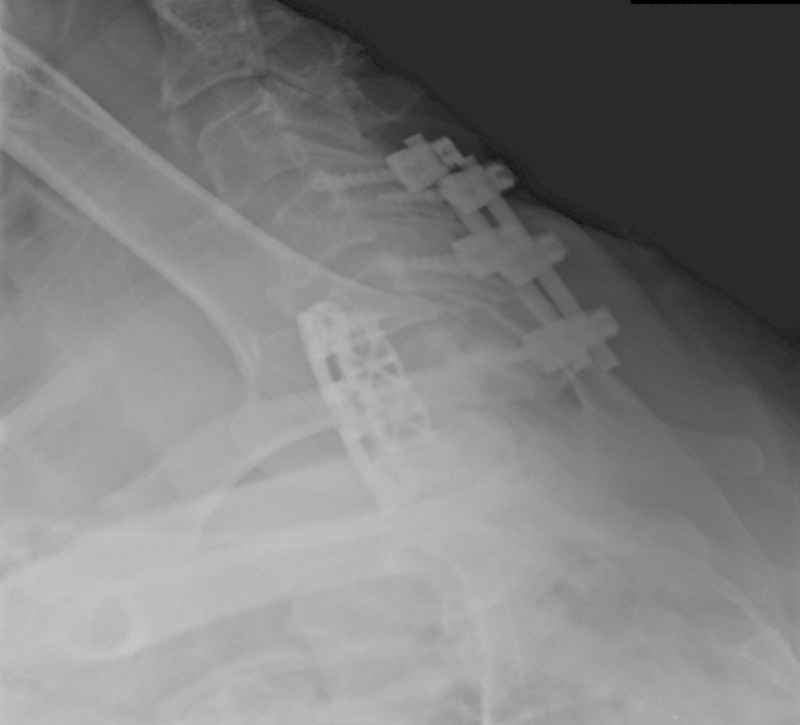
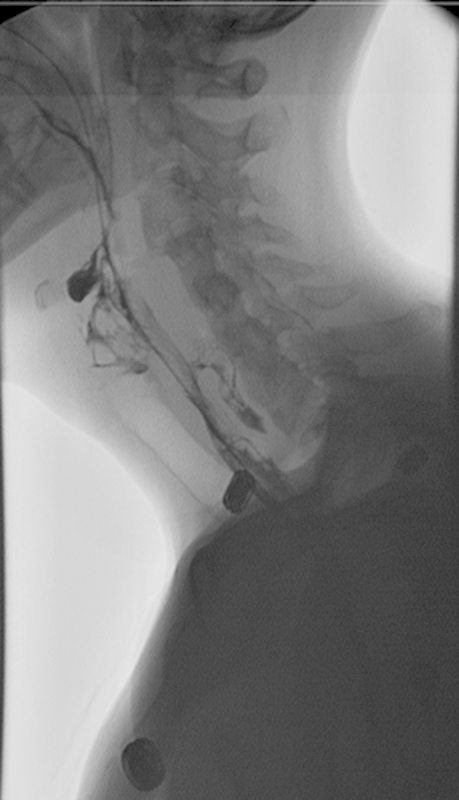
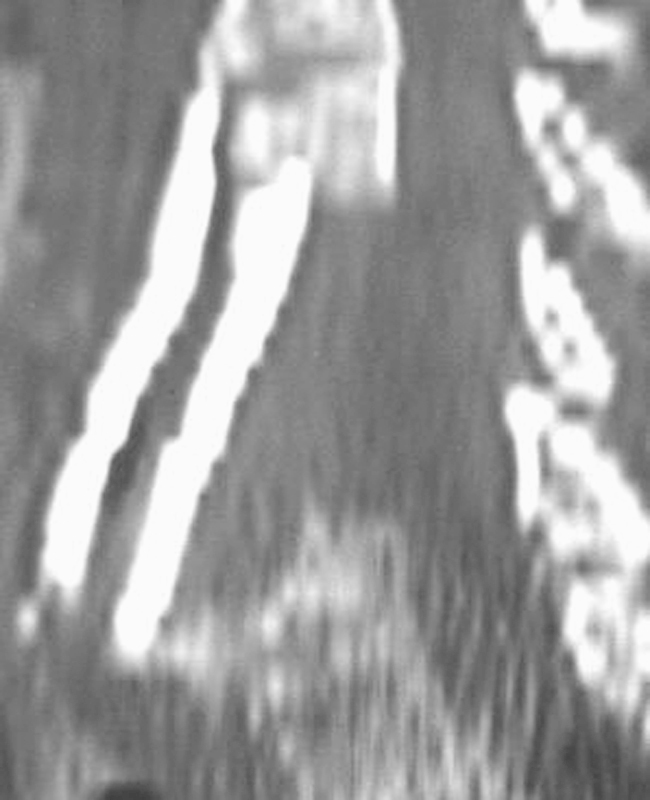
References
-
- Buttermann G R. Prospective nonrandomized comparison of an allograft with bone morphogenic protein versus an iliac-crest autograft in anterior cervical discectomy and fusion. Spine J. 2008;8:426–435. - PubMed
-
- Campbell P G, Yadla S, Malone J. et al.Early complications related to approach in cervical spine surgery: single-center prospective study. World Neurosurg. 2010;74:363–368. - PubMed
-
- Skeppholm M, Ingebro C, Engström T, Olerud C. The Dysphagia Short Questionnaire: an instrument for evaluation of dysphagia: a validation study with 12 months' follow-up after anterior cervical spine surgery. Spine (Phila Pa 1976) 2012;37:996–1002. - PubMed
-
- Kalb S, Reis M T, Cowperthwaite M C. et al.Dysphagia after anterior cervical spine surgery: incidence and risk factors. World Neurosurg. 2012;77:183–187. - PubMed
-
- Daniels A H, Riew K D, Yoo J U. et al.Adverse events associated with anterior cervical spine surgery. J Am Acad Orthop Surg. 2008;16:729–738. - PubMed
Publication types
LinkOut - more resources
Full Text Sources
Other Literature Sources
Medical
