. 2014 Feb 1;65(2):142-50.
doi: 10.1097/QAI.0b013e3182a9917e.

Characterization of T-cell responses to cryptic epitopes in recipients of a noncodon-optimized HIV-1 vaccine

Affiliations

Characterization of T-cell responses to cryptic epitopes in recipients of a noncodon-optimized HIV-1 vaccine

Anne Bet et al. J Acquir Immune Defic Syndr. .

Abstract

Introduction: Cryptic epitopes (CEs) can be encoded by any of the 5 alternative reading frames (ARFs, 2 sense and 3 antisense) of a known gene. Although CE responses are commonly detected during HIV-1 infection, it is not known whether these responses are induced after vaccination.

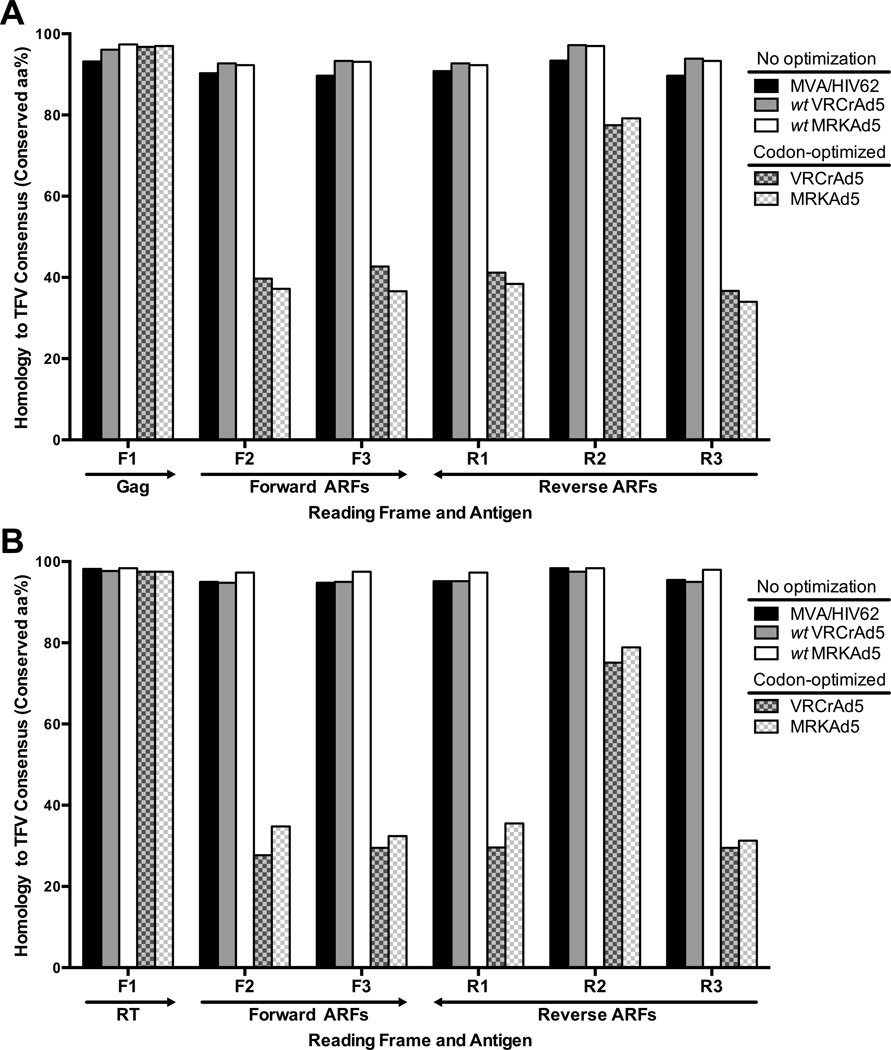
Methods: Using a bioinformatic approach, we determined that vaccines with codon-optimized HIV inserts significantly skewed CE sequences and are not likely to induce crossreactive responses to natural HIV CE. We then evaluated the CE- and protein-specific T-cell responses using Gag, Pol, and ARF peptide pools among participants immunized with a non-codon optimized vaccine regimen of 2 pGA2/JS7 DNA primes followed by 2 MVA/HIV62 Gag-Pol-Env vector boosts or 4 saline injections.

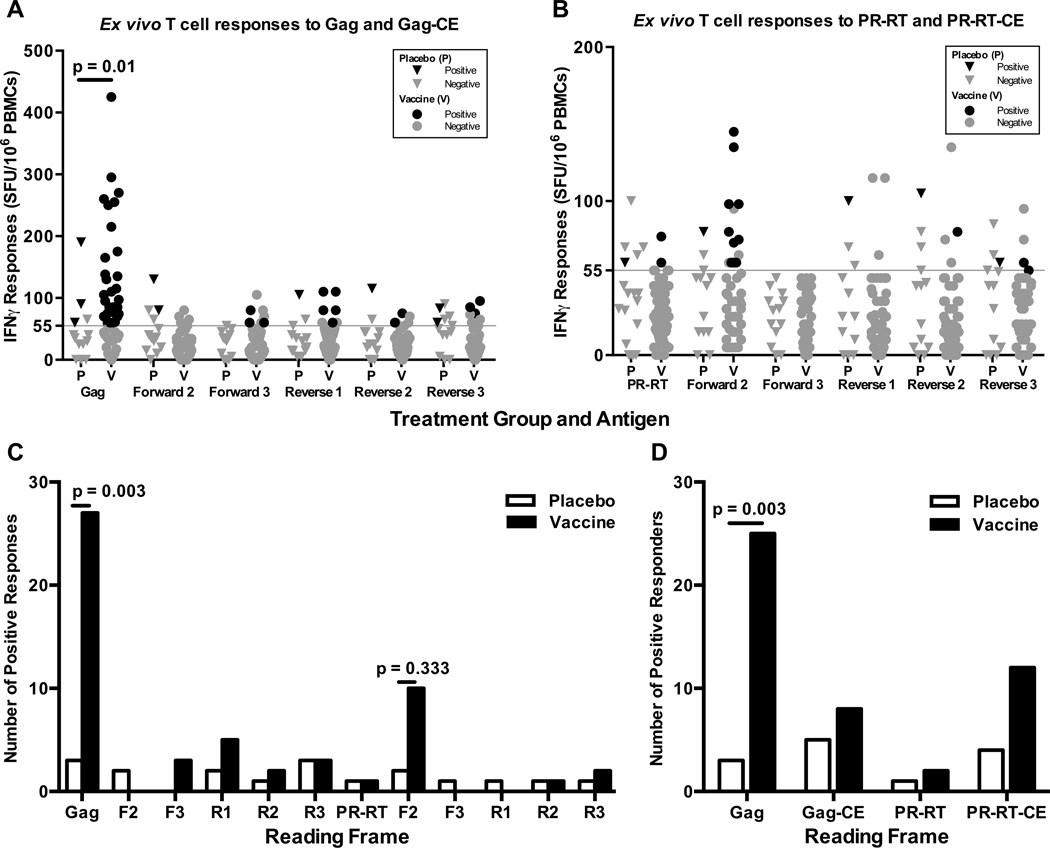
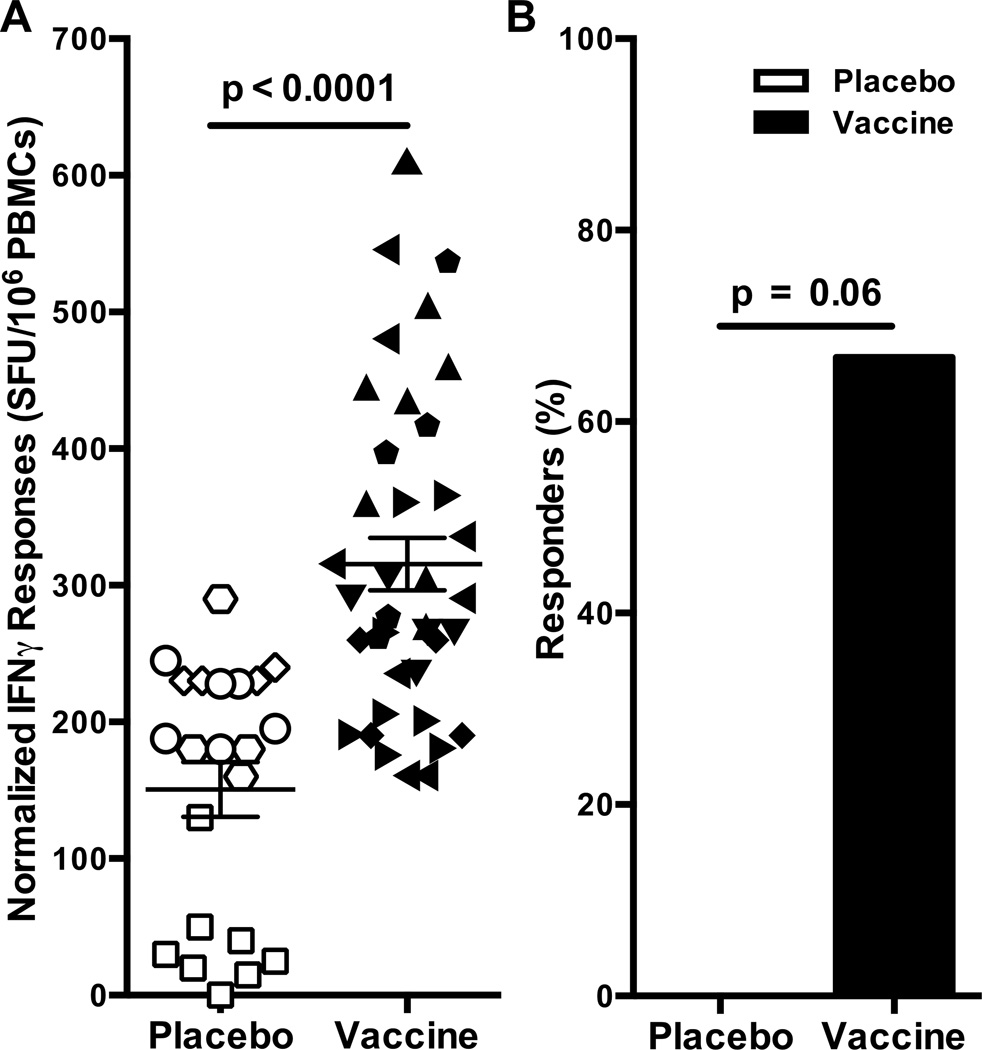
Results: Vaccinees had significantly more interferon gamma enzyme-linked immunosorbent spot (IFNγ ELISpot) responses toward Gag (P = 0.003) but not toward Pol protein than did placebo recipients. However, CE-specific T-cell responses were low in magnitude, and their frequencies did not differ significantly between vaccine and placebo recipients. Additionally, most positive CE responses could not be mapped to individual peptides. After expanding responses in a cultured assay, however, the frequency and the median magnitude of responses to ARF peptides were significantly greater in vaccinees (P < 0.0001), indicating that CE-specific T-cell responses are present but below an ex vivo assay's limit of detection.

Conclusions: Our data demonstrate that HIV-1 vaccines currently in clinical trials are poorly immunogenic with regard to CE-specific T-cell responses. Therefore, the context of HIV-1 immunogens may need to be modified as a comprehensive strategy to broaden vaccine-induced T-cell responses.


Conflict of interest statement

Conflicts of Interest: The authors report no scientific or financial conflicts of interest.

Figures

Figure 1
Figure 1. Codon optimization significantly alters natural HIV-1 ARFs
The homology of amino acid sequences is plotted as the percent of residues that were conserved with respect to a reference, the translated TFV consensus sequence, for 1 noncodon-optimized insert (MVA/HIV62; black), 2 codon-optimized inserts (VRCrAd5, MRKAd5; grey and white pattern, respectively), and the 2 wild type sequences from which the codon-optimized insert were designed (wtVRCrAd5, wtMRKAd5; grey and white). Amino acid identities were compared for all reading frames of the gag (A) and RT (B) regions.
Figure 2
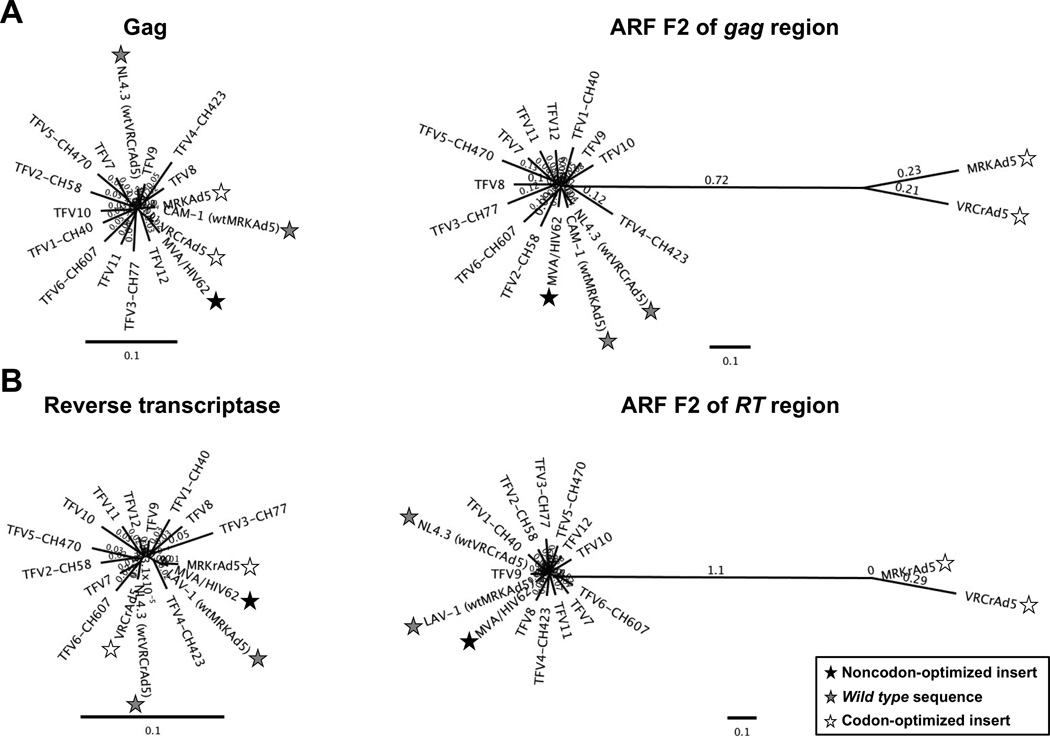
Figure 2. Genetic distances of ARF sequences are greatly increased for codon-optimized vector inserts
Genetic distances were determined for amino acid sequences translated from 12 individual clade B TFV sequences, 1 noncodon-optimized vector insert (MVA/HIV62; black stars), 2 codon-optimized vector inserts (VRCrAd5, MRKAd5; white stars), and 2 wild type, noncodon-optimized sequences (wtVRCrAd5, wtMRKAd5; grey stars). Distances are plotted for Gag and RT proteins (A and B, respectively; left panels) and forward frame 2 (F2), a representative example of distances for an alternative reading frame (ARF; A and B, right panels). Branch lengths reflect sequence divergence. Scale bars indicate 10% genetic distance.
Figure 3
Figure 3. Lack of detectable CE-specific cytotoxic T cell responses to ARF peptide pools
The magnitude of responses to large, single frame overlapping peptide pools from the gag (A) and PR-RT (B) regions was measured by IFNγ ELISpot. All responses for are shown for positive responders who received vaccine (N= 32; V, circles) or placebo (N=8; P, triangles) treatment during HVTN 205. Positive values (black) exceeded both the positivity threshold (grey line) and 3 times the sample background. (C) The total number of positive responses to 12 large, single frame peptide pools are shown for positive responders according to treatment group. (D) The proportion of participants with a positive response to either protein or any CE encoded by the gag or PR-RT regions is shown as a percentage according to group.
Figure 4
Figure 4. Increased detection of proliferating HIV-1 CE-specific T cells in a cultured IFNγ ELISpot assay
T cells were evaluated following 10 days in culture with subpools of peptides encoded by ARFs. (A) Data are presented as the number of responses normalized to the lowest magnitude subpool response after subtracting background. Each symbol represents all positive and negative responses for an individual vaccinee. Bars represent the standard error of the mean. (B) The proportion of participants with a positive response to any ARF subpool is shown as a percentage according to group.

References

    1. Taylor BS, Hammer SM. The challenge of HIV-1 subtype diversity. N Engl J Med. 2008;359:1965–1966. - PubMed
    1. Rerks-Ngarm S, Pitisuttithum P, Nitayaphan S, Kaewkungwal J, Chiu J, et al. Vaccination with ALVAC and AIDSVAX to prevent HIV-1 infection in Thailand. N Engl J Med. 2009;361:2209–2220. - PubMed
    1. Picker LJ, Hansen SG, Lifson JD. New paradigms for HIV/AIDS vaccine development. Annu Rev Med. 2012;63:95–111. - PMC - PubMed
    1. Haynes BF, Gilbert PB, McElrath MJ, Zolla-Pazner S, Tomaras GD, et al. Immune-correlates analysis of an HIV-1 vaccine efficacy trial. N Engl J Med. 2012;366:1275–1286. - PMC - PubMed
    1. McElrath MJ, De Rosa SC, Moodie Z, Dubey S, Kierstead L, et al. HIV-1 vaccine-induced immunity in the test-of-concept Step Study: a case-cohort analysis. Lancet. 2008;372:1894–1905. - PMC - PubMed

Publication types

MeSH terms