


Neuroplasticity-based auditory training via laptop computer improves cognition in young individuals with recent onset schizophrenia
- PMID: 24444862
- PMCID: PMC4266283
- DOI: 10.1093/schbul/sbt232
Neuroplasticity-based auditory training via laptop computer improves cognition in young individuals with recent onset schizophrenia
Abstract
Objective: Cognitive deficits that characterize schizophrenia are present in the prodrome, worsen with illness onset, and predict functional outcome. Cognitive dysfunction is thus a critical target for early intervention in young individuals with recent onset schizophrenia.
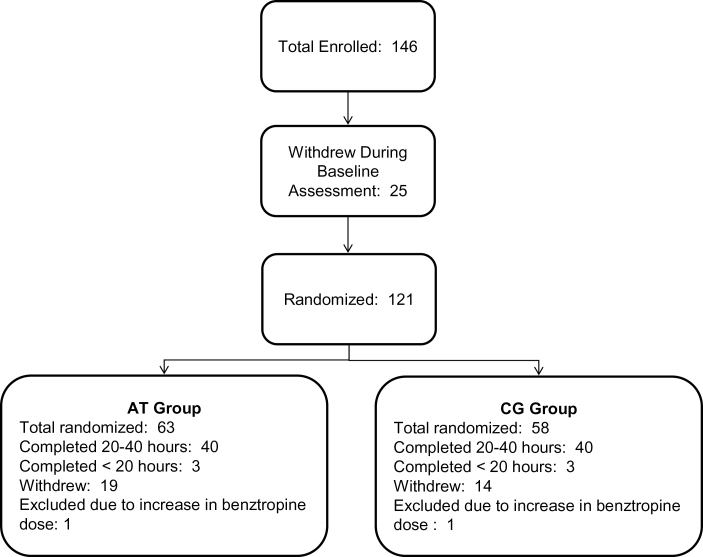
Method: This 2-site double-blind randomized controlled trial investigated cognitive training of auditory processing/verbal learning in 86 subjects with recent onset schizophrenia (mean age of 21 years). Subjects were given laptop computers to take home and were asked to perform 40 hours of training or 40 hours of commercial computer games over 8 weeks. We examined cognitive measures recommended by the Measurement and Treatment Research to Improve Cognition in Schizophrenia initiative (MATRICS), symptoms, and functioning. We also assessed baseline reward anticipation to index motivational system functioning and measured changes in auditory processing speed after 20 hours of training to assess target engagement.
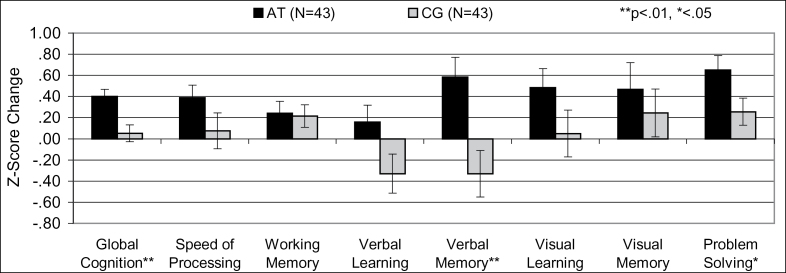
Results: Auditory training subjects demonstrated significant improvements in global cognition, verbal memory, and problem solving compared with those of computer games control subjects. Both groups showed a slight but significant decrease in symptoms and no change in functional outcome measures. Training-induced cognitive gains at posttraining showed significant associations with reward anticipation at baseline and with improvement in auditory processing speed at 20 hours.
Conclusion: Neuroscience-informed cognitive training via laptop computer represents a promising treatment approach for cognitive dysfunction in early schizophrenia. An individual's baseline motivational system functioning (reward anticipation), and ability to engage in auditory processing speed improvement, may represent important predictors of treatment outcome. Future studies must investigate whether cognitive training improves functioning and how best to integrate it into critical psychosocial interventions.
Keywords: cognitive remediation; cognitive training; early psychosis; first-episode schizophrenia; motivation.
© The Author 2014. Published by Oxford University Press on behalf of the Maryland Psychiatric Research Center. All rights reserved. For permissions, please email: journals.permissions@oup.com.
Figures
References
-
- Insel TR. Rethinking schizophrenia. Nature. 2010;468:187–193. - PubMed
-
- Mesholam-Gately RI, Giuliano AJ, Goff KP, Faraone SV, Seidman LJ. Neurocognition in first-episode schizophrenia: a meta-analytic review. Neuropsychology. 2009;23:315–336. - PubMed
-
- Milev P, Ho BC, Arndt S, Andreasen NC. Predictive values of neurocognition and negative symptoms on functional outcome in schizophrenia: a longitudinal first-episode study with 7-year follow-up. Am J Psychiatry. 2005;162:495–506. - PubMed
Publication types
MeSH terms
Substances
Grants and funding
LinkOut - more resources
Full Text Sources
Other Literature Sources
Medical
