


A brain basis for musical hallucinations
- PMID: 24445167
- PMCID: PMC3969291
- DOI: 10.1016/j.cortex.2013.12.002
A brain basis for musical hallucinations
Abstract
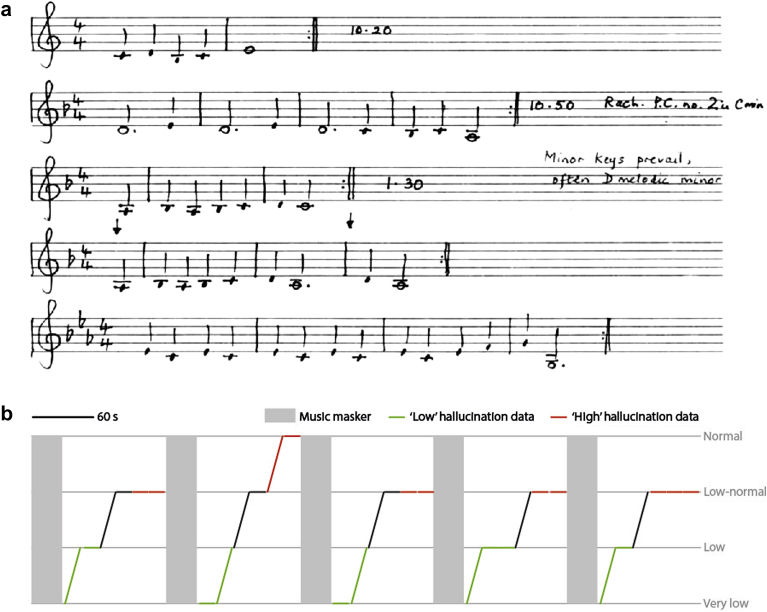
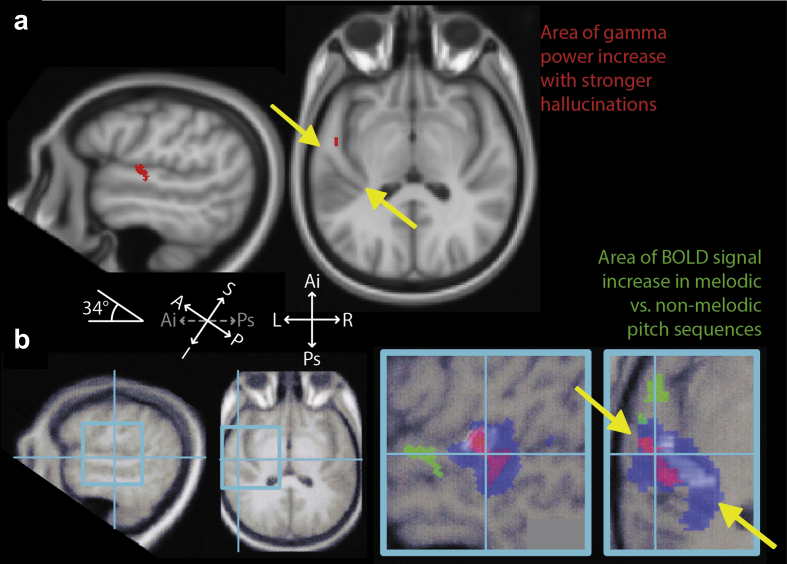
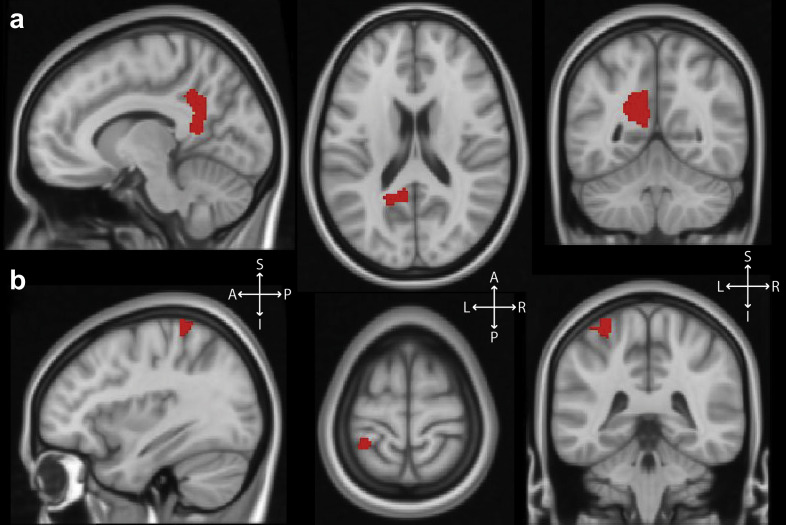
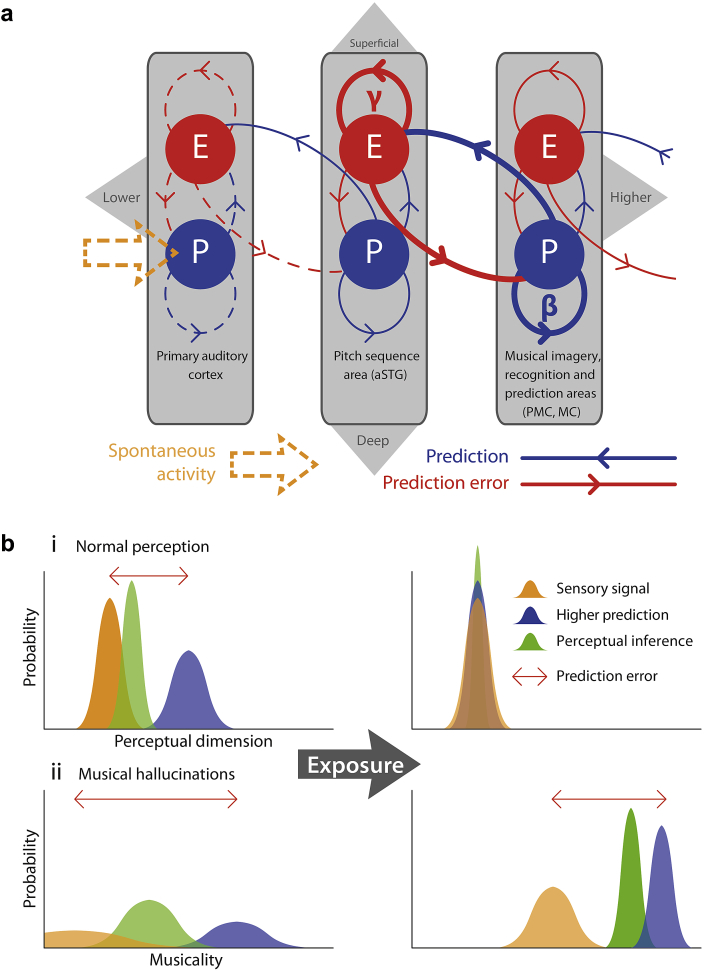
The physiological basis for musical hallucinations (MH) is not understood. One obstacle to understanding has been the lack of a method to manipulate the intensity of hallucination during the course of experiment. Residual inhibition, transient suppression of a phantom percept after the offset of a masking stimulus, has been used in the study of tinnitus. We report here a human subject whose MH were residually inhibited by short periods of music. Magnetoencephalography (MEG) allowed us to examine variation in the underlying oscillatory brain activity in different states. Source-space analysis capable of single-subject inference defined left-lateralised power increases, associated with stronger hallucinations, in the gamma band in left anterior superior temporal gyrus, and in the beta band in motor cortex and posteromedial cortex. The data indicate that these areas form a crucial network in the generation of MH, and are consistent with a model in which MH are generated by persistent reciprocal communication in a predictive coding hierarchy.
Keywords: Auditory cortex; Beta oscillations; Gamma oscillations; Magnetoencephalography; Musical hallucinations; Predictive coding.
Copyright © 2013 The Authors. Published by Elsevier Ltd.. All rights reserved.
Figures
References
-
- Arnal L.H., Wyart V., Giraud A.-L. Transitions in neural oscillations reflect prediction errors generated in audiovisual speech. Nature Neuroscience. 2011;14:797–801. - PubMed
-
- Bailes F. The prevalence and nature of imagined music in the everyday lives of music students. Psychology of Music. 2007;35:555–570.
-
- Beaman C.P., Williams T.I. Earworms (stuck song syndrome): towards a natural history of intrusive thoughts. British Journal of Psychology. 2010;101:637–653. - PubMed
Publication types
MeSH terms
Grants and funding
LinkOut - more resources
Full Text Sources
Other Literature Sources
Molecular Biology Databases
