


Respiratory syncytial virus surveillance in the United States, 2007-2012: results from a national surveillance system
- PMID: 24445835
- PMCID: PMC4025589
- DOI: 10.1097/INF.0000000000000257
Respiratory syncytial virus surveillance in the United States, 2007-2012: results from a national surveillance system
Abstract
Background: Annual respiratory syncytial virus (RSV) outbreaks throughout the US exhibit variable patterns in onset, peak month of activity and duration of season. RSVAlert, a US surveillance system, collects and characterizes RSV test data at national, regional, state and local levels.
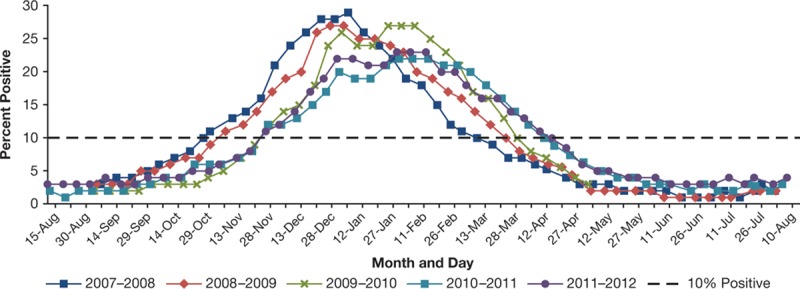
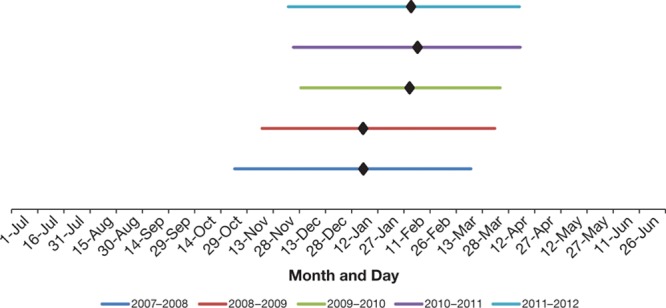
Methods: RSV test data from 296 to 666 laboratories from 50 states, the District of Columbia and Puerto Rico (as of 2010) were collected during the 2007-2008 to 2011-2012 RSV seasons. Data were collected in early August/September to the following August/September each season. Participating laboratories provided the total number and types of RSV tests performed each week and test results. RSV season onset and offset were defined as the first and last, respectively, of 2 consecutive weeks during which the mean percentage of specimens testing positive for RSV was ≥10%.
Results: Nationally, the RSV season onset occurred in October/November of each year with offset occurring in March/April of the following year. The RSV season averaged 20 weeks and typically occurred earliest in the South and latest in the West. The onset, offset and duration varied considerably within the U.S. Department of Health and Human Services regions. RSV activity in Puerto Rico was elevated throughout the 2-year period studied. Median onset in core-based statistical areas ranged from 2 weeks earlier to 5 weeks later than those in their corresponding states.
Conclusions: Substantial variability existed in the timing of RSV activity at all geographic strata analyzed. RSV actively circulated (ie, ≥10%) in many areas outside the traditionally defined RSV epidemic period of November to March.
Conflict of interest statement
RSVAlert is funded under a contract with MedImmune and managed by IMS Health. This study was sponsored by MedImmune. M.L.B., V.R.K. and K.M.R.-S. are employees of MedImmune. C.B.M. and B.S. are employees of IMS Health. L.E. was an employee of IMS Health at the time of data collection and analysis.
Figures


References
-
- Boyce TG, Mellen BG, Mitchel EF, Jr, et al. Rates of hospitalization for respiratory syncytial virus infection among children in Medicaid. J Pediatr. 2000;137:865–870. - PubMed
-
- Leader S, Kohlhase K. Respiratory syncytial virus-coded pediatric hospitalizations, 1997 to 1999. Pediatr Infect Dis J. 2002;21:629–632. - PubMed
-
- Shay DK, Holman RC, Newman RD, et al. Bronchiolitis-associated hospitalizations among US children, 1980-1996. JAMA. 1999;282:1440–1446. - PubMed
-
- Sigurs N, Gustafsson PM, Bjarnason R, et al. Severe respiratory syncytial virus bronchiolitis in infancy and asthma and allergy at age 13. Am J Respir Crit Care Med. 2005;171:137–141. - PubMed
Publication types
MeSH terms
LinkOut - more resources
Full Text Sources
Other Literature Sources
Medical
Miscellaneous
