


Population variation in and selection for resistance to pyrethroid-neonicotinoid insecticides in the bed bug
- PMID: 24452337
- PMCID: PMC3899600
- DOI: 10.1038/srep03836
Population variation in and selection for resistance to pyrethroid-neonicotinoid insecticides in the bed bug
Abstract
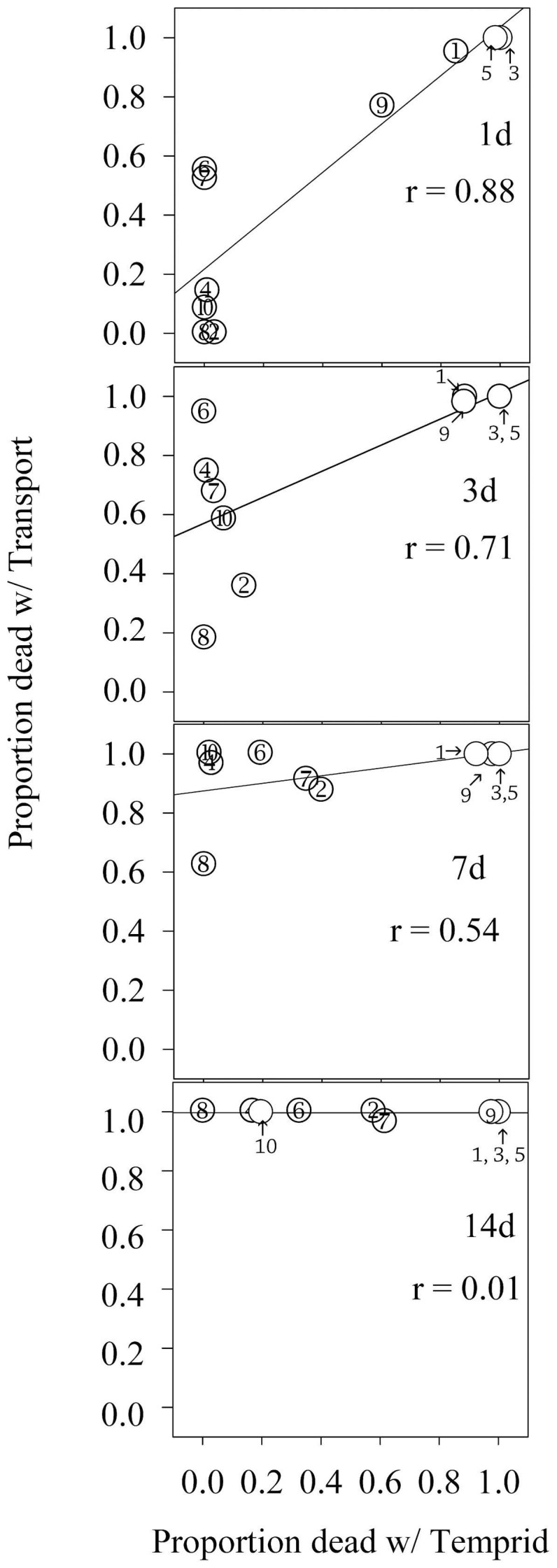
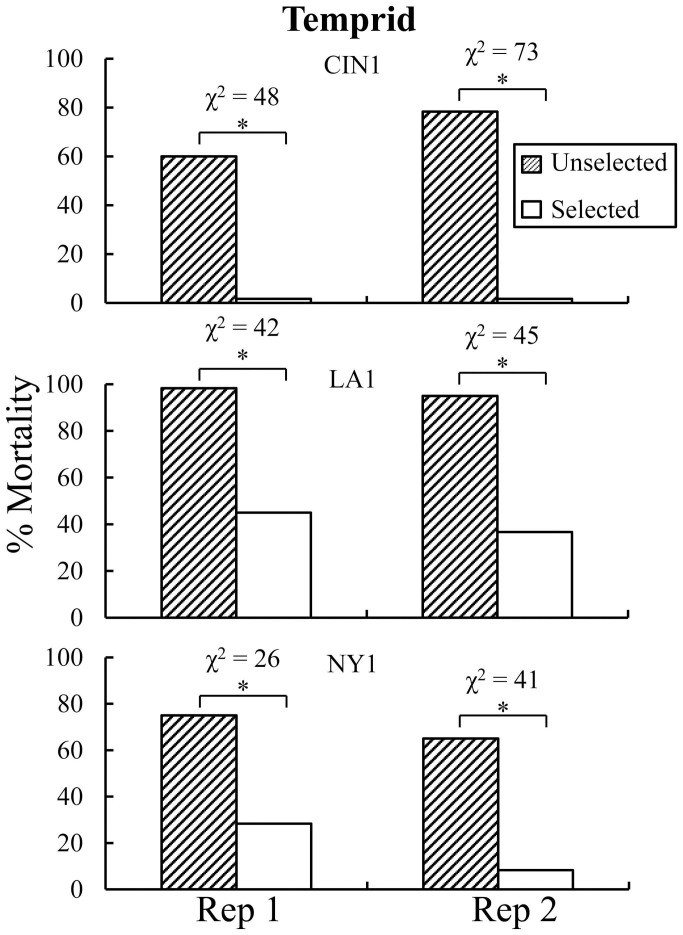
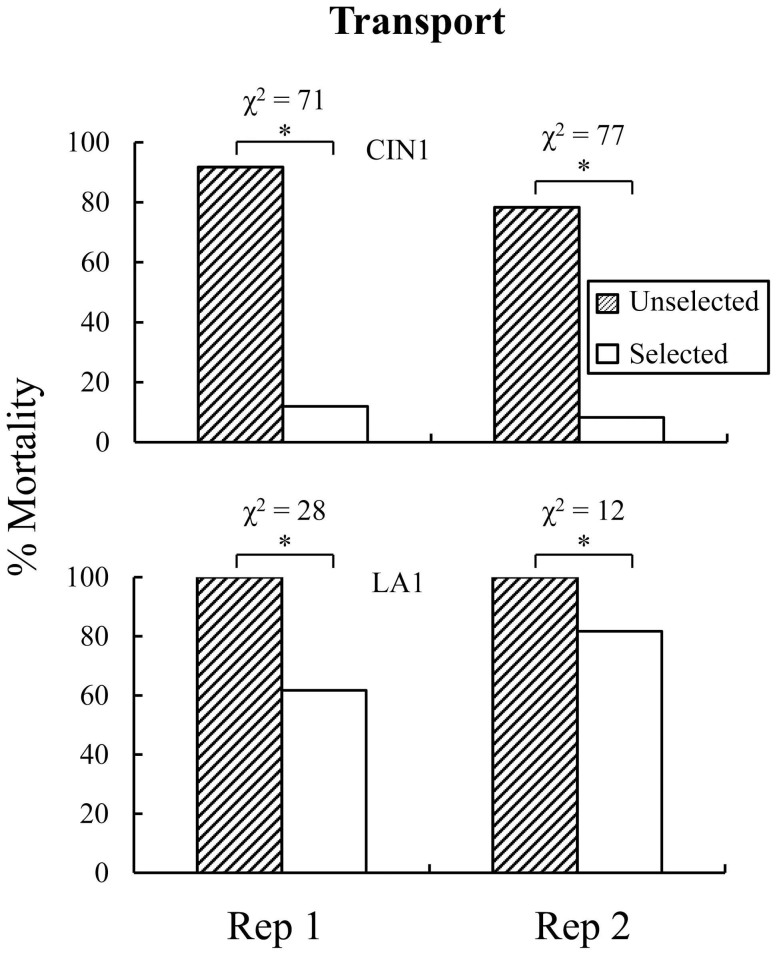
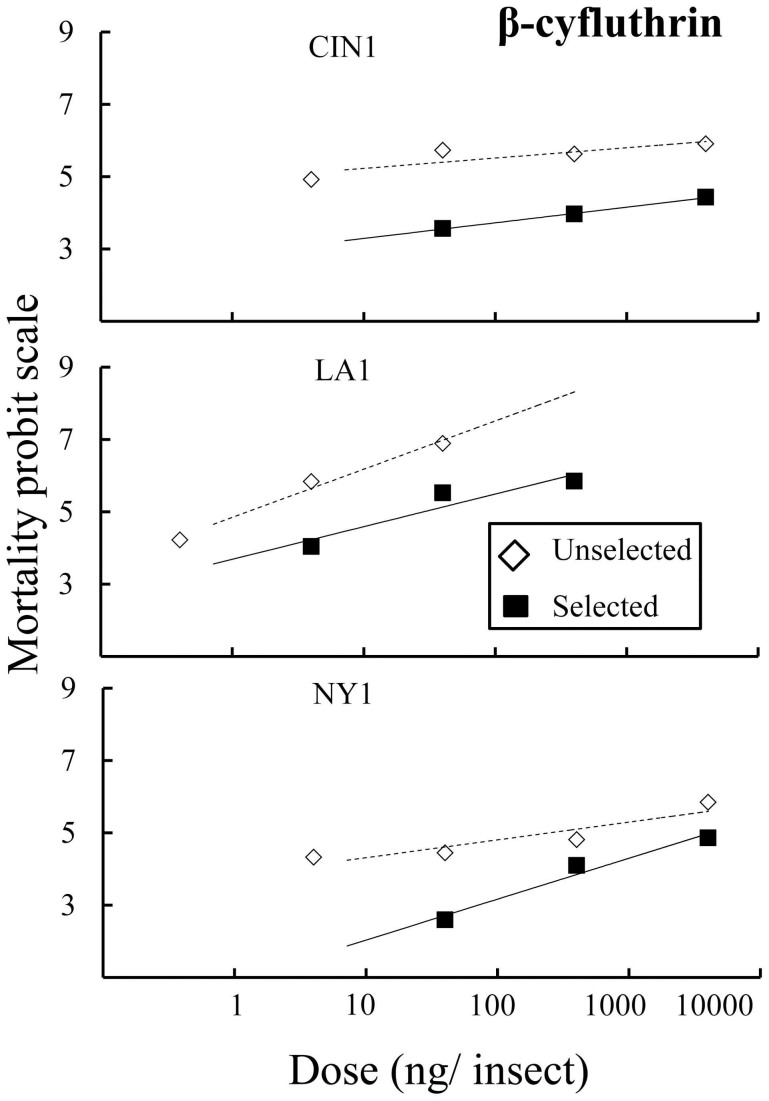
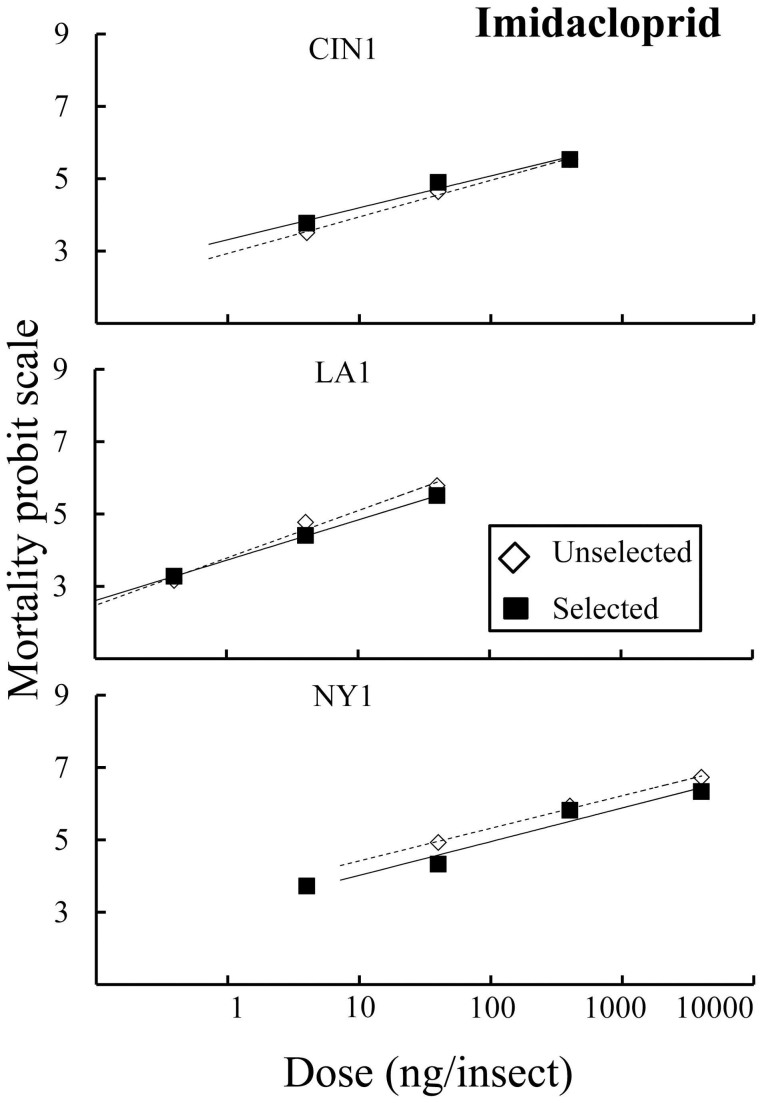
Pyrethroid resistance in bed bugs, Cimex lectularius, has prompted a change to combination products that include a pyrethroid and a neonicotinoid. Ten populations of bed bugs were challenged with two combination products (Temprid SC and Transport GHP). Susceptibility of these populations varied, with the correlated response of the two products indicating cross resistance. We imposed selection on three populations using label rate Temprid, and then reared progeny from unselected and selected strains. All selected strains were significantly less susceptible to Temprid SC than unselected strains. Temprid selected strains were also less susceptible to Transport. The pyrethroid component of Temprid showed a significantly higher LD50 in selected strains, but susceptibility to the neonicotinoid remained unchanged. Taken together these results indicate resistance to combination insecticides is present in field populations at levels that should be of concern, and that short-term selection affecting existing variance in susceptibility can quickly increase resistance.
Figures
References
-
- Doggett S. L. & Russell R. C. The resurgence of bed bugs, Cimex spp. (Hemiptera: Cimicidae) in Australia. Paper presented at Sixth International Conference on Urban Pests, Budapest, Hungary. Hungary: OOK-Press Kft. (2008).
-
- Kilpinen O., Kristensen M. & Jensen K. M. Resistance differences between chlorpyrifos and synthetic pyrethroids in Cimex lectularius population from Denmark. Parasitol. Res. 109, 1461–1464 (2011). - PubMed
-
- Mumcuoglu K. Y. & Shalom U. Questionnaire survey of common bedbug (Cimex lectularius) infestations of Israel. Israel J. Entomol. 40, 1–10 (2010).
-
- Omudu E. A. & Kuse C. N. Bedbug infestation and its control practices in Gbajimba: a rural settlement in Benue state, Nigeria. J. Vector Borne Dis. 47, 222–227 (2010). - PubMed
-
- Potter M. F., Rosenberg B. & Henriksen M. Bugs without borders: Defining the global bed bug resurgence. Pest World. Sept./Oct., 8–20 (2010).
Publication types
MeSH terms
Substances
LinkOut - more resources
Full Text Sources
Other Literature Sources
Medical
