


Suboptimal use of neural information in a mammalian auditory system
- PMID: 24453321
- PMCID: PMC3898290
- DOI: 10.1523/JNEUROSCI.3031-13.2014
Suboptimal use of neural information in a mammalian auditory system
Abstract
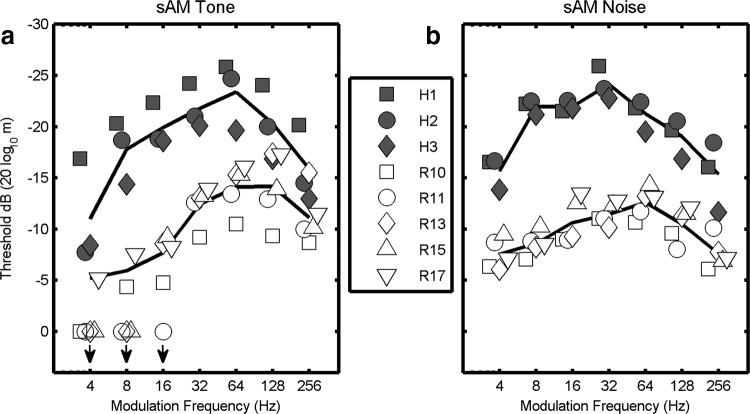
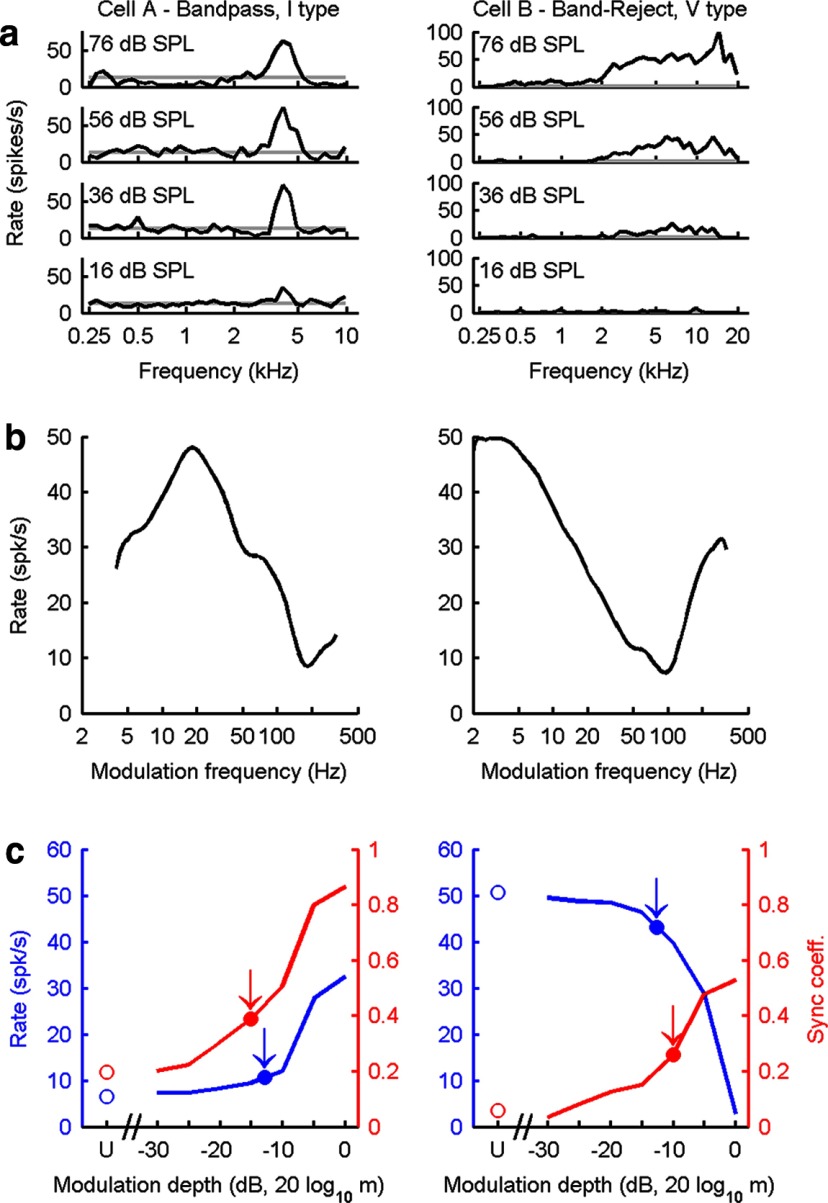
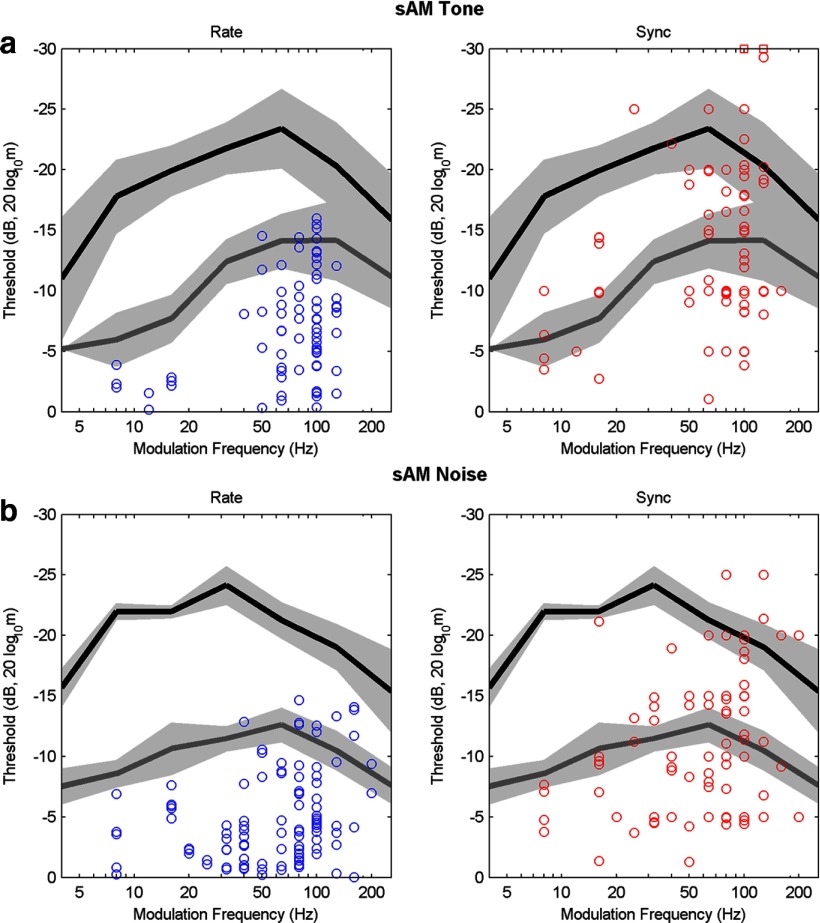
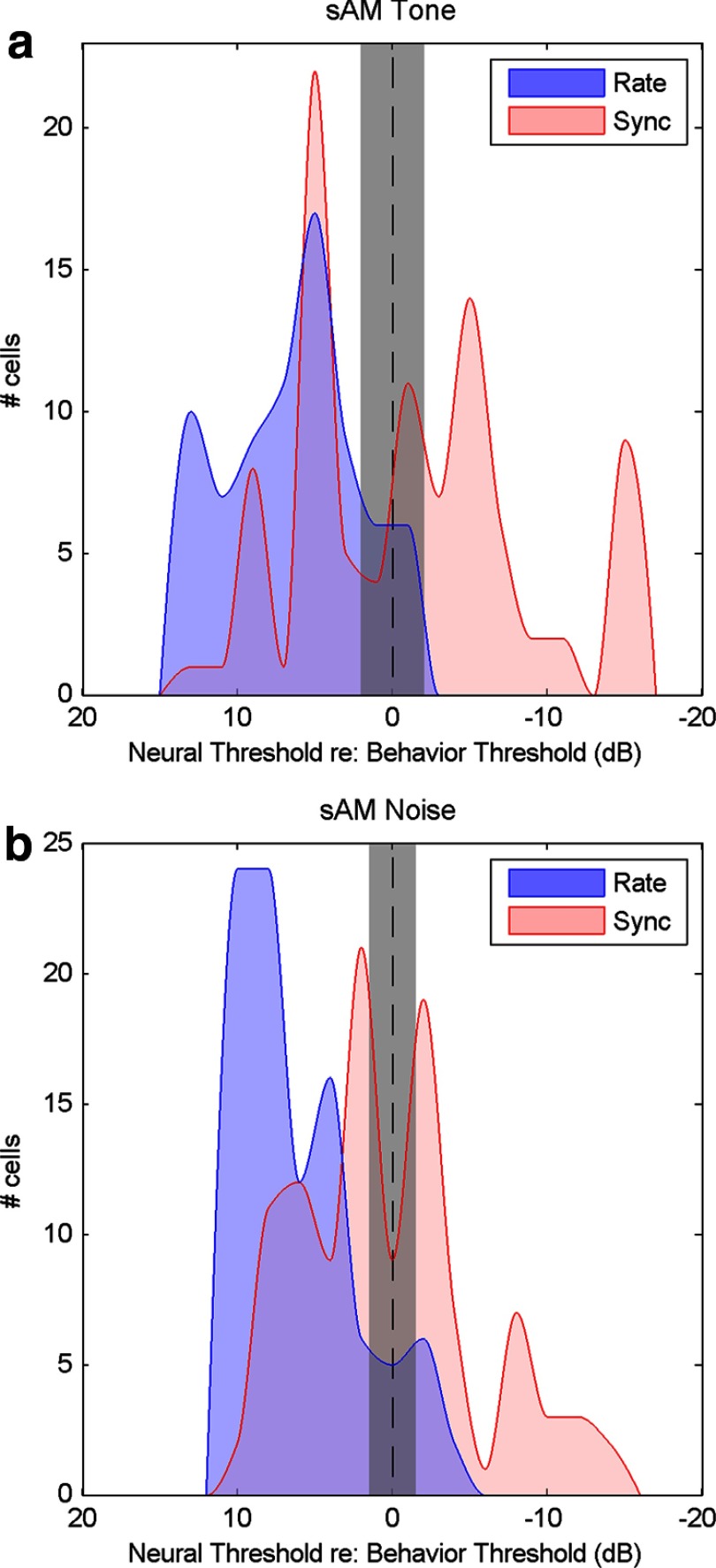
Establishing neural determinants of psychophysical performance requires both behavioral and neurophysiological metrics amenable to correlative analyses. It is often assumed that organisms use neural information optimally, such that any information available in a neural code that could improve behavioral performance is used. Studies have shown that detection of amplitude-modulated (AM) auditory tones by humans is correlated to neural synchrony thresholds, as recorded in rabbit at the level of the inferior colliculus, the first level of the ascending auditory pathway where neurons are tuned to AM stimuli. Behavioral thresholds in rabbit, however, are ∼10 dB higher (i.e., 3 times less sensitive) than in humans, and are better correlated to rate-based than temporal coding schemes in the auditory midbrain. The behavioral and physiological results shown here illustrate an unexpected, suboptimal utilization of available neural information that could provide new insights into the mechanisms that link neuronal function to behavior.
Figures
References
-
- Attias H, Schreiner CE. Advances in neural information processing systems. Vol 9. Cambridge: MIT; 1997. Low-order temporal statistics of natural sounds; pp. 27–33.
Publication types
MeSH terms
Grants and funding
LinkOut - more resources
Full Text Sources
Other Literature Sources
Miscellaneous
