


Reducing agents decrease the oxidative burst and improve clinical outcomes in COPD patients: a randomised controlled trial on the effects of sulphurous thermal water inhalation
- PMID: 24453924
- PMCID: PMC3884964
- DOI: 10.1155/2013/927835
Reducing agents decrease the oxidative burst and improve clinical outcomes in COPD patients: a randomised controlled trial on the effects of sulphurous thermal water inhalation
Abstract
Background: Inhalation of thermal water with antioxidant properties is empirically used for COPD.
Aims: To evaluate the effects of sulphurous thermal water (reducing agents) on airway oxidant stress and clinical outcomes in COPD.
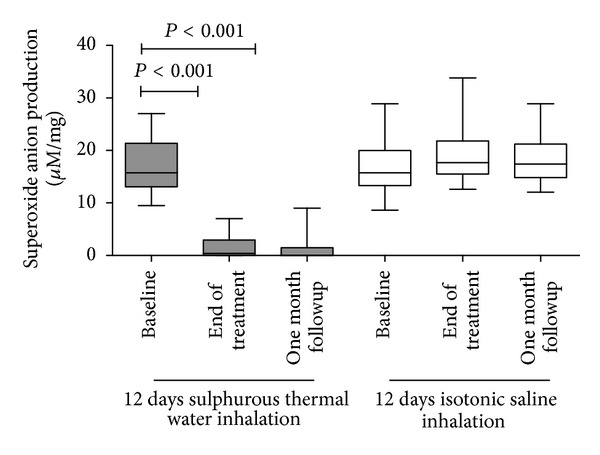
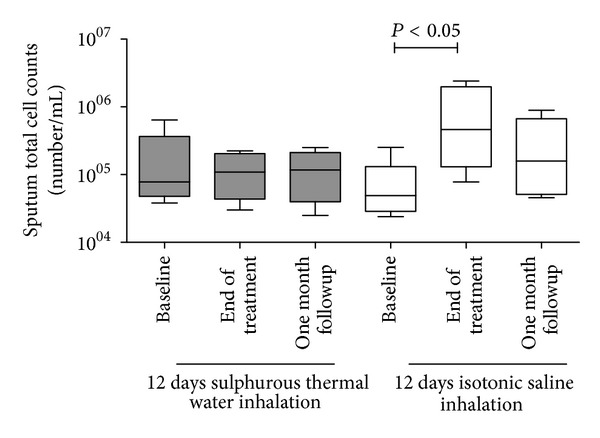
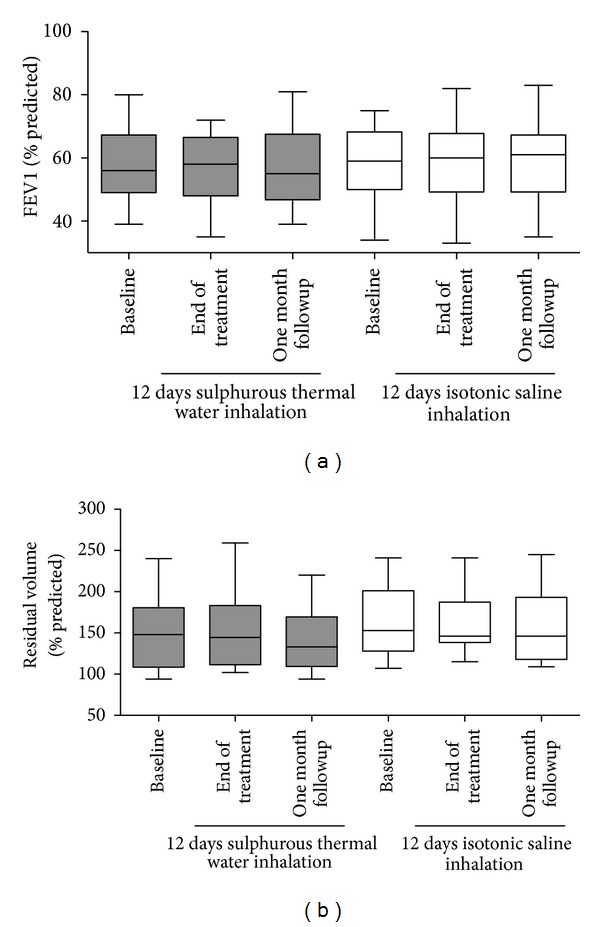
Methods: Forty moderate-to-severe COPD patients were randomly assigned to receive 12-day inhalation with sulphurous thermal water or isotonic saline. Patients were assessed for superoxide anion (O2 (-)) production in the exhaled breath condensate and clinical outcomes at recruitment, the day after the conclusion of the 12-day inhalation treatment, and one month after the end of the inhalation treatment.
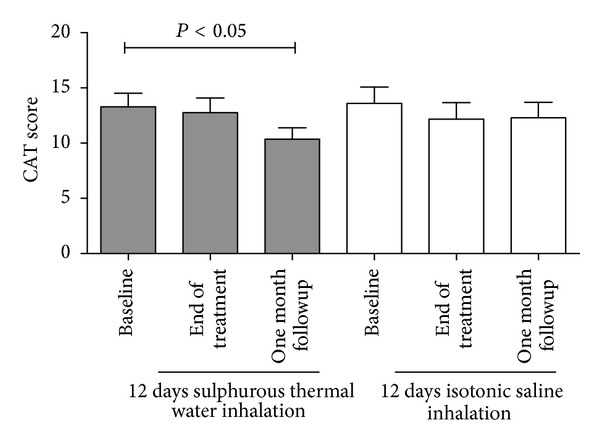
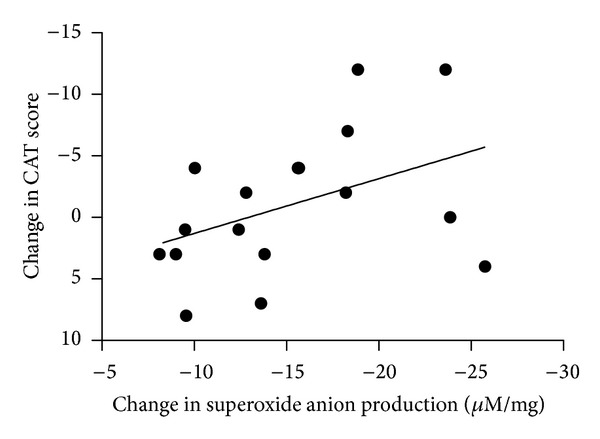
Results: Inhalation of reducing agents resulted in a significant reduction of O2 (-) production in exhaled breath condensate of COPD patients at the end of the inhalatory treatment and at followup compared to baseline. A significant improvement in the COPD assessment test (CAT) questionnaire was shown one month after the end of the inhalatory treatment only in patients receiving sulphurous water.
Conclusion: Thermal water inhalation produced an in vivo antioxidant effect and improvement in health status in COPD patients. Larger studies are required in order to evaluate whether inhalation of thermal water is able to modify relevant clinical outcomes of the disease (the study was registered at clinicaltrial.gov-identifier: NCT01664767).
Figures
References
-
- Global Initiative for Chronic Obstructive Lung Disease (GOLD) Global Strategy for the Diagnosis, Management and Prevention of Chronic Obstructive Pulmonary Disease: NHLBI/WHO Workshop Report. Bethesda, Md, USA: National Institutes of Health, National Heart, Lung and Blood Institute; 2001. (Publication no. 2701:1-108). http://www.goldcopd.org/
-
- Psarras S, Caramori G, Contoli M, Papadopoulos N, Papi A. Oxidants in asthma and in chronic obstructive pulmonary disease (COPD) Current Pharmaceutical Design. 2005;11(16):2053–2062. - PubMed
-
- Barnes PJ. Chronic obstructive pulmonary disease. The New England Journal of Medicine. 2000;343(4):269–280. - PubMed
-
- Hancock JT, Desikan R, Neill SJ. Role of reactive oxygen species in cell signalling pathways. Biochemical Society Transactions. 2001;29(2):345–350. - PubMed
-
- Faux SP, Tai T, Thorne D, Xu Y, Breheny D, Gaca M. The role of oxidative stress in the biological responses of lung epithelial cells to cigarette smoke. Biomarkers. 2009;14(supplement 1):90–96. - PubMed
Publication types
MeSH terms
Substances
Associated data
LinkOut - more resources
Full Text Sources
Other Literature Sources
Medical
Miscellaneous
