


Bioinformatics analysis of bacterial annexins--putative ancestral relatives of eukaryotic annexins
- PMID: 24454864
- PMCID: PMC3894181
- DOI: 10.1371/journal.pone.0085428
Bioinformatics analysis of bacterial annexins--putative ancestral relatives of eukaryotic annexins
Abstract
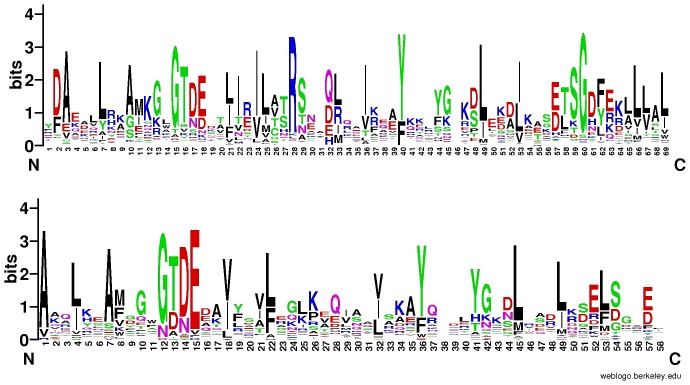
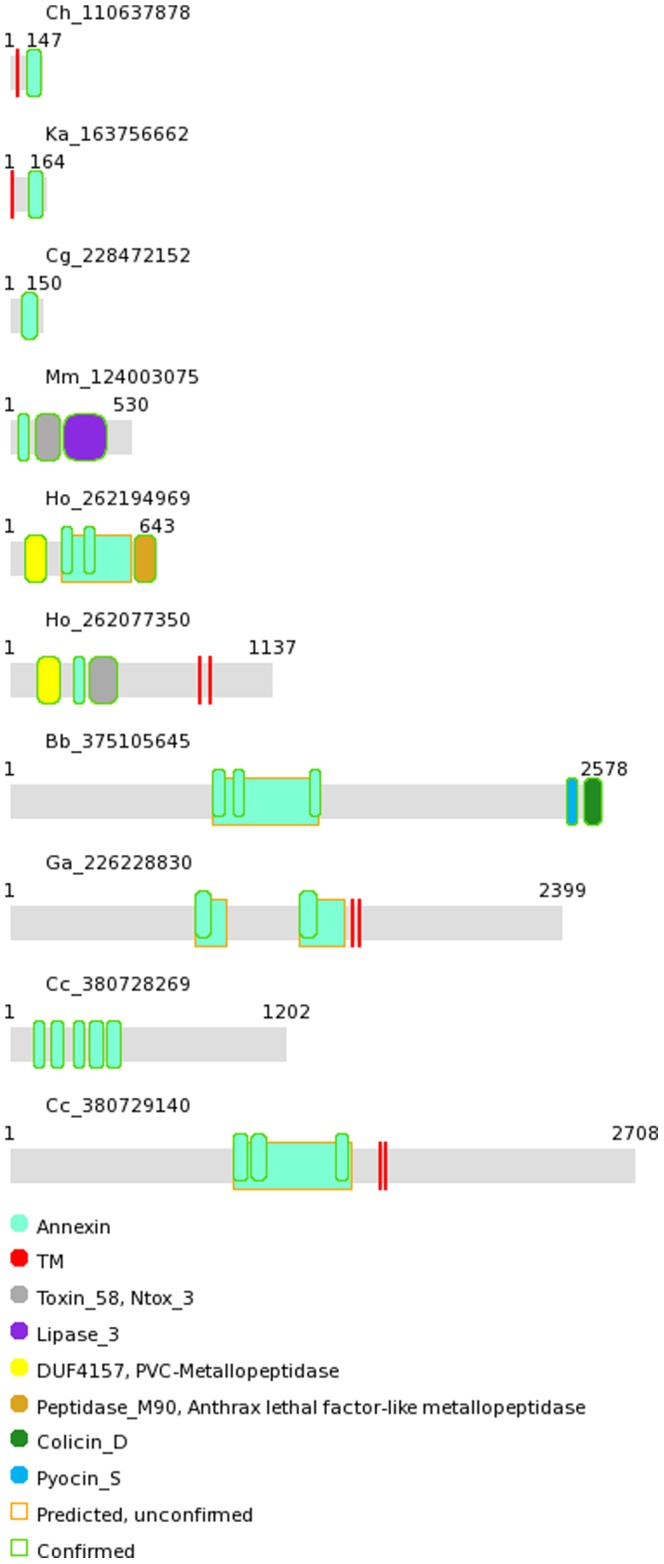
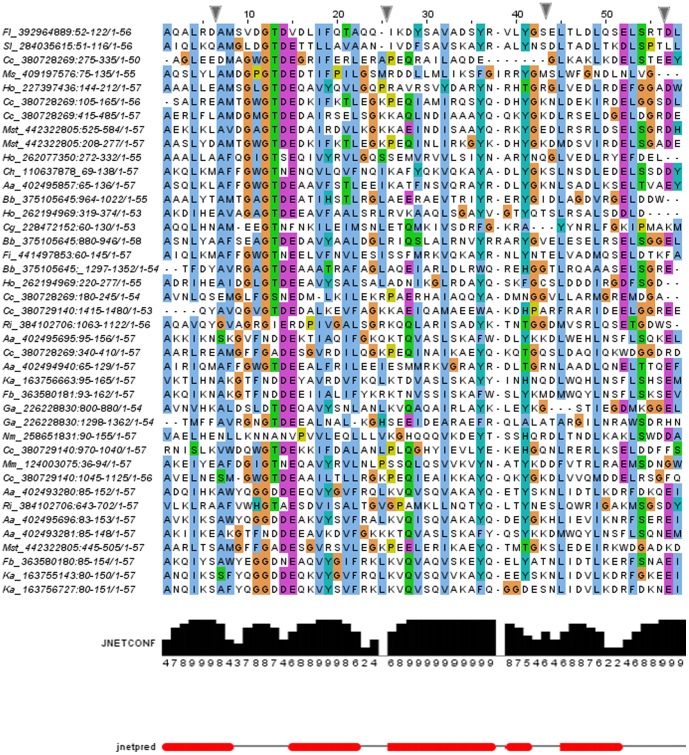
Annexins are Ca(2+)-binding, membrane-interacting proteins, widespread among eukaryotes, consisting usually of four structurally similar repeated domains. It is accepted that vertebrate annexins derive from a double genome duplication event. It has been postulated that a single domain annexin, if found, might represent a molecule related to the hypothetical ancestral annexin. The recent discovery of a single-domain annexin in a bacterium, Cytophaga hutchinsonii, apparently confirmed this hypothesis. Here, we present a more complex picture. Using remote sequence similarity detection tools, a survey of bacterial genomes was performed in search of annexin-like proteins. In total, we identified about thirty annexin homologues, including single-domain and multi-domain annexins, in seventeen bacterial species. The thorough search yielded, besides the known annexin homologue from C. hutchinsonii, homologues from the Bacteroidetes/Chlorobi phylum, from Gemmatimonadetes, from beta- and delta-Proteobacteria, and from Actinobacteria. The sequences of bacterial annexins exhibited remote but statistically significant similarity to sequence profiles built of the eukaryotic ones. Some bacterial annexins are equipped with additional, different domains, for example those characteristic for toxins. The variation in bacterial annexin sequences, much wider than that observed in eukaryotes, and different domain architectures suggest that annexins found in bacteria may actually descend from an ancestral bacterial annexin, from which eukaryotic annexins also originate. The hypothesis of an ancient origin of bacterial annexins has to be reconciled with the fact that remarkably few bacterial strains possess annexin genes compared to the thousands of known bacterial genomes and with the patchy, anomalous phylogenetic distribution of bacterial annexins. Thus, a massive annexin gene loss in several bacterial lineages or very divergent evolution would appear a likely explanation. Alternative evolutionary scenarios, involving horizontal gene transfer between bacteria and protozoan eukaryotes, in either direction, appear much less likely. Altogether, current evidence does not allow unequivocal judgement as to the origin of bacterial annexins.
Conflict of interest statement
Figures
References
-
- Gerke V, Moss SE (2002) Annexins: from structure to function. Physiol Rev 82(2): 331–371. - PubMed
-
- Barton GJ, Newman RH, Freemont PS, Crumpton MJ (1991) Amino acid sequence analysis of the annexin super-gene family of proteins. Eur J Biochem 198(3): 749–760. - PubMed
-
- Morgan RO, Fernandez MP (1995) Molecular phylogeny of annexins and identification of a primitive homologue in Giardia lamblia. Mol Biol Evol 12(6): 967–979. - PubMed
-
- Swairjo MA, Seaton BA (1994) Annexin structure and membrane interactions: a molecular perspective. Annu Rev Biophys Biomol Struct 23: 193–213. - PubMed
Publication types
MeSH terms
Substances
LinkOut - more resources
Full Text Sources
Other Literature Sources
Molecular Biology Databases
Miscellaneous
