


DNA barcoding for the identification of sand fly species (Diptera, Psychodidae, Phlebotominae) in Colombia
- PMID: 24454877
- PMCID: PMC3893204
- DOI: 10.1371/journal.pone.0085496
DNA barcoding for the identification of sand fly species (Diptera, Psychodidae, Phlebotominae) in Colombia
Abstract
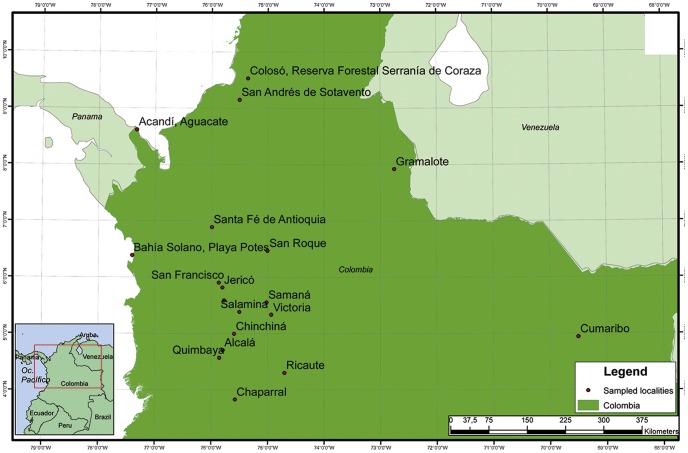
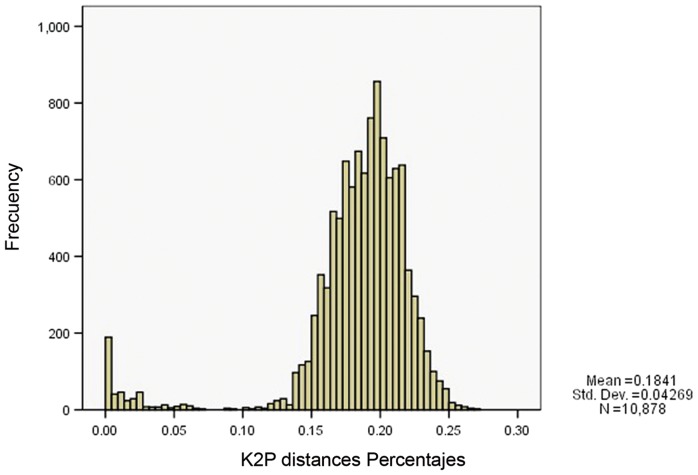
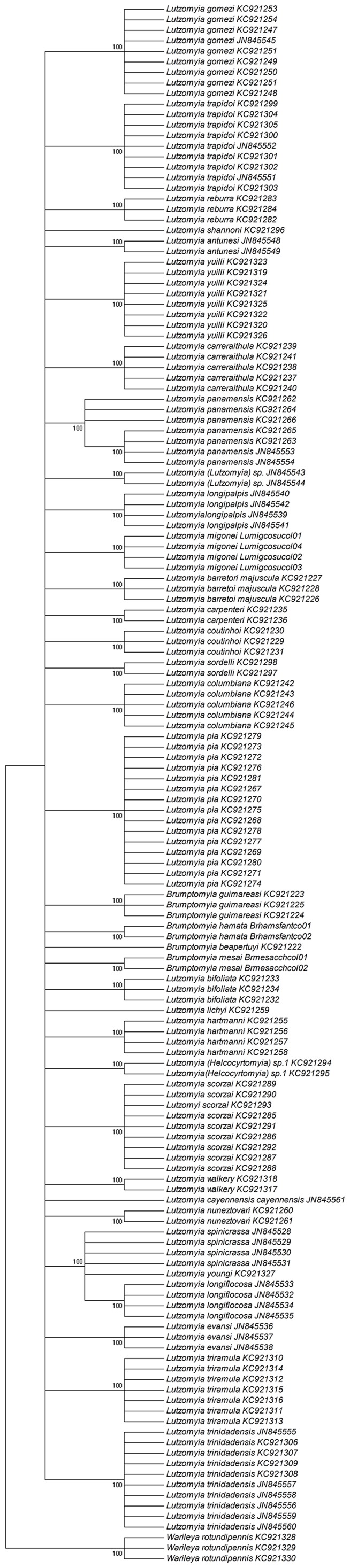
Sand flies include a group of insects that are of medical importance and that vary in geographic distribution, ecology, and pathogen transmission. Approximately 163 species of sand flies have been reported in Colombia. Surveillance of the presence of sand fly species and the actualization of species distribution are important for predicting risks for and monitoring the expansion of diseases which sand flies can transmit. Currently, the identification of phlebotomine sand flies is based on morphological characters. However, morphological identification requires considerable skills and taxonomic expertise. In addition, significant morphological similarity between some species, especially among females, may cause difficulties during the identification process. DNA-based approaches have become increasingly useful and promising tools for estimating sand fly diversity and for ensuring the rapid and accurate identification of species. A partial sequence of the mitochondrial cytochrome oxidase gene subunit I (COI) is currently being used to differentiate species in different animal taxa, including insects, and it is referred as a barcoding sequence. The present study explored the utility of the DNA barcode approach for the identification of phlebotomine sand flies in Colombia. We sequenced 700 bp of the COI gene from 36 species collected from different geographic localities. The COI barcode sequence divergence within a single species was <2% in most cases, whereas this divergence ranged from 9% to 26.6% among different species. These results indicated that the barcoding gene correctly discriminated among the previously morphologically identified species with an efficacy of nearly 100%. Analyses of the generated sequences indicated that the observed species groupings were consistent with the morphological identifications. In conclusion, the barcoding gene was useful for species discrimination in sand flies from Colombia.
Conflict of interest statement
Figures
References
-
- Young DG, Duncan MA (1994) Guide to the identification and geographic distribution of Lutzomyia sand flies in Mexico, the West Indies, Central and South America (Diptera: Psychodidae). Gainesville, FL: Associated Publishers. 881 p.
-
- Galati EAB (2010) Phlebotominae (Diptera, Psychodidae) Classificação, Morfologia, Terminologia e Identificação de Adultos [Phlebotominae (Diptera, Psychodidae) classification, morphology, terminology and adult identification]. Apostila Disciplina HEP 5752 Bioecologia e Identificação de Phlebotominae Vol. I. São Paulo: Brasil. Press, Departamento de Epidemiologia Faculdade de Saúde Pública Universidade de São Paulo.126 p.
-
- Killick-Kendrick R (1999) The biology and control of phlebotomine sand flies. Clin Dermatol 17: 279–289. - PubMed
-
- Munstermann LE (2004) Phlebotomine sand flies, the Psychodidae. In: Marquardt WC, Black WC, Freier JE, Hagedorn HH, Hemingway J, Higgs S, James AA, Kondratieff B, Moore CG, editors. Biology of disease vectors, 2nd ed. San Diego: Elsevier. pp. 141–151.
Publication types
MeSH terms
Substances
LinkOut - more resources
Full Text Sources
Other Literature Sources
