. 2014 Jan 16;9(1):e86297.
doi: 10.1371/journal.pone.0086297. eCollection 2014.

A co-culture model of the developing small intestine offers new insight in the early immunomodulation of enterocytes and macrophages by Lactobacillus spp. through STAT1 and NF-kB p65 translocation

Affiliations

A co-culture model of the developing small intestine offers new insight in the early immunomodulation of enterocytes and macrophages by Lactobacillus spp. through STAT1 and NF-kB p65 translocation

Martin Trapecar et al. PLoS One. .

Abstract

The early establishment of a complete microbiome has been shown to play an integral part in the development and maintenance of an intact intestine and its immune system, although much remains unknown about the specific mechanisms of immune modulation in newborns. In our study we show in a co-culture model of the undeveloped small intestine that members of Lactobacillus spp. influence STAT1 and NF-kB p65 nuclear translocation in both intestinal epithelial cells as well as underlying macrophages. Moreover, by using imaging flow cytometry we were able to monitor each individual cell and create a framework of the percentage of cells in which translocation occurred in challenged versus control cell populations. We also observed a significant difference in baseline translocation in intestinal cells when cultured alone versus those in a co-culture model, underpinning the importance of 3D models over monolayer set-ups in epithelial in vitro research. In conclusion, our work offers new insights into the potential routes by which the commensal microbiome primes the early immune system to fight pathogens, and shows how strain-specific these mechanisms really are.


Conflict of interest statement

Competing Interests: The authors have declared that no competing interests exist.

Figures

Figure 1
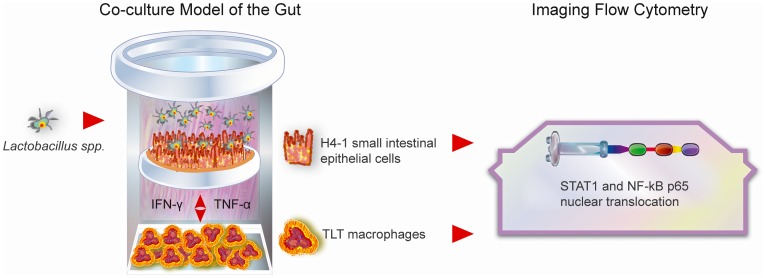
Figure 1. Graphic outline of the study.
By using imaging multicolor flow cytometry we have monitored the translocation of NF-kB p65 and STAT1 in untransformed polarized human neonatal small intestinal epithelial cells H4-1, challenged with different Lactobacillus spp. strains, and in macrophage TLT cells that have been simultaneously co-cultured in a reductionist human 3D model of the immature gut.
Figure 2
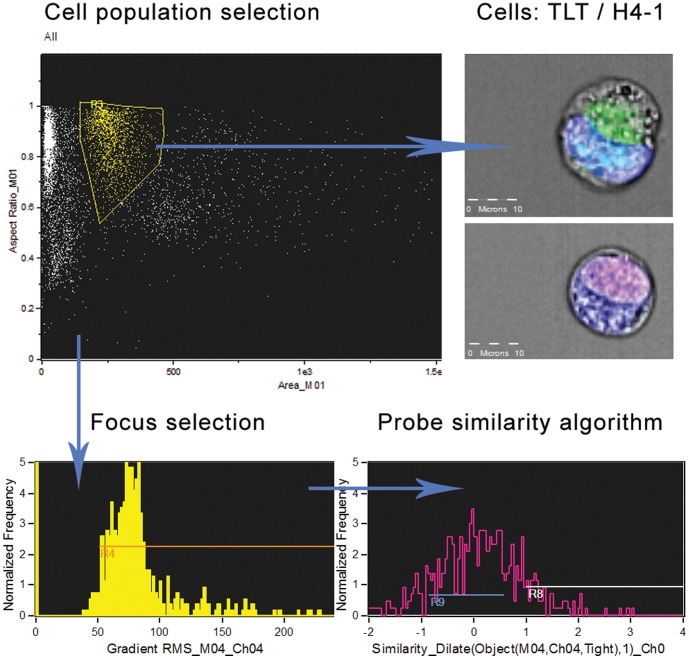
Figure 2. Analysis of cell populations with imaging flow cytometry.
Cells were stained with Cy3-labeled NF-kB p65 as well as 7AAD and Alexa Fluor 647-labeled STAT1. Images were acquired using the ImageStreamX multispectral imaging flow cytometer, collecting 5000 events per sample at 40× magnification and analyzed using IDEAS image-analysis software. Gating on bivariate plot of aspect ratio versus cell area was first used to isolate a population of single cells. Cells within the focal plane were further selected using a two-dimensional plot of image contrast versus root-mean-squared (rms) gradient. The software compared the location of probes (NF-kB, STAT1) with the location of the nucleus in each acquired cell, running a probe similarity algorithm.
Figure 3
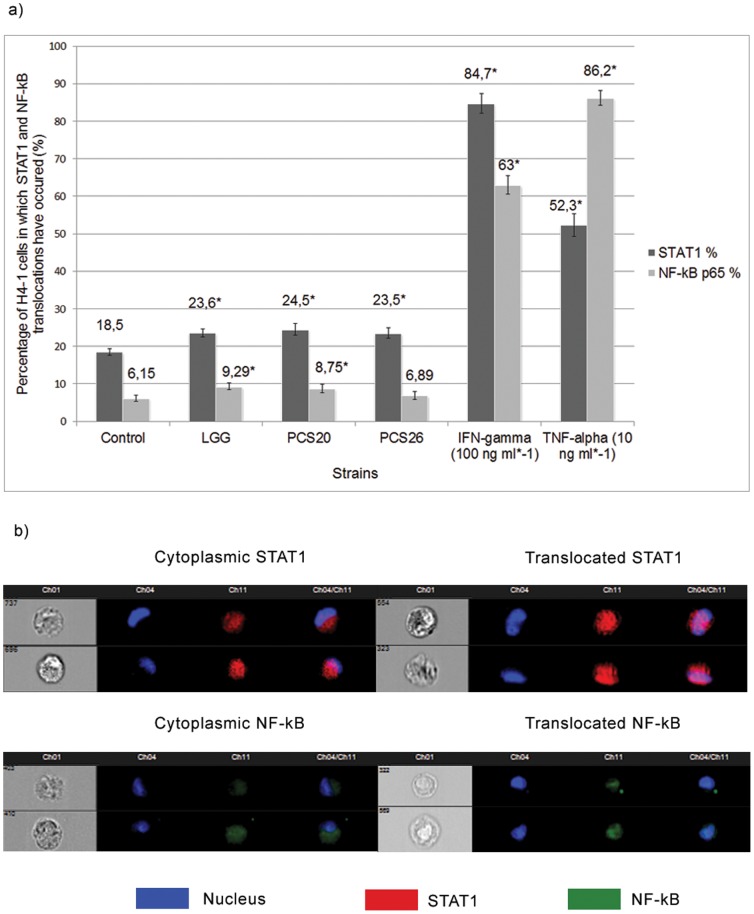
Figure 3. NF-kB p65 and STAT1 translocations in small intestinal epithelial cells.
a) Percentage of H4-1 small intestinal epithelial cells in co-culture with TLT macrophages in which translocation of STAT1 and NF-kB occurred after treatment with different bacterial strains and positive controls. b) Acquired images of H4-1 cells with cytoplasmic or translocating probes. * indicates significant differences from control cells (p<0.05).
Figure 4
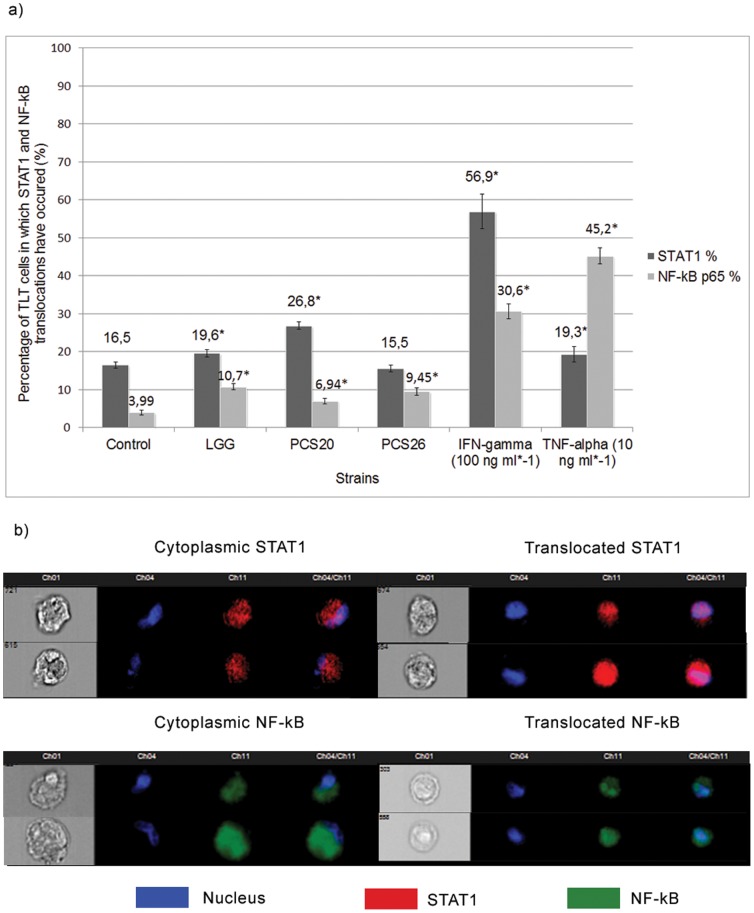
Figure 4. NF-kB p65 and STAT1 translocations in TLT macrophages.
a) Percentage of TLT macrophage cells in basolateral co-culture with H4-1 cells in which translocation of STAT1 and NF-kB occurred after treatment with different bacterial strains and positive controls. b) Acquired images of H4-1 cells with cytoplasmic or translocating probes. * indicates significant differences from control cells (p<0.05).
Figure 5
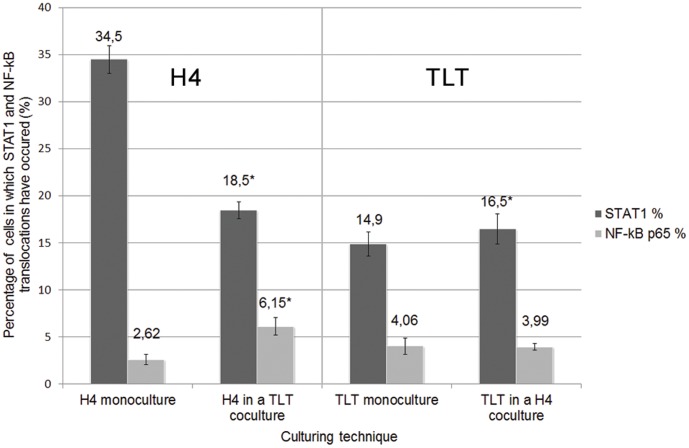
Figure 5. Baseline translocations in regard to the culturing technique.
Percentages of untreated H4-1 and TLT cells in which baseline STAT1 and NF-kB cytoplasmic shifts have been observed in regard to the culturing technique. * indicates significant differences between models (p<0.05).

References

    1. Patel RM, Lin PW (2010) Developmental biology of gut-probiotic interaction. Gut Microbes 1: 186–195. - PMC - PubMed
    1. Curtis MM, Sperandio V (2011) A complex relationship: the interaction among symbiotic microbes, invading pathogens, and their mammalian host. Mucosal Immunol 4: 133–138. - PMC - PubMed
    1. Boirivant M, Amendola A, Butera A (2008) Intestinal microflora and immunoregulation. Mucosal Immunol 1 Suppl 1S47–49. - PubMed
    1. Sanz Y, De Palma G (2009) Gut microbiota and probiotics in modulation of epithelium and gut-associated lymphoid tissue function. Int Rev Immunol 28: 397–413. - PubMed
    1. Cross ML, Stevenson LM, Gill HS (2001) Anti-allergy properties of fermented foods: an important immunoregulatory mechanism of lactic acid bacteria? Int Immunopharmacol 1: 891–901. - PubMed