. 2014 Jan 13:3:333.
doi: 10.3389/fonc.2013.00333.

Evidence That GRIN2A Mutations in Melanoma Correlate with Decreased Survival

Affiliations

Evidence That GRIN2A Mutations in Melanoma Correlate with Decreased Survival

Stacey Ann N D'mello et al. Front Oncol. .

Abstract

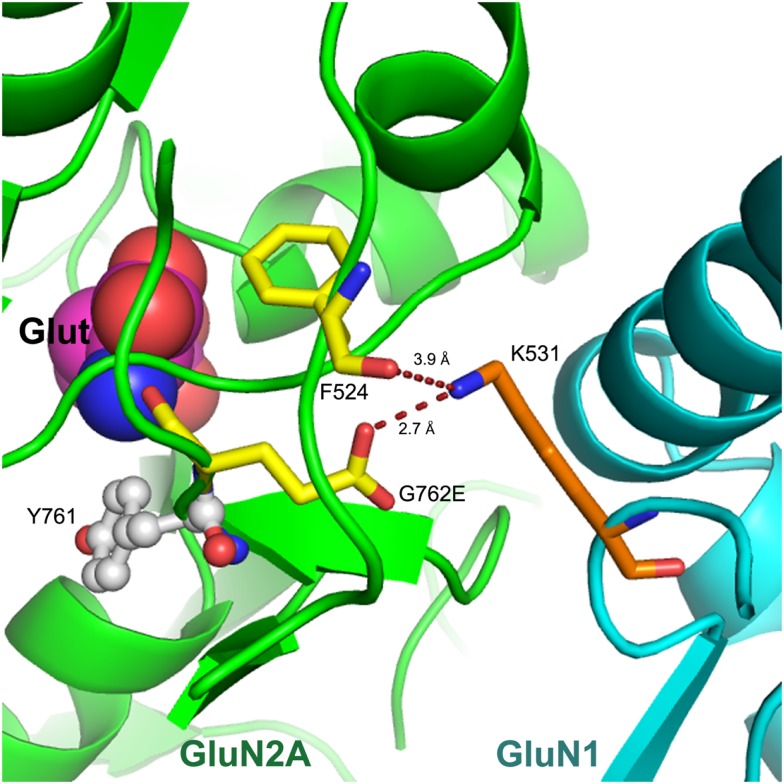
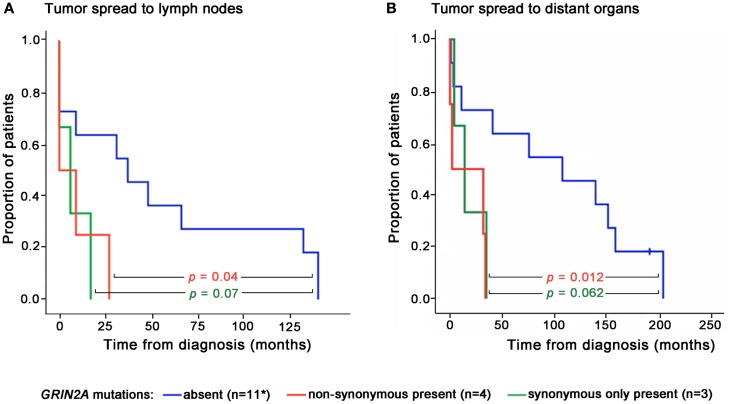
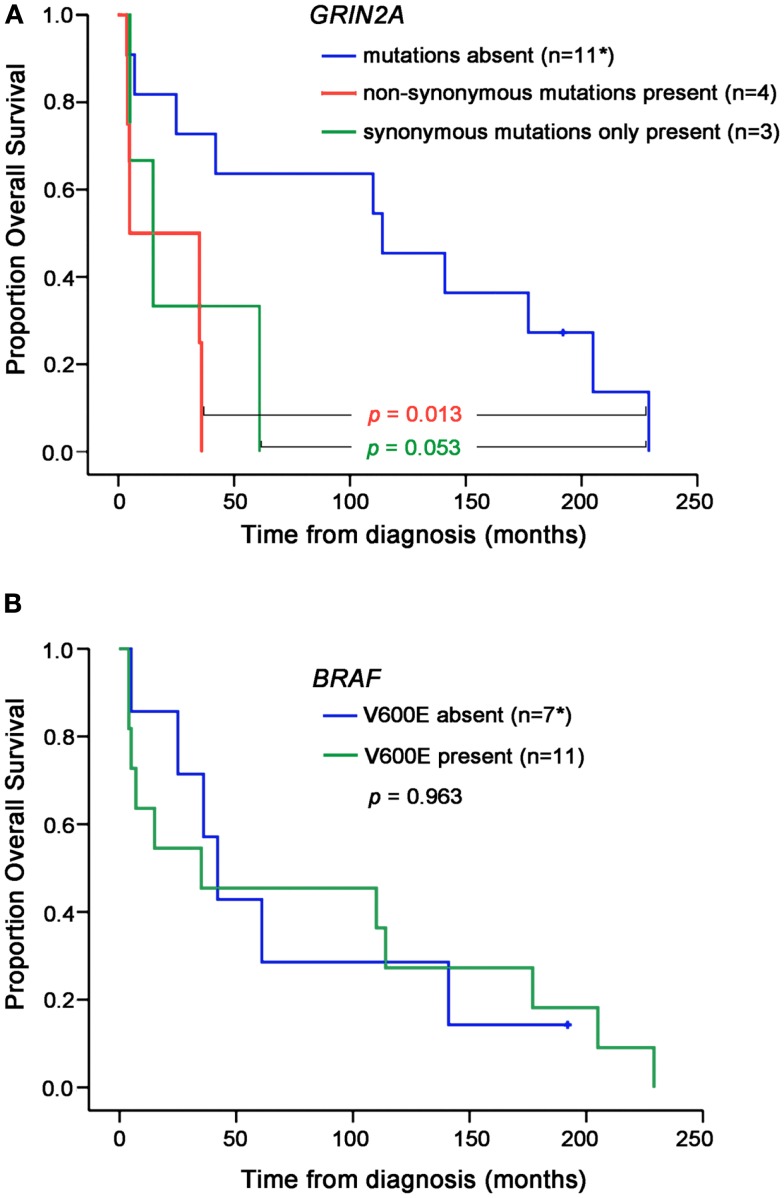
Previous whole-exome sequencing has demonstrated that melanoma tumors harbor mutations in the GRIN2A gene. GRIN2A encodes the regulatory GluN2A subunit of the glutamate-gated N-methyl-d-aspartate receptor (NMDAR), involvement of which in melanoma remains undefined. Here, we sequenced coding exons of GRIN2A in 19 low-passage melanoma cell lines derived from patients with metastatic melanoma. Potential mutation impact was evaluated in silico, including within the GluN2A crystal structure, and clinical correlations were sought. We found that of 19 metastatic melanoma tumors, four (21%) carried five missense mutations in the evolutionarily conserved domains of GRIN2A; two were previously reported. Melanoma cells that carried these mutations were treatment-naïve. Sorting intolerant from tolerant analysis predicted that S349F, G762E, and P1132L would disrupt protein function. When modeled into the crystal structure of GluN2A, G762E was seen to potentially alter GluN1-GluN2A interactions and ligand binding, implying disruption to NMDAR functionality. Patients whose tumors carried non-synonymous GRIN2A mutations had faster disease progression and shorter overall survival (P < 0.05). This was in contrast to the BRAF V600E mutation, found in 58% of tumors but showing no correlation with clinical outcome (P = 0.963). Although numbers of patients in this study are small, and firm conclusions about the association between GRIN2A mutations and poor clinical outcome cannot be drawn, our results highlight the high prevalence of GRIN2A mutations in metastatic melanoma and suggest for the first time that mutated NMDARs impact melanoma progression.

Keywords: GRIN2A; GluN2A; NMDA receptor; NMDAR; glutamate; melanoma; mutation; prognosis.


Figures
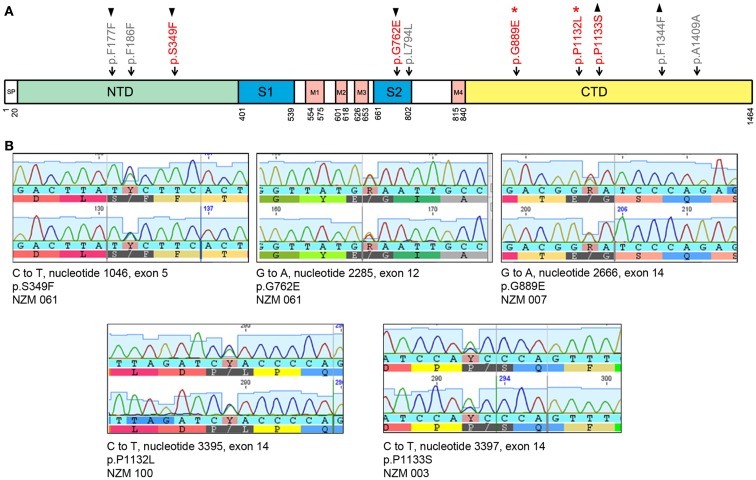
Figure 1
Figure 1
GRIN2A mutations in melanoma cell lines. (A) Schematic of the GluN2A protein together with the non-synonymous (in red) and synonymous (in gray) mutations in GRIN2A. GRIN2A cDNA is 4392 nucleotides long and can be divided into sections encoding evolutionarily conserved domains in the GluN2A protein. The first and last amino acid residues of the SP, S1, S2, and M1–M4 domains are numbered. Symbols ▴ and ▾ mark mutations that coincided in the same tumor samples; *marks mutations reported previously. Abbreviations: SP, signal peptide; NTD, N-terminal domain; S1 and S2 segments form the glutamate-binding domain; M1–M4 transmembrane segments form the ion channel pore; CTD, C-terminal domain. (B) Sanger sequencing output of non-synonymous mutations in GRIN2A. Each panel represents a non-synonymous mutation detected. Nucleotides are labeled below their respective peaks. Corresponding amino acid sequences are indicated.
Figure 2
Figure 2
Model of G762E within the GluN1–GluN2A X-ray crystal structure. The S1S2 loop of GluN2A (in green) is shown interfacing with GluN1 (in cyan). A portion of the GluN2A agonist-binding site is on the left together with bound glutamate (Glut). G762E and F524 residues of GluN2A are 2.7 and 3.9 Å away from K531 in GluN1, respectively; potential new electrostatic interactions are indicated as dashed lines. Nitrogen atoms are in blue, and oxygen in red.
Figure 3
Figure 3
Times of disease progression from diagnosis to lymph node (A) or distant organ (B) metastases for individual patients according to the presence or absence of GRIN2A mutations. Levels of statistical significance are shown. *Progression data for one patient with non-mutated GRIN2A was not available.
Figure 4
Figure 4
Overall survival according to the GRIN2A (A) or BRAF V600E (B) mutation status. Levels of statistical significance are shown. *Data for one patient with non-mutated GRIN2A (V600E absent) was not available.

References

    1. Hodis E, Watson IR, Kryukov GV, Arold ST, Imielinski M, Theurillat JP, et al. A landscape of driver mutations in melanoma. Cell (2012) 150:251–6310.1016/j.cell.2012.06.024 - DOI - PMC - PubMed
    1. Jang S, Atkins MB. Which drug, and when, for patients with BRAF- mutant melanoma? Lancet Oncol (2013) 14:e60–910.1016/S1470-2045(12)70539-9 - DOI - PubMed
    1. Wei X, Walia V, Lin JC, Teer JK, Prickett TD, Gartner J, et al. Exome sequencing identifies GRIN2A as frequently mutated in melanoma. Nat Genet (2011) 43:442–610.1038/ng.810 - DOI - PMC - PubMed
    1. Berger MF, Hodis E, Heffernan TP, Deribe YL, Lawrence MS, Protopopov A, et al. Melanoma genome sequencing reveals frequent PREX2 mutations. Nature (2012) 485:502–610.1038/nature11071 - DOI - PMC - PubMed
    1. Krauthammer M, Kong Y, Ha BH, Evans P, Bacchiocchi A, McCusker JP, et al. Exome sequencing identifies recurrent somatic RAC1 mutations in melanoma. Nat Genet (2012) 44:1006–1410.1038/ng.2359 - DOI - PMC - PubMed