


Should mesenteric tumor deposits be included in staging of well-differentiated small intestine neuroendocrine tumors?
- PMID: 24457461
- PMCID: PMC4110189
- DOI: 10.1038/modpathol.2013.232
Should mesenteric tumor deposits be included in staging of well-differentiated small intestine neuroendocrine tumors?
Abstract
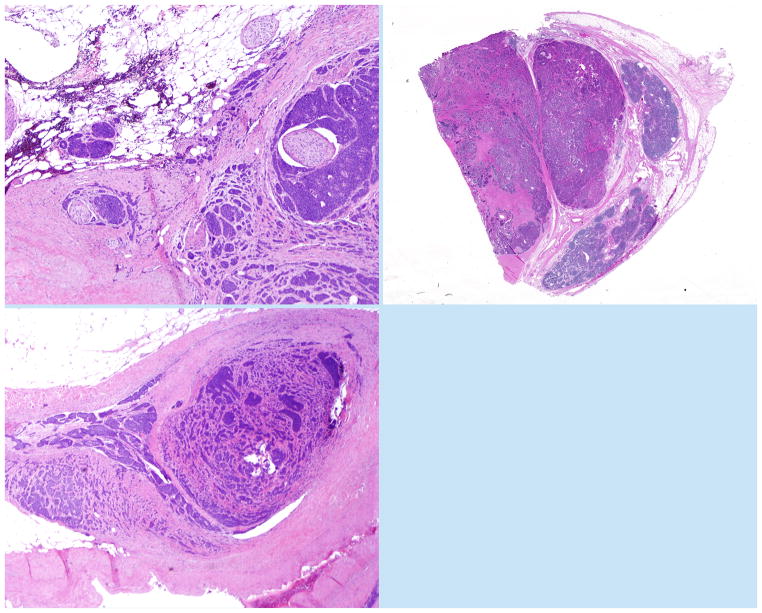
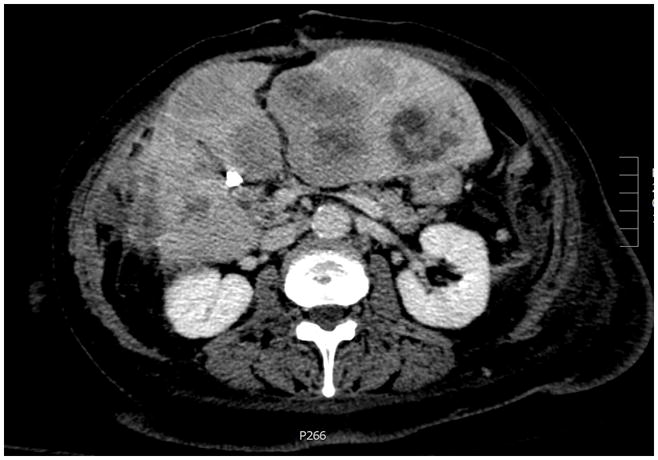
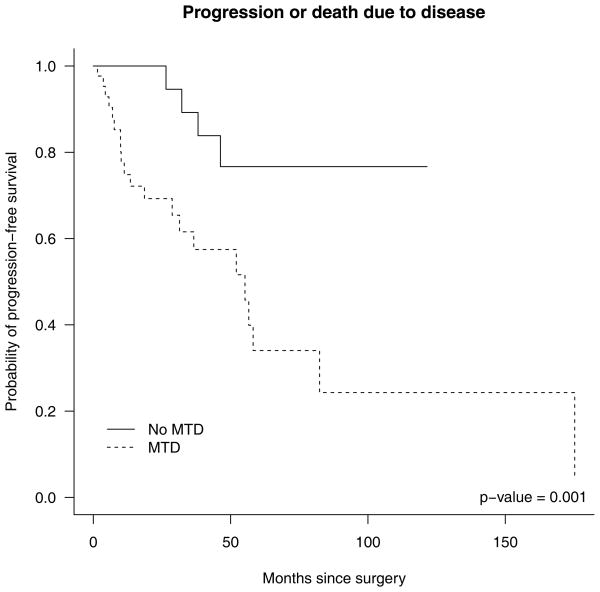
Well-differentiated small intestine neuroendocrine tumors can give rise to mesenteric tumor deposits, which are not included in the current American Joint Committee on Cancer staging system for small intestine neuroendocrine tumors, and their impact on patient prognosis is unknown. Seventy-two small intestine neuroendocrine tumors resections were identified in our files with slides, reports, and follow-up data available. Cases were assessed for T-category and for the presence of mesenteric tumor deposits, lymph node metastases, lymphovascular invasion, and liver metastases. Mesenteric tumor deposits were defined as discrete mesenteric tumor nodules ≥1 mm with an irregular growth profile. Similar lesions clearly resulting from extranodal extension or direct contiguous spread by the primary lesion were excluded. Forty-three of the 72 cases had mesenteric tumor deposits (60%). The deposits were significantly associated with lymphovascular invasion (P=0.001), pT3 or pT4 disease (P=0.001), nodal metastases (P=0.040), and liver metastases (P<0.001) at the time of surgery. In addition, four of six cases with tumor deposits and no nodal disease had liver disease. Tumor deposits were associated with an increased incidence of disease progression and death due to the disease (P=0.001). Finally, the presence of tumor deposits at the time of surgery was associated with an increase in hazard of progression or death due to disease (hazard ratio: 4.0; 95% confidence interval: 1.3, 12.5; P=0.016). Mesenteric tumor deposits are present in the majority of cases of small intestine neuroendocrine tumors and are indicators of poor prognosis for this disease. Therefore, they may have a place in staging of small intestine neuroendocrine tumors, perhaps as analogous to lymph node disease.
Conflict of interest statement
The authors report that they have no conflicts of interest to disclose.
Figures
References
-
- Haselkorn T, Whittemore AS, Lilienfeld DE. Incidence of small bowel cancer in the United States and worldwide: geographic, temporal, and racial differences. Cancer Causes Control. 2005;16:781–7. - PubMed
-
- Rorstad O. Prognostic indicators for carcinoid neuroendocrine tumors of the gastrointestinal tract. J Surg Oncol. 2005;89:151–60. - PubMed
-
- Modlin IM, Lye KD, Kidd M. A 5-decade analysis of 13,715 carcinoid tumors. Cancer. 2003;97:934–59. - PubMed
-
- Modlin IM, Champaneria MC, Chan AK, Kidd M. A three-decade analysis of 3,911 small intestinal neuroendocrine tumors: the rapid pace of no progress. Am J Gastroenterol. 2007;102:1464–73. - PubMed
Publication types
MeSH terms
Grants and funding
LinkOut - more resources
Full Text Sources
Other Literature Sources
Medical
