Prevalence, awareness, and management of CKD and cardiovascular risk factors in publicly funded health care
- PMID: 24458079
- PMCID: PMC3974355
- DOI: 10.2215/CJN.06550613
Prevalence, awareness, and management of CKD and cardiovascular risk factors in publicly funded health care
Abstract
Background and objectives: It is uncertain how many patients with CKD and cardiovascular risk factors in publicly funded universal health care systems are aware of their disease and how to achieve their treatment targets.
Design, setting, participants, & measurements: The CARTaGENE study evaluated BP, lipid, and diabetes profiles as well as corresponding treatments in 20,004 random individuals between 40 and 69 years of age. Participants had free access to health care and were recruited from four regions within the province of Quebec, Canada in 2009 and 2010.
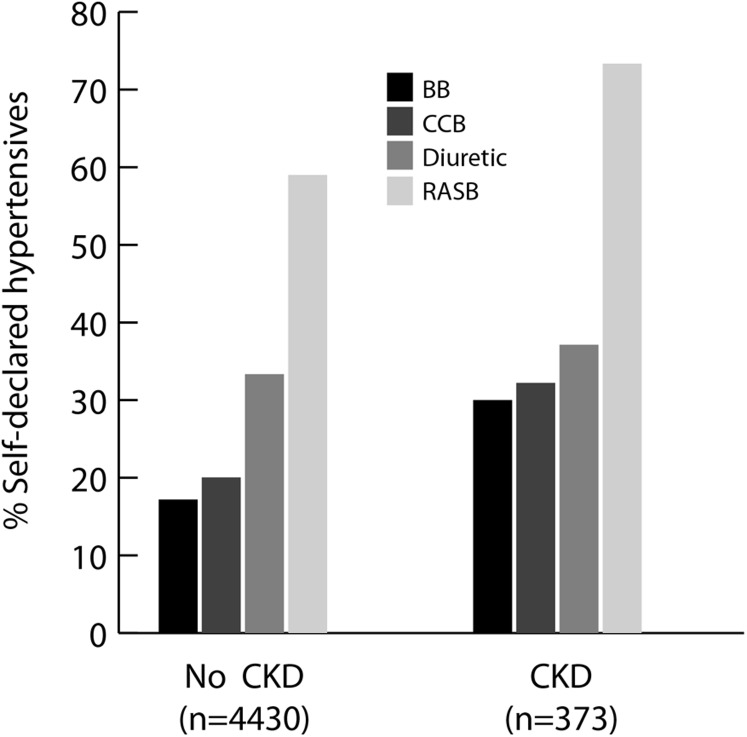
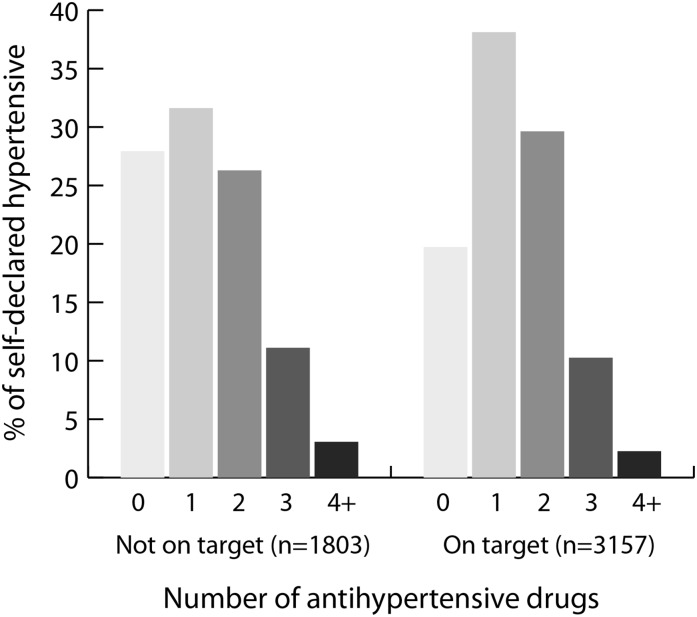
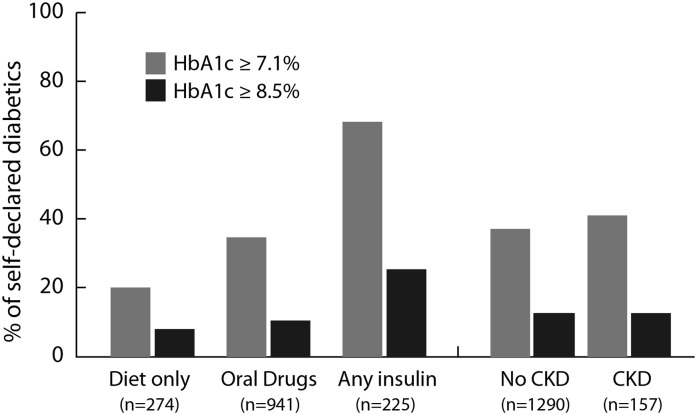
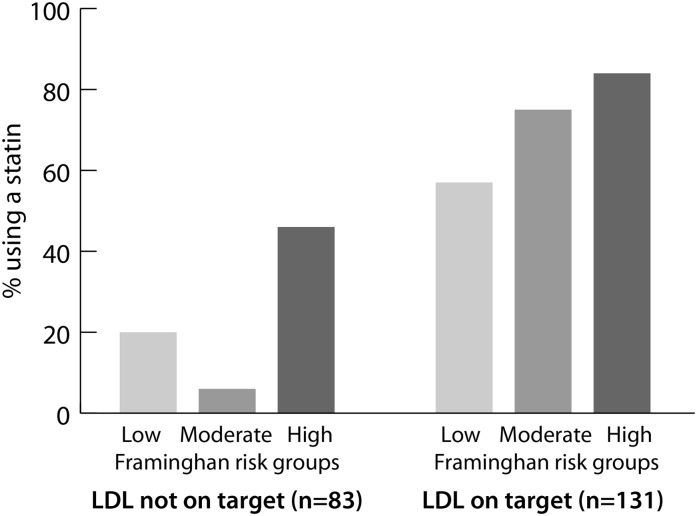
Results: CKD (Chronic Kidney Disease Epidemiology Collaboration equation; <60 ml/min per 1.73 m(2)) was present in 4.0% of the respondents, and hypertension, diabetes, and hypercholesterolemia were reported by 25%, 7.4%, and 28% of participants, respectively. Self-awareness was low: 8% for CKD, 73% for diabetes, and 45% for hypercholesterolemia. Overall, 31% of patients with hypertension did not meet BP goals, and many received fewer antihypertensive drugs than appropriately controlled individuals; 41% of patients with diabetes failed to meet treatment targets. Among those patients with a moderate or high Framingham risk score, 53% of patients had LDL levels above the recommended levels, and many patients were not receiving a statin. Physician checkups were not associated with greater awareness but did increase the achievement of targets.
Conclusion: In this population with access to publicly funded health care, CKD and cardiovascular risk factors are common, and self-awareness of these conditions is low. Recommended targets were frequently not achieved, and treatments were less intensive in those patients who failed to reach goals. New strategies to enhance public awareness and reach guideline targets should be developed.
Figures
References
-
- Canadian Institute for Health Information : Canadian Organ Replacement Register Annual Report: Treatment of End-Stage Organ Failure in Canada, Ottawa, ON, Canada, CIHI, 2011
-
- Kaczorowski J, Chambers LW, Dolovich L, Paterson JM, Karwalajtys T, Gierman T, Farrell B, McDonough B, Thabane L, Tu K, Zagorski B, Goeree R, Levitt CA, Hogg W, Laryea S, Carter MA, Cross D, Sabaldt RJ: Improving cardiovascular health at population level: 39 community cluster randomised trial of Cardiovascular Health Awareness Program (CHAP). BMJ 342: d442, 2011 - PMC - PubMed
-
- Lloyd-Jones D, Adams R, Carnethon M, De Simone G, Ferguson TB, Flegal K, Ford E, Furie K, Go A, Greenlund K, Haase N, Hailpern S, Ho M, Howard V, Kissela B, Kittner S, Lackland D, Lisabeth L, Marelli A, McDermott M, Meigs J, Mozaffarian D, Nichol G, O’Donnell C, Roger V, Rosamond W, Sacco R, Sorlie P, Stafford R, Steinberger J, Thom T, Wasserthiel-Smoller S, Wong N, Wylie-Rosett J, Hong Y, American Heart Association Statistics Committee and Stroke Statistics Subcommittee : Heart disease and stroke statistics—2009 update: A report from the American Heart Association Statistics Committee and Stroke Statistics Subcommittee. Circulation 119: 480–486, 2009 - PubMed
-
- Nickolas TL, Frisch GD, Opotowsky AR, Arons R, Radhakrishnan J: Awareness of kidney disease in the US population: Findings from the National Health and Nutrition Examination Survey (NHANES) 1999 to 2000. Am J Kidney Dis 44: 185–197, 2004 - PubMed
-
- Coresh J, Byrd-Holt D, Astor BC, Briggs JP, Eggers PW, Lacher DA, Hostetter TH: Chronic kidney disease awareness, prevalence, and trends among U.S. adults, 1999 to 2000. J Am Soc Nephrol 16: 180–188, 2005 - PubMed
MeSH terms
LinkOut - more resources
Full Text Sources
Other Literature Sources
Medical