


An intervention based on Schachter's externality theory for overweight children: the regulation of cues pilot
- PMID: 24459240
- PMCID: PMC4007101
- DOI: 10.1093/jpepsy/jst142
An intervention based on Schachter's externality theory for overweight children: the regulation of cues pilot
Abstract
Objective: This study evaluated the feasibility, acceptability, and initial efficacy of an intervention based on Schachter's externality theory; the Regulation of Cues (ROC) program.
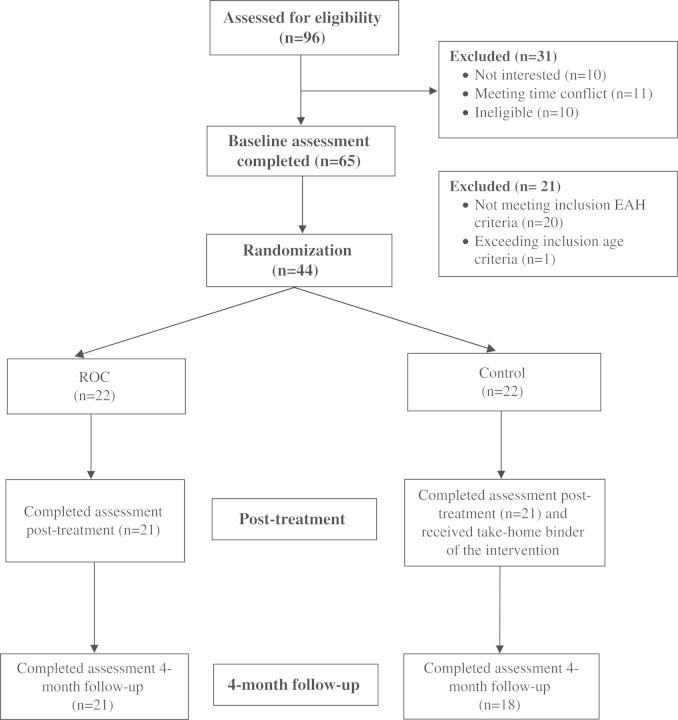
Methods: 44 overweight and obese 8-12-year-old children and their parents were randomly assigned to a 4-month ROC program or the control group. Outcomes were assessed at baseline, posttreatment, and 4 months posttreatment and included acceptability and feasibility, body weight, and eating behaviors.
Results: The ROC program had moderate to high acceptability ratings. Significant improvements were found for the ROC group compared with the control group on child food responsiveness at posttreatment and eating in the absence of hunger at 4 months posttreatment. Improvements were seen for the ROC group compared with the control group on body weight measures and food responsiveness, although these only approached significance.
Conclusion: The ROC intervention may be useful with overweight and obese children. Larger, fully powered studies are needed to further evaluate the efficacy of this model.
Trial registration: ClinicalTrials.gov NCT01442142.
Keywords: children; eating and feeding disorders; obesity; weight management.
Figures
References
-
- Bloom T, Sharpe L, Mullan B, Zucker N. A pilot evaluation of appetite-awareness training in the treatment of childhood overweight and obesity: A preliminary investigation. The International Journal of Eating Disorder. 2013;46:47–51. doi:10.1002/eat.22041. - PubMed
Publication types
MeSH terms
Associated data
Grants and funding
LinkOut - more resources
Full Text Sources
Other Literature Sources
Medical
