


Kidney and phosphate metabolism
- PMID: 24459526
- PMCID: PMC3894480
- DOI: 10.5049/EBP.2008.6.2.77
Kidney and phosphate metabolism
Abstract
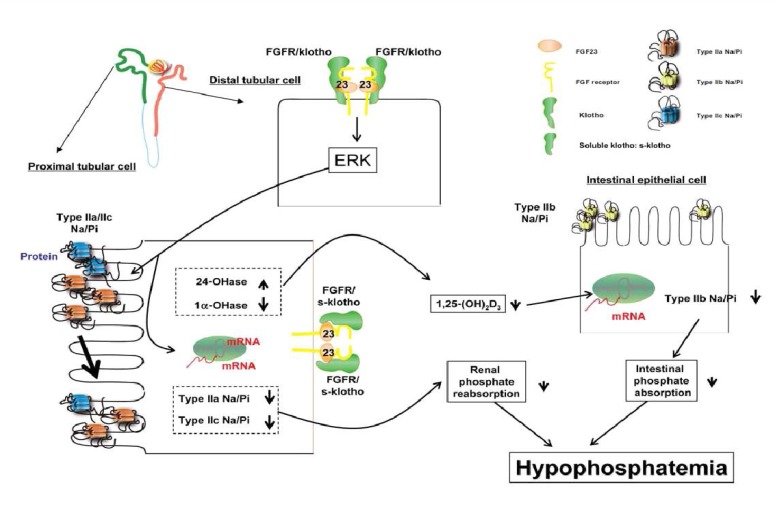
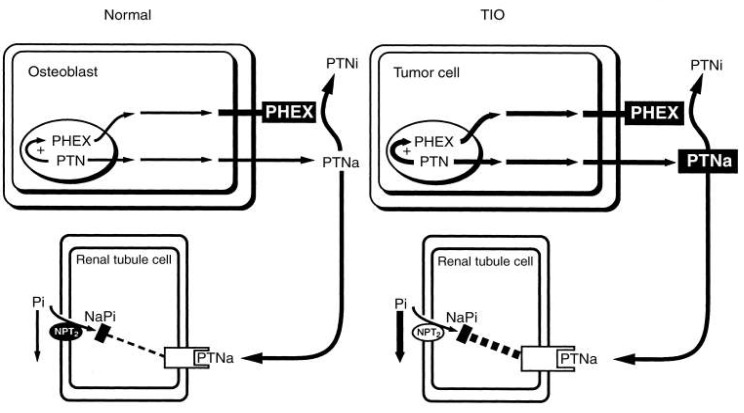
The serum phosphorus level is maintained through a complex interplay between intestinal absorption, exchange intracellular and bone storage pools, and renal tubular reabsorption. The kidney plays a major role in regulation of phosphorus homeostasis by renal tubular reabsorption. Type IIa and type IIc Na(+)/Pi transporters are important renal Na(+)-dependent inorganic phosphate (Pi) transporters, which are expressed in the brush border membrane of proximal tubular cells. Both are regulated by dietary Pi intake, vitamin D, fibroblast growth factor 23 (FGF23) and parathyroid hormone. The expression of type IIa Na(+)/Pi transporter result from hypophosphatemia quickly. However, type IIc appears to act more slowly. Physiological and pathophysiological alteration in renal Pi reabsorption are related to altered brush border membrane expression/content of the type II Na(+)/Pi cotransporter. Many studies of genetic and acquired renal phosphate wasting disorders have led to the identification of novel genes. Two novel Pi regulating genes, PHEX and FGF23, play a role in the pathophysiology of genetic and acquired renal phosphate wasting disorders and studies are underway to define their mechanism on renal Pi regulation. In recent studies, sodium-hydrogen exchanger regulatory factor 1 (NHERF1) is reported as another new regulator for Pi reabsorption mechanism.
Keywords: PHEX; fibroblast growth factor 23; phosphorus; sodium-hydrogen exchanger regulatory factor 1; sodium-phosphate cotransporter proteins.
Figures


References
-
- Berndt TJ, Knox FG. Renal regulation of phosphate excretion. In: Seldin DW, Giebisch GH, editors. The Kidney: Physiology and Pathophysiology. 2nd ed. Raven; 1992. pp. 2511–2532.
-
- Dennis VW. Phosphate homeostasis. In: Windhager EE, editor. Renal physiology. New York American Physiological Society by Oxford University Press; 1992. pp. 1785–1815.
-
- Miller WL, Portale AA. Genetic causes of rickets. Curr Opin Pediatr. 1999;11:333–339. - PubMed
-
- Demay MB, Sabbagh Y, Carpenter TO. Calcium and vitamin D: what is known about the effects on growing bone. Pediatrics. 2007;119(Suppl 2):S141–S144. - PubMed
-
- Murer H, Hernando N, Forster I, Biber J. Proximal tubular phosphate reabsorption: molecular mechanisms. Physiol Rev. 2000;80:1373–1409. - PubMed
Publication types
LinkOut - more resources
Full Text Sources
Other Literature Sources
Research Materials
Miscellaneous