


Malaria in overseas labourers returning to China: an analysis of imported malaria in Jiangsu Province, 2001-2011
- PMID: 24460982
- PMCID: PMC3922785
- DOI: 10.1186/1475-2875-13-29
Malaria in overseas labourers returning to China: an analysis of imported malaria in Jiangsu Province, 2001-2011
Abstract
Background: While great success in malaria control has been achieved in China, imported malaria has become a major challenge in the context of malaria elimination. This retrospective study describes the epidemiological profile of imported malaria and identifies the at-risk population during the period of 2001-2011 in Jiangsu Province.
Methods: Data on imported malaria cases in Jiangsu Province from 2001 to 2011 were collected from the infectious disease surveillance system and case investigation reports. Epidemiological trends were described and correlations between trends in exported labour and malaria imported from other countries were explored.
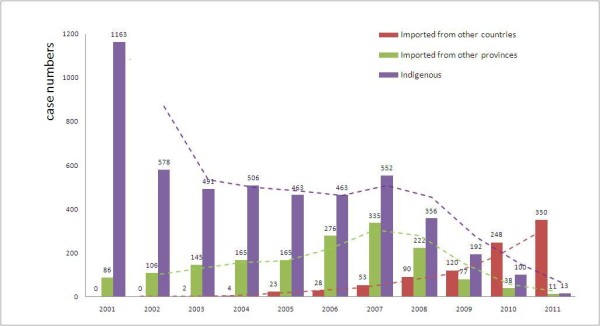
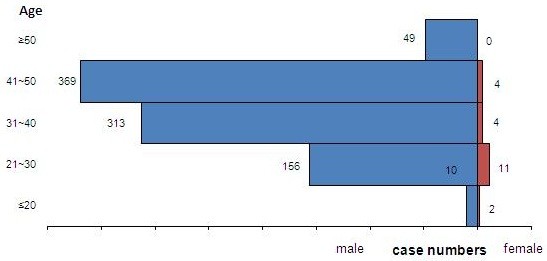
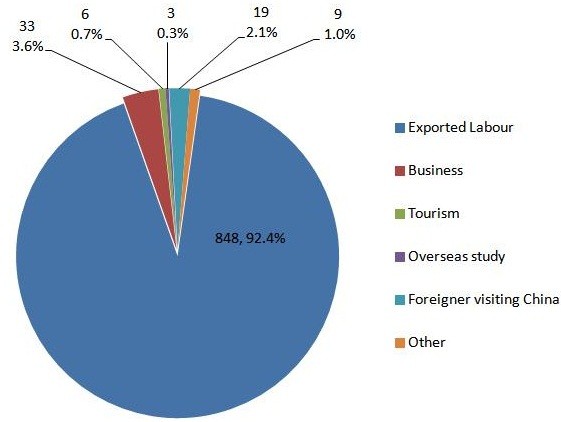
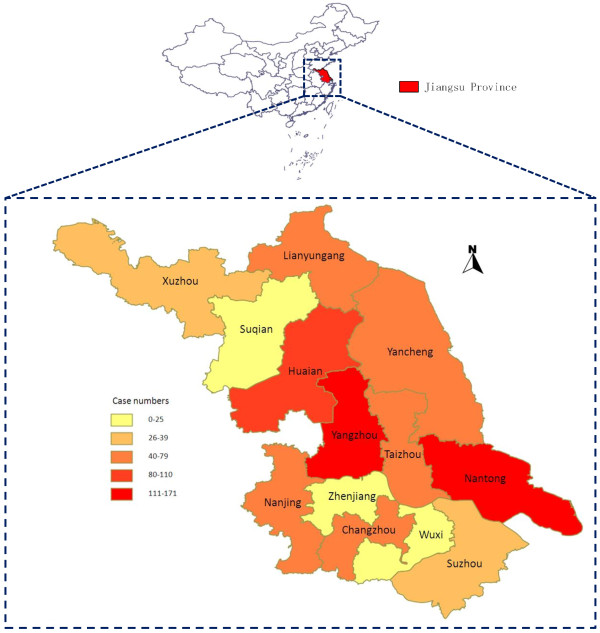
Results: From 2001 to 2011, 918 malaria cases and six malaria deaths were due to malaria imported from other countries, accounting for 12.4% of all malaria cases and 100% of all malaria deaths. During this time period the annual number of indigenous cases decreased from 1,163 to 13 while the number of imported cases increased from 86 to 366. The relative proportion of cases imported from other countries versus other provinces also increased from 0.0% (0/86) to 97.0% (350/361). The most affected demographic groups were males (897 cases, 97.7%) and adults (20-50 years old: 857 cases, 93.4%). All 918 cases had a recent travel history to malaria-endemic areas and the main purpose for travel was overseas labour (848 cases, 92.4%). The cases were mainly acquired from African countries (855 cases, 93.1%). Plasmodium falciparum was the most common species (733 cases, 79.8%). The increase in malaria cases imported from other countries was associated with the growth of investment to Africa from Jiangsu (R2 = 0.8057) and the increasing number of exported labourers to Africa from Jiangsu (R2 = 0.8863).
Conclusions: From 2001 to 2011 in Jiangsu Province, there was a consistent increase in the number of malaria cases imported from other countries while the number of locally acquired cases sharply declined. This trend may be ascribed to the increasing investment from China to Africa and the rising number of Chinese labourers working in Africa. Preventative efforts should be targeted to this high-risk group and the surveillance and response system should be strengthened to prevent local resurgence in Jiangsu.
Figures

References
-
- WHO. World Malaria Report. Geneva: World Health Organization; 2012.
-
- WHO. International Travel and Health 2011th edition. Geneva: World Health Organization; 2011.
-
- Jiangsu Bureau of Statistics. Jiangsu statistic yearbook 2003–2012 [in Chinese] China: Jiangsu; 2013.
Publication types
MeSH terms
Grants and funding
LinkOut - more resources
Full Text Sources
Other Literature Sources
Medical
