


Premature menopause and risk of neurological disease: basic mechanisms and clinical implications
- PMID: 24462786
- PMCID: PMC4040297
- DOI: 10.1016/j.mce.2014.01.013
Premature menopause and risk of neurological disease: basic mechanisms and clinical implications
Abstract
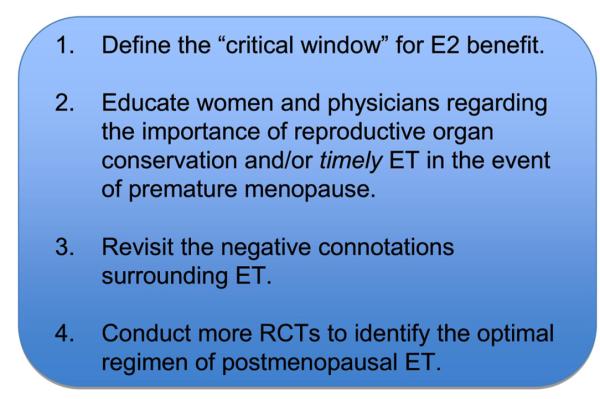
Since basic scientific studies in the 1990s revealed dramatic gender differences in neurological damage from cerebral ischemia, significant evidence has accumulated for a neuroprotective role of ovarian-derived 17β-Estradiol (E2). Intriguingly, observational studies have further suggested that early and prolonged loss of ovarian E2 (premature menopause) leads to a doubled lifetime risk for dementia and a fivefold increased risk of mortality from neurological disorders, but some controversy remains. Here, we briefly summarize and analyze clinical cohort studies assessing the detrimental neurological outcomes of premature menopause. Furthermore, we discuss current basic science studies elucidating the molecular mechanisms underlying the enhanced risk of neurological disease in prematurely menopausal women and the "window of opportunity" for estrogen benefit. Finally, we highlight four critical issues in the field that require collaboration between basic scientists and clinicians for successful resolution, with the ultimate goal of maintaining optimal neurological health in prematurely menopausal women.
Keywords: Dementia; Estradiol; Estrogen; Menopause; Neurological disease.
Published by Elsevier Ireland Ltd.
Figures

References
-
- Armstrong K, Schwartz JS, Randall T, Rubin SC, Weber B. Hormone replacement therapy and life expectancy after prophylactic oophorectomy in women with BRCA1/2 mutations: a decision analysis. Journal of clinical oncology : official journal of the American Society of Clinical Oncology. 2004;22:1045–1054. - PubMed
-
- Brinton RD. Requirements of a brain selective estrogen: advances and remaining challenges for developing a NeuroSERM. Journal of Alzheimer's disease : JAD. 2004;6:S27–35. - PubMed
Publication types
MeSH terms
Substances
Grants and funding
LinkOut - more resources
Full Text Sources
Other Literature Sources
Medical
