


The performance of different propensity score methods for estimating absolute effects of treatments on survival outcomes: A simulation study
- PMID: 24463885
- PMCID: PMC5051602
- DOI: 10.1177/0962280213519716
The performance of different propensity score methods for estimating absolute effects of treatments on survival outcomes: A simulation study
Abstract
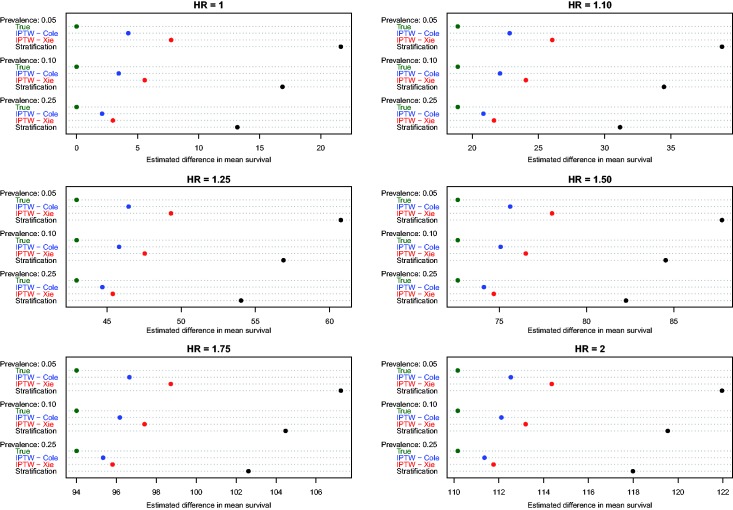
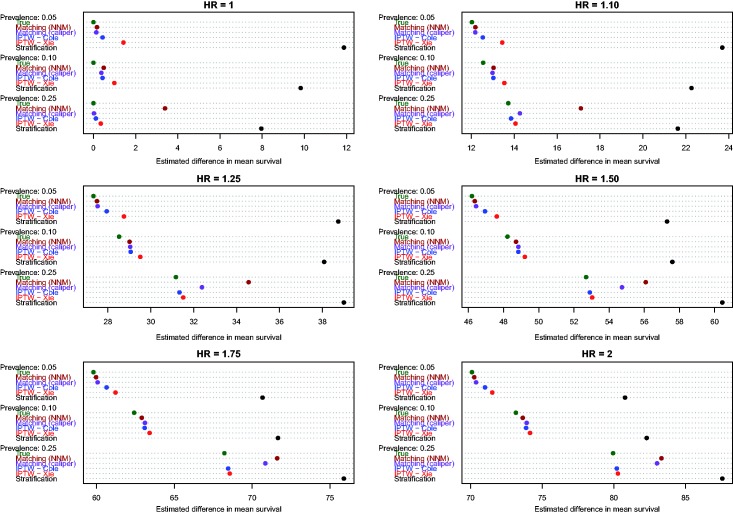
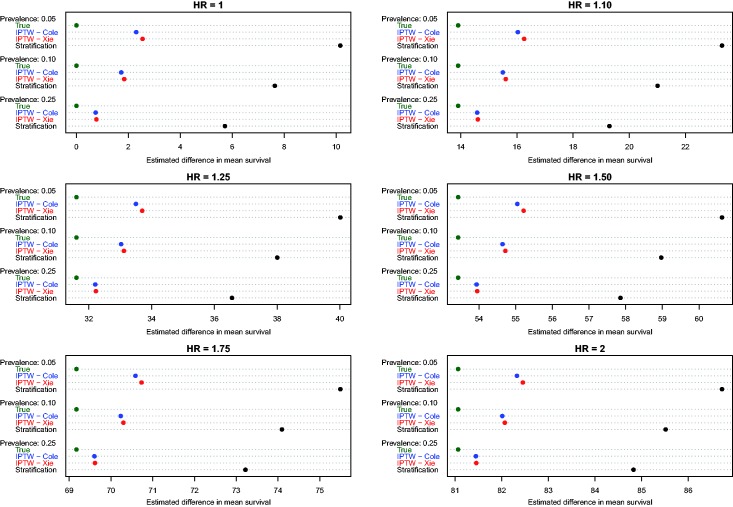
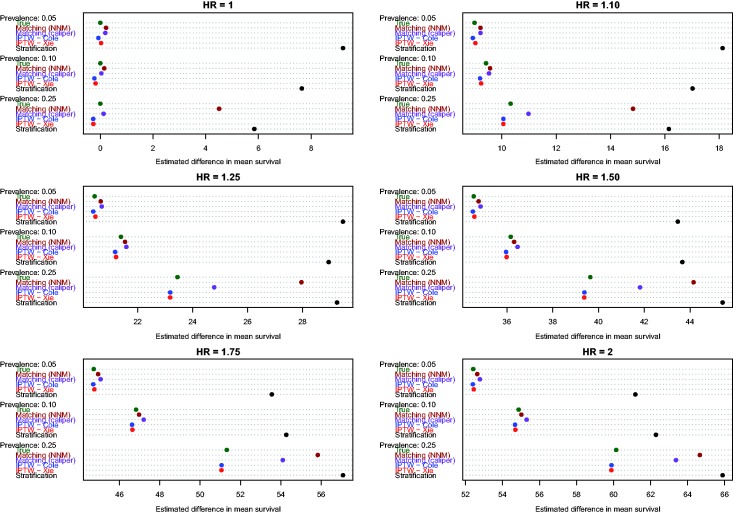
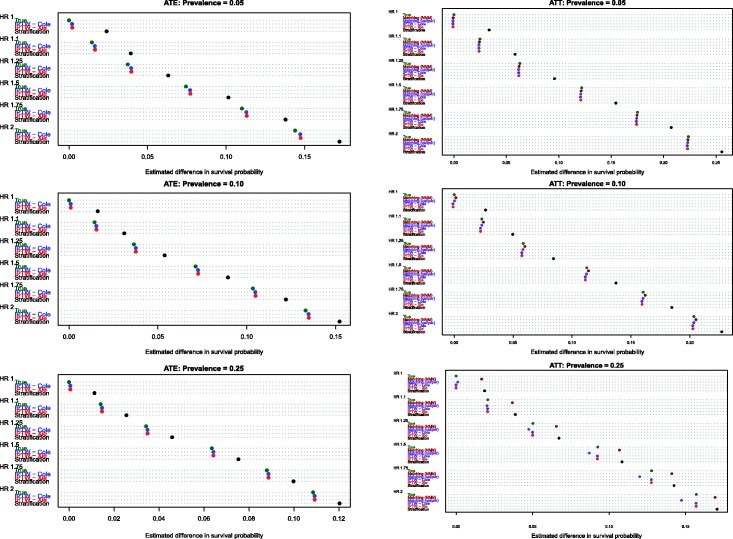
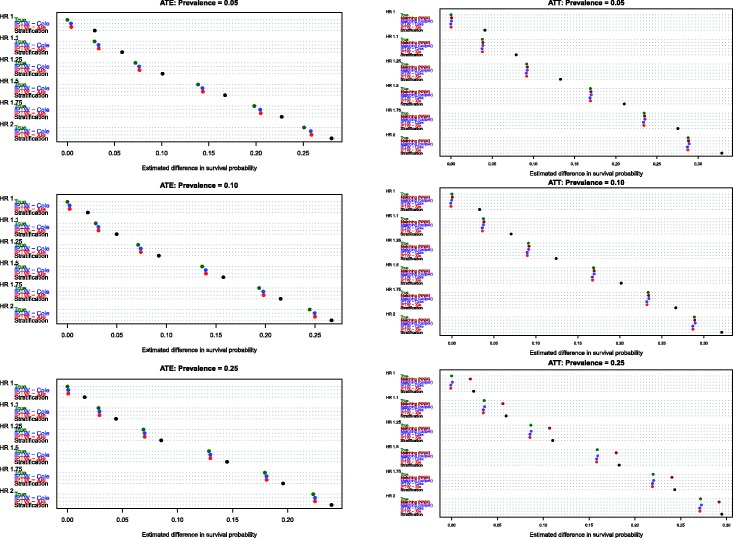
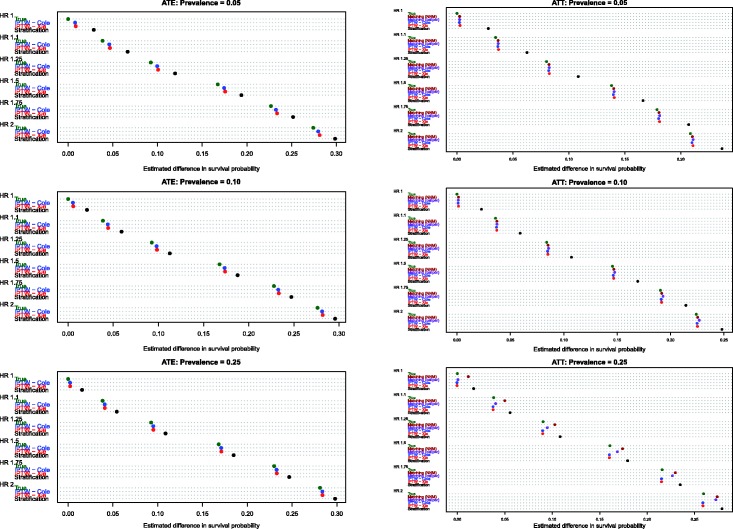
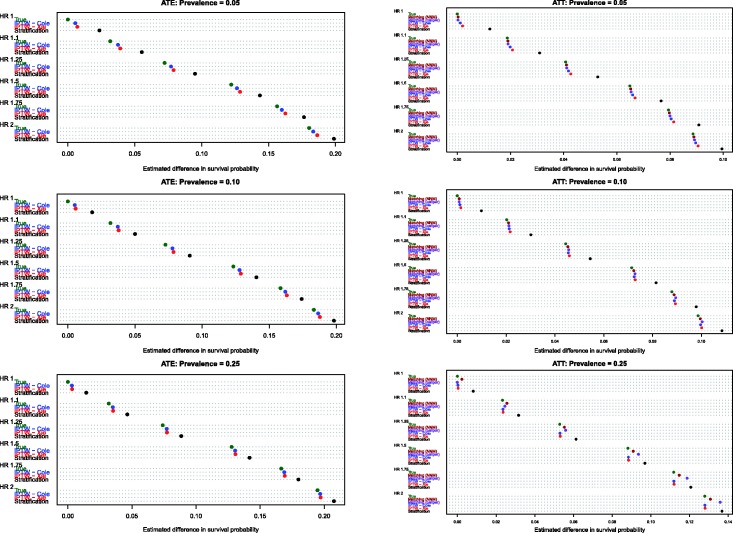
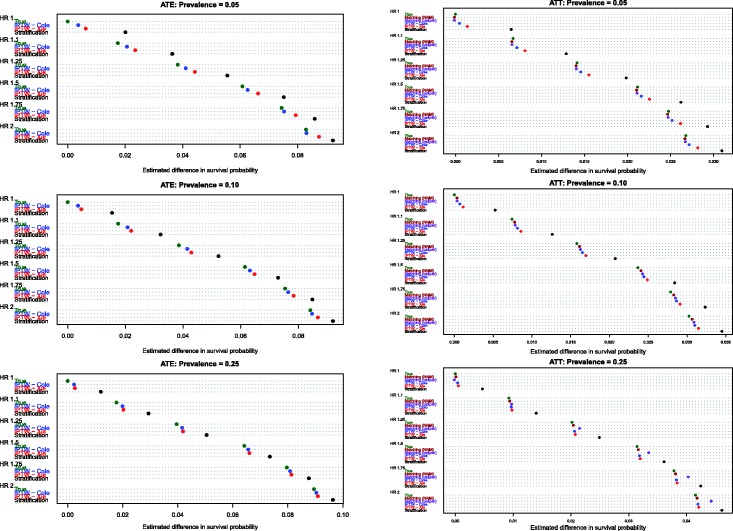
Observational studies are increasingly being used to estimate the effect of treatments, interventions and exposures on outcomes that can occur over time. Historically, the hazard ratio, which is a relative measure of effect, has been reported. However, medical decision making is best informed when both relative and absolute measures of effect are reported. When outcomes are time-to-event in nature, the effect of treatment can also be quantified as the change in mean or median survival time due to treatment and the absolute reduction in the probability of the occurrence of an event within a specified duration of follow-up. We describe how three different propensity score methods, propensity score matching, stratification on the propensity score and inverse probability of treatment weighting using the propensity score, can be used to estimate absolute measures of treatment effect on survival outcomes. These methods are all based on estimating marginal survival functions under treatment and lack of treatment. We then conducted an extensive series of Monte Carlo simulations to compare the relative performance of these methods for estimating the absolute effects of treatment on survival outcomes. We found that stratification on the propensity score resulted in the greatest bias. Caliper matching on the propensity score and a method based on earlier work by Cole and Hernán tended to have the best performance for estimating absolute effects of treatment on survival outcomes. When the prevalence of treatment was less extreme, then inverse probability of treatment weighting-based methods tended to perform better than matching-based methods.
Keywords: Monte Carlo simulations; inverse probability of treatment weighting; observational study; propensity score; survival analysis; time-to-event outcomes.
© The Author(s) 2014.
Figures
References
-
- Weitzen S, Lapane KL, Toledano AY, et al. Principles for modeling propensity scores in medical research: a systematic literature review. Pharmacoepidemiol Drug Saf 2004; 13: 841–853. - PubMed
-
- Austin PC. A critical appraisal of propensity-score matching in the medical literature between 1996 and 2003. Stat Med 2008; 27: 2037–2049. - PubMed
-
- Rosenbaum PR, Rubin DB. The central role of the propensity score in observational studies for causal effects. Biometrika 1983; 70: 41–55.
-
- Rosenbaum PR, Rubin DB. Reducing bias in observational studies using subclassification on the propensity score. J Am Stat Assoc 1984; 79: 516–524.
-
- Rosenbaum PR. Model-based direct adjustment. J Am Stat Assoc 1987; 82: 387–394.
MeSH terms
Grants and funding
LinkOut - more resources
Full Text Sources
Other Literature Sources
