


Surfactant secretion in LRRK2 knock-out rats: changes in lamellar body morphology and rate of exocytosis
- PMID: 24465451
- PMCID: PMC3897396
- DOI: 10.1371/journal.pone.0084926
Surfactant secretion in LRRK2 knock-out rats: changes in lamellar body morphology and rate of exocytosis
Abstract
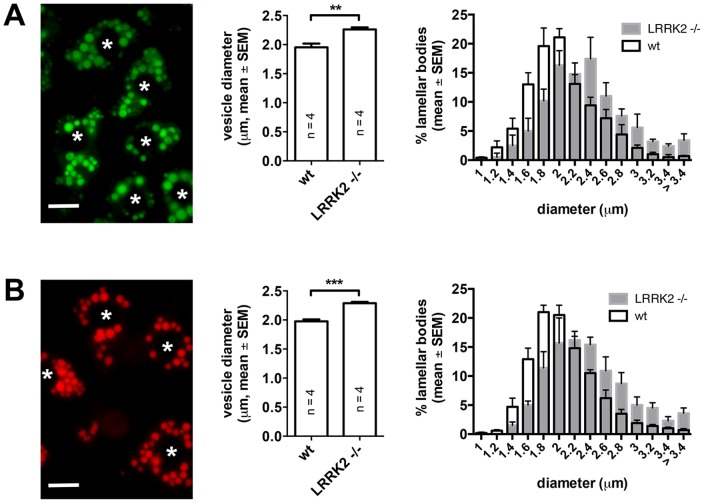
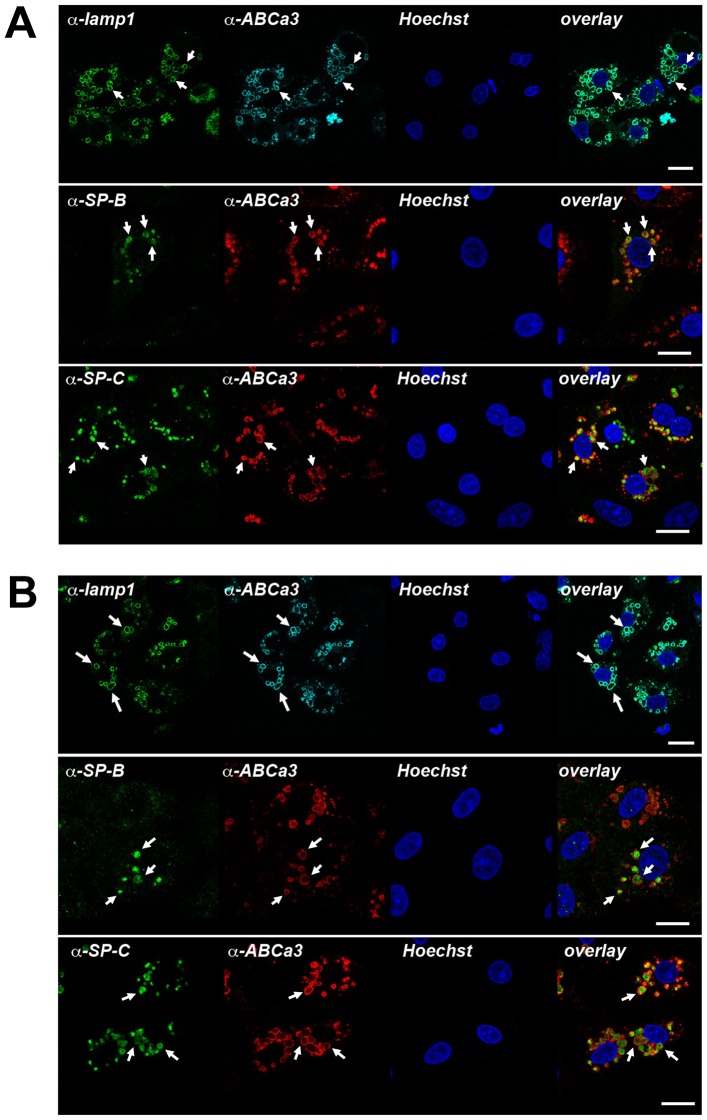
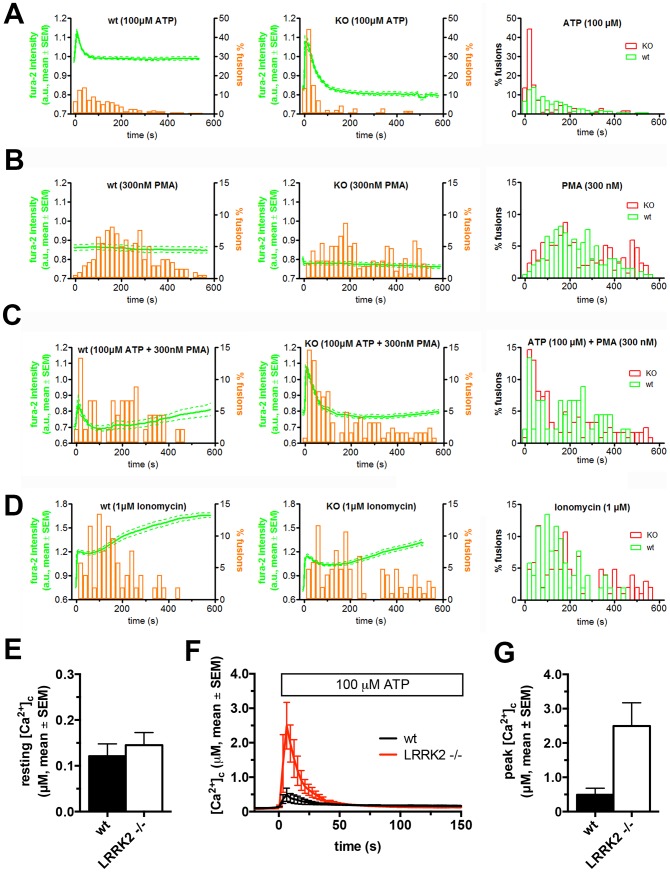
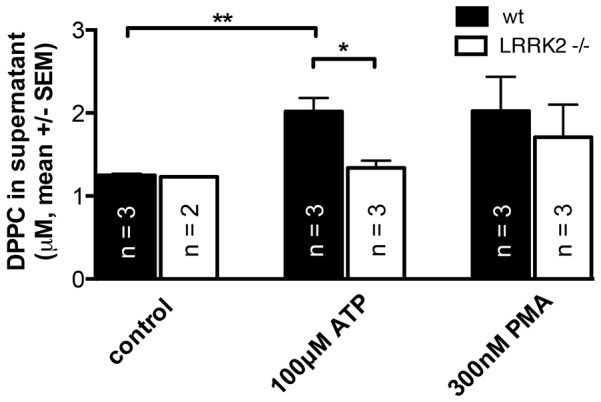
Leucine-rich repeat kinase 2 (LRRK2) is known to play a role in the pathogenesis of various diseases including Parkinson disease, morbus Crohn, leprosy and cancer. LRRK2 is suggested to be involved in a number of cell biological processes such as vesicular trafficking, transcription, autophagy and lysosomal pathways. Recent histological studies of lungs of LRRK2 knock-out (LRRK2 -/-) mice revealed significantly enlarged lamellar bodies (LBs) in alveolar type II (ATII) epithelial cells. LBs are large, lysosome-related storage organelles for pulmonary surfactant, which is released into the alveolar lumen upon LB exocytosis. In this study we used high-resolution, subcellular live-cell imaging assays to investigate whether similar morphological changes can be observed in primary ATII cells from LRRK2 -/- rats and whether such changes result in altered LB exocytosis. Similarly to the report in mice, ATII cells from LRRK2 -/- rats contained significantly enlarged LBs resulting in a >50% increase in LB volume. Stimulation of ATII cells with ATP elicited LB exocytosis in a significantly increased proportion of cells from LRRK2 -/- animals. LRRK2 -/- cells also displayed increased intracellular Ca(2+) release upon ATP treatment and significant triggering of LB exocytosis. These findings are in line with the strong Ca(2+)-dependence of LB fusion activity and suggest that LRRK2 -/- affects exocytic response in ATII cells via modulating intracellular Ca(2+) signaling. Post-fusion regulation of surfactant secretion was unaltered. Actin coating of fused vesicles and subsequent vesicle compression to promote surfactant expulsion were comparable in cells from LRRK2 -/- and wt animals. Surprisingly, surfactant (phospholipid) release from LRRK2 -/- cells was reduced following stimulation of LB exocytosis possibly due to impaired LB maturation and surfactant loading of LBs. In summary our results suggest that LRRK2 -/- affects LB size, modulates intracellular Ca(2+) signaling and promotes LB exocytosis upon stimulation of ATII cells with ATP.
Conflict of interest statement
Figures


References
-
- Bosgraaf L, Van Haastert PJ (2003) Roc, a Ras/GTPase domain in complex proteins. BiochimBiophysActa 1643: 5–10. - PubMed
-
- Drolet RE, Sanders JM, Kern JT (2011) Leucine-rich repeat kinase 2 (LRRK2) cellular biology: a review of recent advances in identifying physiological substrates and cellular functions. J Neurogenet 25: 140–151. - PubMed
-
- Berwick DC, Harvey K (2011) LRRK2 signaling pathways: the key to unlocking neurodegeneration? Trends Cell Biol 21: 257–265. - PubMed
-
- Paisan-Ruiz C, Jain S, Evans EW, Gilks WP, Simon J, et al. (2004) Cloning of the gene containing mutations that cause PARK8-linked Parkinson's disease. Neuron 44: 595–600. - PubMed
Publication types
MeSH terms
Substances
LinkOut - more resources
Full Text Sources
Other Literature Sources
Miscellaneous
