


Identification of differentially expressed proteins in porcine alveolar macrophages infected with virulent/attenuated strains of porcine reproductive and respiratory syndrome virus
- PMID: 24465692
- PMCID: PMC3897507
- DOI: 10.1371/journal.pone.0085767
Identification of differentially expressed proteins in porcine alveolar macrophages infected with virulent/attenuated strains of porcine reproductive and respiratory syndrome virus
Abstract
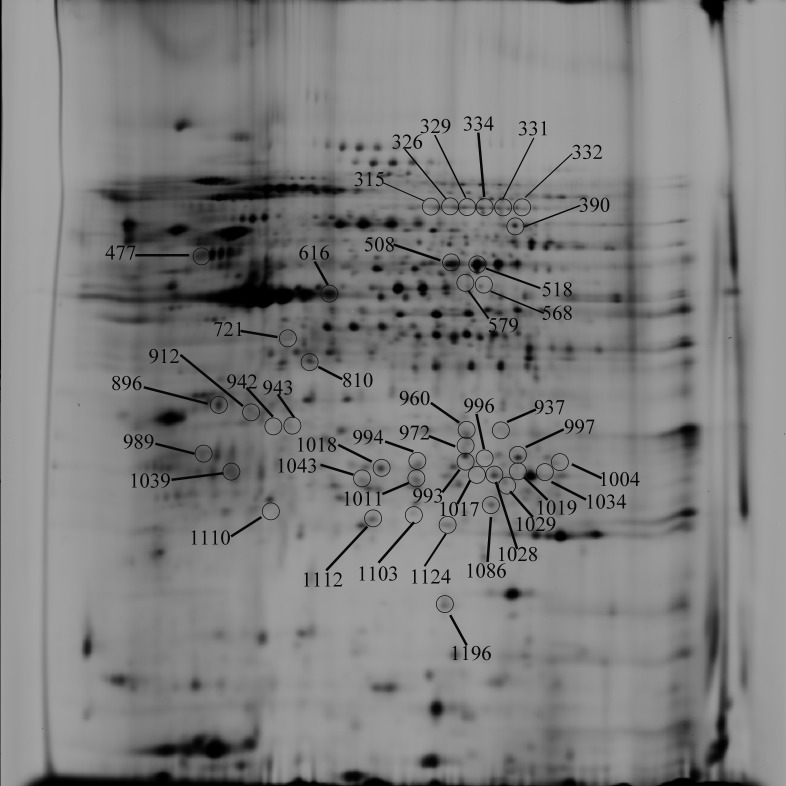
The highly pathogenic porcine reproductive and respiratory syndrome virus (HP-PRRSV) is still a serious threat to the swine industry. However, the pathogenic mechanism of HP-PRRSV remains unclear. We infected host porcine alveolar macrophages (PAMs) with the virulent HuN4 strain and the attenuated HuN4-F112 strain and then utilized fluorescent two-dimensional difference gel electrophoresis (2D-DIGE) to screen for intracellular proteins that were differentially expressed in host cells infected with the two strains. There were 153 proteins with significant different expression (P<0.01) observed, 42 of which were subjected to mass spectrometry, and 24 proteins were identified. PAM cells infected with the virulent strain showed upregulated expression of pyruvate kinase M2 (PKM2), heat shock protein beta-1 (HSPB1), and proteasome subunit alpha type 6 (PSMA6), which were downregulated in cells infected with the attenuated strain. The upregulation of PKM2 provides sufficient energy for viral replication, and the upregulation of HSPB1 inhibits host cell apoptosis and therefore facilitates mass replication of the virulent strain, while the upregulation of PSMA6 facilitates the evasion of immune surveillance by the virus. Studying on those molecules mentioned above may be able to help us to understand some unrevealed details of HP-PRRSV infection, and then help us to decrease its threat to the swine industry in the future.
Conflict of interest statement
Figures


References
-
- Neumann EJ, Kliebenstein JB, Johnson CD, Mabry JW, Bush EJ, et al. (2005) Assessment of the economic impact of porcine reproductive and respiratory syndrome on swine production in the United States. J Am Vet Med Assoc 227: 385–392. - PubMed
-
- Pejsak Z, Stadejek T, Markowska-Daniel I (1997) Clinical signs and economic losses caused by porcine reproductive and respiratory syndrome virus in a large breeding farm. Vet Microbiol 55: 317–322. - PubMed
-
- Zhou YJ, Hao XF, Tian ZJ, Tong GZ, Yoo D, et al. (2008) Highly virulent porcine reproductive and respiratory syndrome virus emerged in China. Transbound Emerg Dis 55: 152–164. - PubMed
Publication types
MeSH terms
Substances
LinkOut - more resources
Full Text Sources
Other Literature Sources
Research Materials
Miscellaneous
