Sex differences in endothelial function in porcine coronary arteries: a role for H2O2 and gap junctions?
- PMID: 24467384
- PMCID: PMC4243852
- DOI: 10.1111/bph.12595
Sex differences in endothelial function in porcine coronary arteries: a role for H2O2 and gap junctions?
Abstract
Background and purpose: Cardiovascular risk is higher in men and postmenopausal women compared with premenopausal women. This may be due to sex differences in endothelial function. Here, sex differences in endothelial function of porcine coronary arteries (PCAs) were investigated.
Experimental approach: Distal PCAs were studied under myographic conditions and after precontraction with U46619. Concentration-response curves to bradykinin were constructed in the presence of a range of inhibitors.
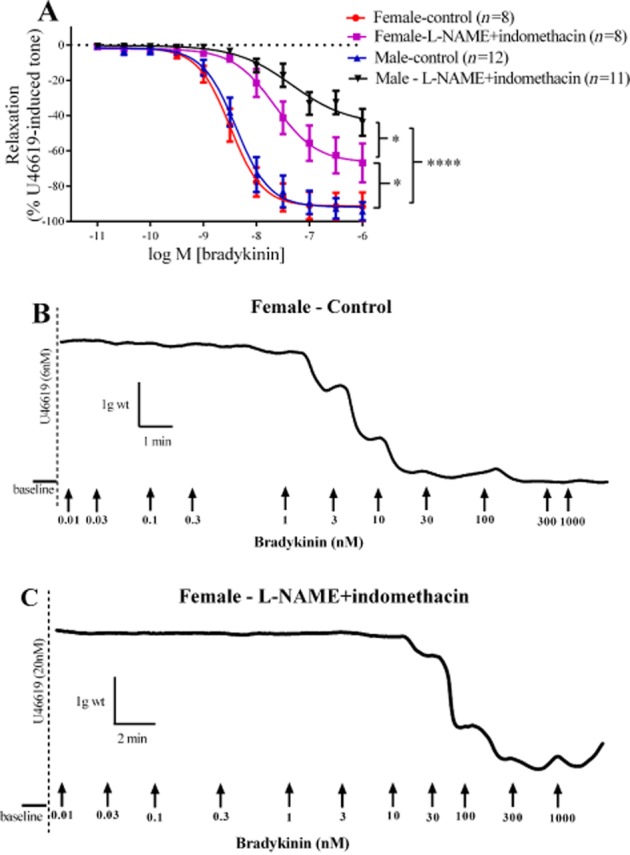
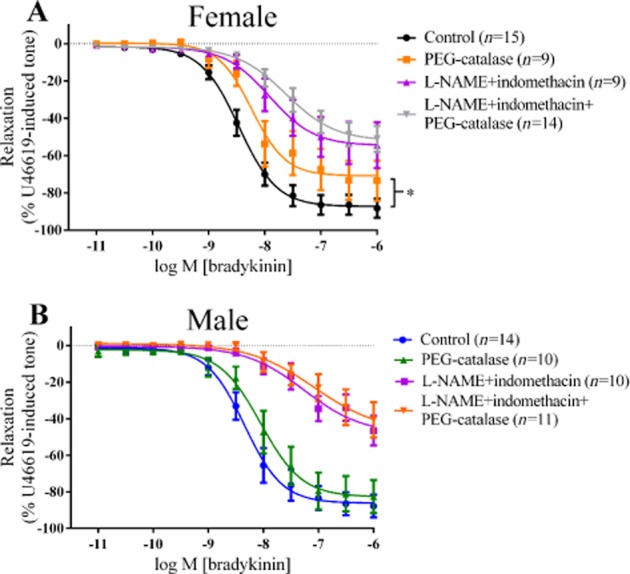
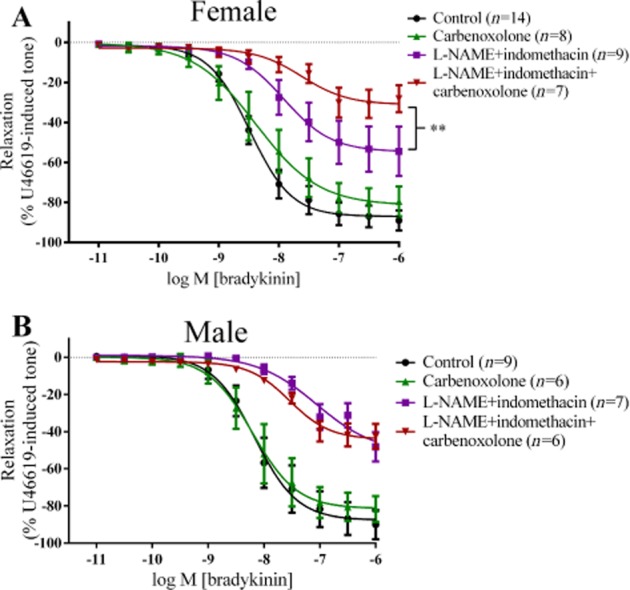
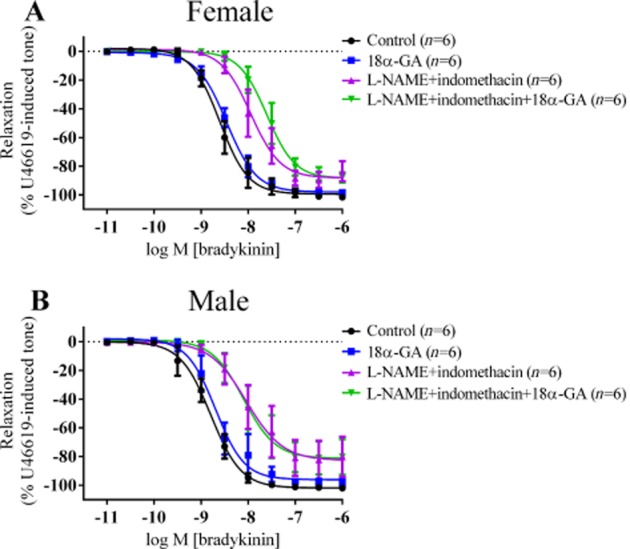
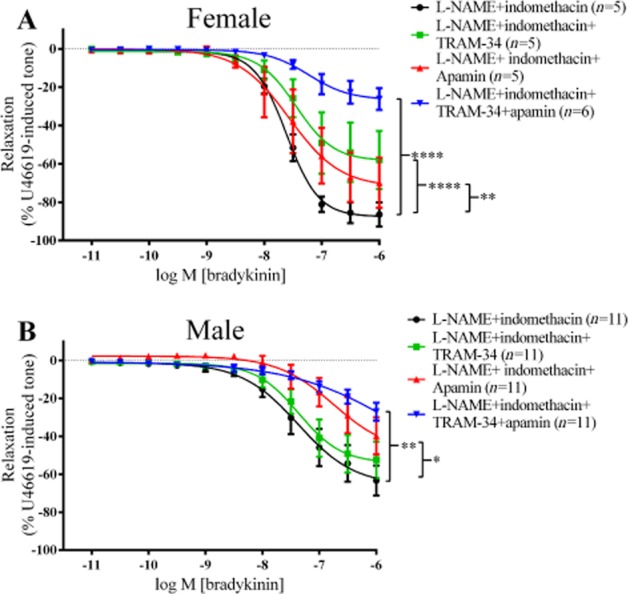
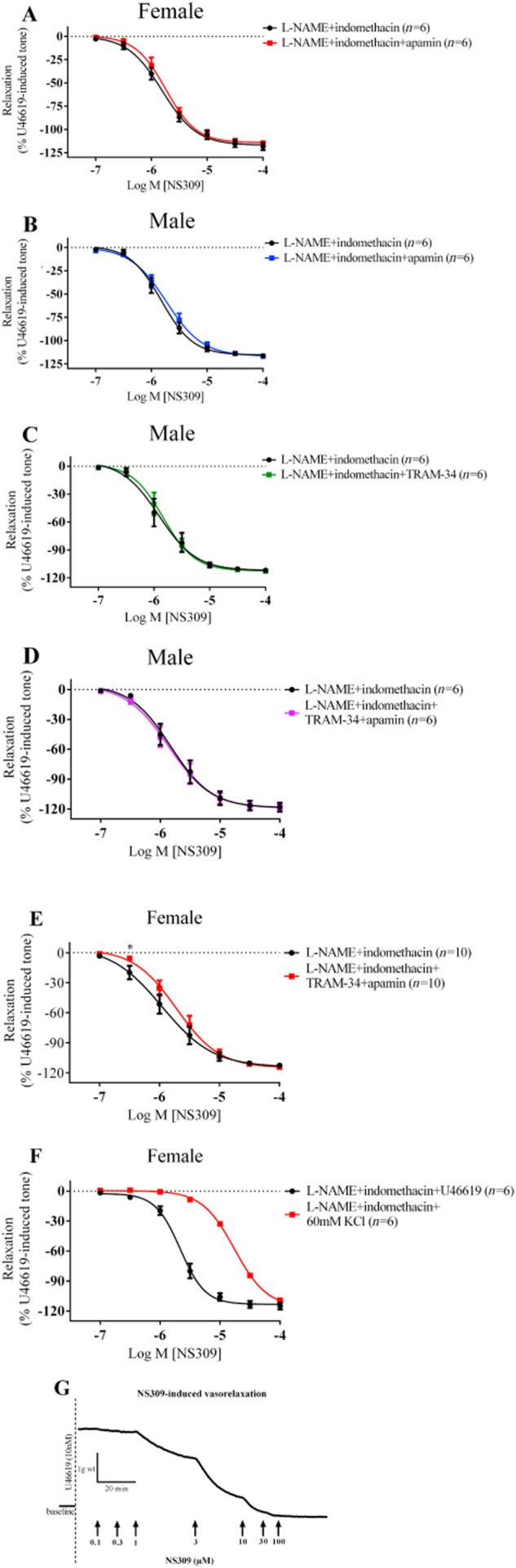
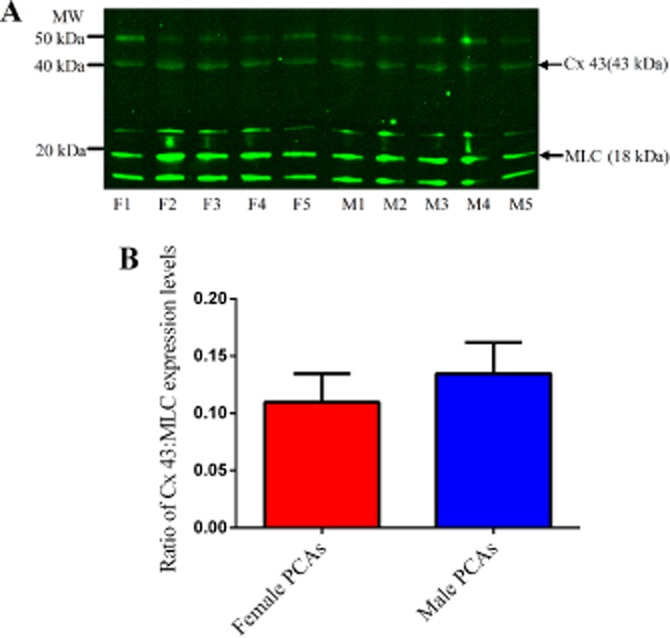
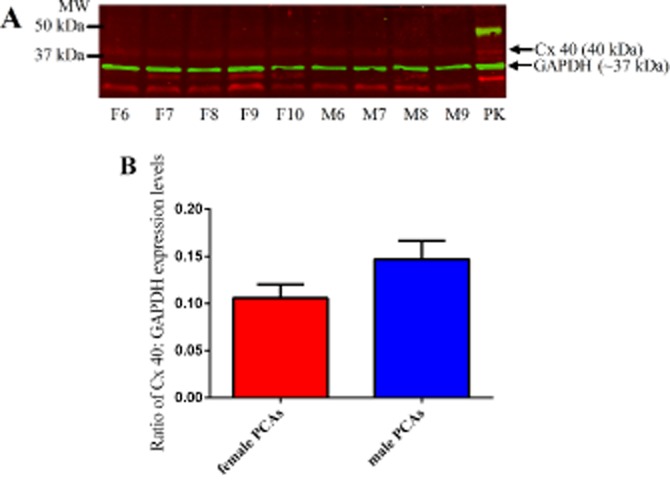
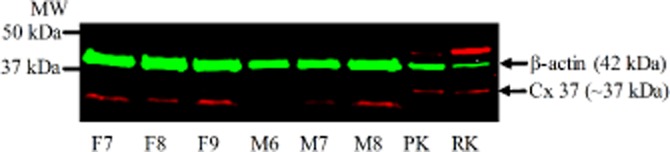
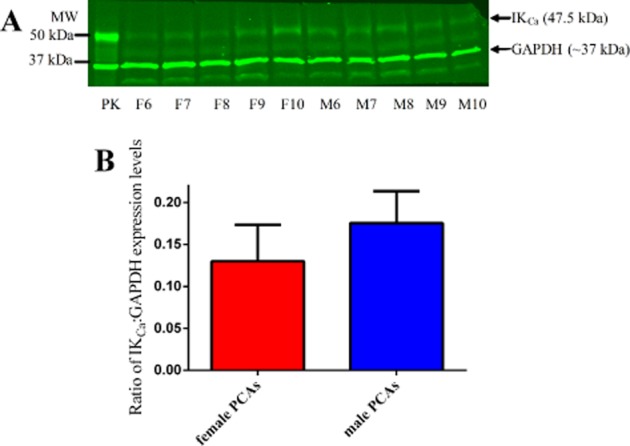
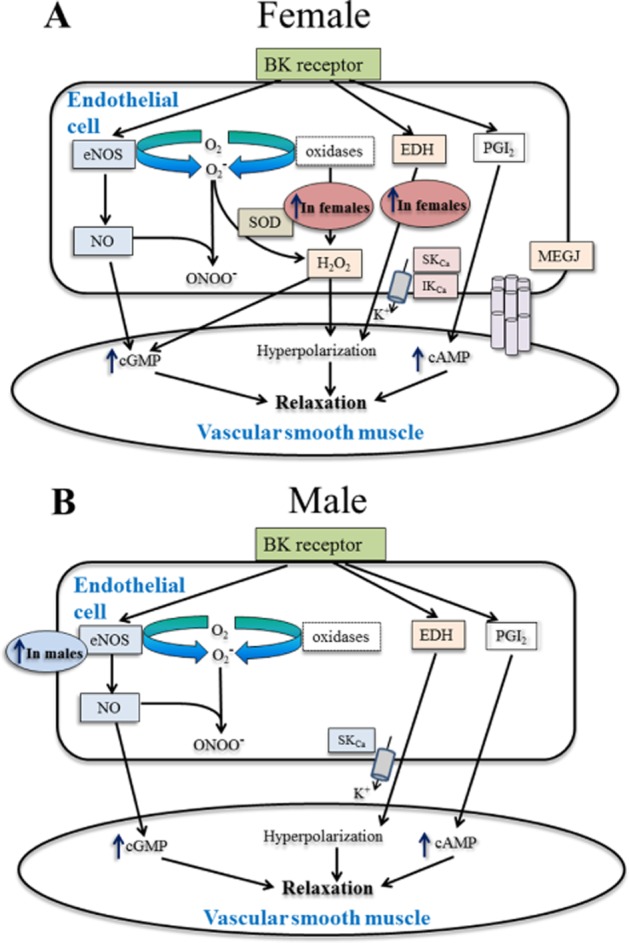
Key results: In male and female PCAs, bradykinin produced comparable vasorelaxant responses. Inhibition of NO and prostanoid synthesis produced greater inhibition in males compared with females. Removing H2 O2 with PEG-catalase reduced the maximum relaxation in the absence, but not the presence of L-NAME and indomethacin in females, and had no effect in males. Blocking gap junctions with 100 µM carbenoxolone or 18α-glycyrrhetinic acid further inhibited the endothelium-derived hyperpolarization (EDH)-mediated response in females but not in males. In female PCAs, the maximum EDH-mediated response was reduced by inhibiting SKCa with apamin and by inhibiting IKCa with TRAM-34, or with both. In male PCAs, at maximum bradykinin concentration, the EDH-mediated response was reduced in the presence of apamin but not TRAM-34. Western blot did not detect any differences in connexins 40 or 43 or in IKCa expression between male and female PCAs.
Conclusions and implications: H2 O2 mediated some part of endothelium-dependent vasorelaxation in female PCAs and EDH was more important in females, with differences in the contribution of gap junctions and IKCa channels. These findings may contribute to understanding vascular protection in premenopausal women.
Keywords: bradykinin; connexin (Cx); endothelium-derived hyperpolarization (EDH); gap junctions; hydrogen peroxide (H2O2); intermediate-conductance calcium-activated K+ channel (IKca); nitric oxide (NO); porcine coronary artery (PCA); sex differences; small-conductance calcium-activated K+ channel (SKca).
© 2014 The British Pharmacological Society.
Figures
References
-
- Barber DA, Miller VM. Gender differences in endothelium-dependent relaxations do not involve NO in porcine coronary arteries. Am J Physiol. 1997;273(5 Pt 2):H2325–H2332. - PubMed
-
- Borras C, Sastre J, Garcia-Sala D, Lloret A, Pallardo FV, Vina J. Mitochondria from females exhibit higher antioxidant gene expression and lower oxidative damage than males. Free Radic Biol Med. 2003;34:546–552. - PubMed
-
- Brandes RP, Mugge A. Gender differences in the generation of superoxide anions in the rat aorta. Life Sci. 1997;60:391–396. - PubMed
Publication types
MeSH terms
Substances
LinkOut - more resources
Full Text Sources
Other Literature Sources
Miscellaneous