


Increased levels of asymmetric dimethylarginine are associated with pulmonary arterial hypertension in HIV infection
- PMID: 24469026
- PMCID: PMC4149286
- DOI: 10.1097/QAD.0000000000000124
Increased levels of asymmetric dimethylarginine are associated with pulmonary arterial hypertension in HIV infection
Abstract
Objective: To examine the relationship between asymmetric dimethylarginine (ADMA) and HIV-associated pulmonary arterial hypertension (PAH).
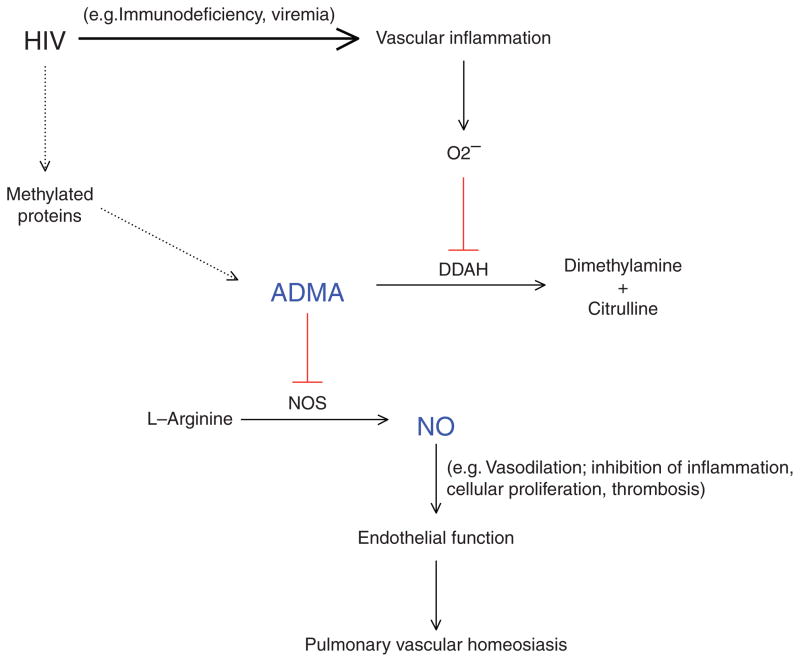
Design: HIV infection is an independent risk factor for PAH, but the underlying pathogenesis remains unclear. Chronic inflammation resulting in nitric oxide-mediated endothelial dysfunction is a key mechanism underlying other types of PAH. ADMA is an endogenous inhibitor of endothelial nitric oxide synthase. Among uninfected individuals, ADMA is associated with PAH and predicts disease-related mortality.
Methods: We measured ADMA, high sensitivity C-reactive protein, interleukin-6 (IL-6), D-dimer, and pulmonary artery systolic pressure (PASP) using echocardiography in HIV-infected individuals. Right heart catheterization (RHC) was performed in individuals with a PASP at least 30 mmHg. We performed multivariable analysis to identify factors associated with high PASP by echocardiogram and PAH by RHC.
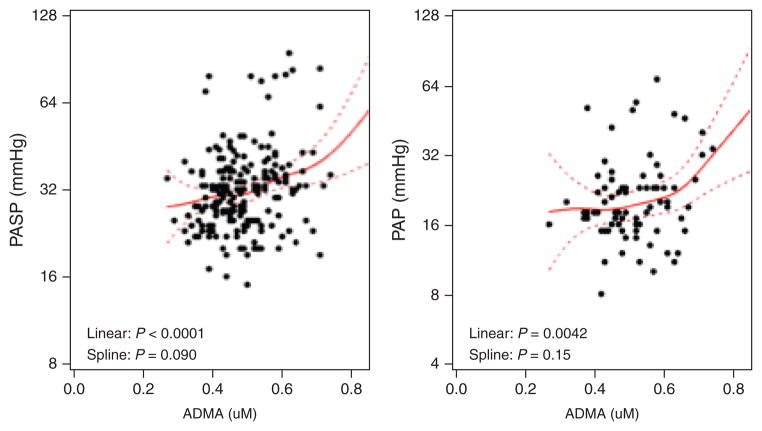
Results: Among 214 HIV-infected individuals, the median age was 50 years, 82% were men, 71% were on antiretroviral therapy, and 4.2% carried a prior diagnosis of PAH. ADMA and IL-6 were associated with increased values of PASP following multivariable adjustment (7.2% per 0.1 μmol/l, P = 0.0049 and 3.9% per doubling, P = 0.027, respectively). In adjusted analysis among the 85 participants who underwent RHC, ADMA and IL-6 were associated with higher values of mean PAP (14.2% per 0.1 μmol/l, P = 0.0014 and 5.8% per doubling, P = 0.038, respectively). However, only ADMA was associated with PAH (prevalence ratio = 1.74, P = 0.029).
Conclusion: Elevated levels of ADMA are independently associated with PAH among HIV-infected individuals. Our findings suggest that chronic HIV-associated inflammation leading to an accumulation of ADMA and subsequent nitric oxide-mediated endothelial dysfunction may represent a novel mechanism for HIV-associated PAH.
Conflict of interest statement
P.Y.H. has received honoraria from Gilead and Pfizer. The remaining authors declare no conflicts of interest.
Figures
References
-
- Kim KK, Factor SM. Membranoproliferative glomerulonephritis and plexogenic pulmonary arteriopathy in a homosexual man with acquired immunodeficiency syndrome. Hum Pathol. 1987;18:1293–1296. - PubMed
-
- Sitbon O, Lascoux-Combe C, Delfraissy JF, Yeni PG, Raffi F, De Zuttere D, et al. Prevalence of HIV-related pulmonary arterial hypertension in the current antiretroviral therapy era. Am J Respir Crit Care Med. 2008;177:108–113. - PubMed
-
- Degano B, Guillaume M, Savale L, Montani D, Jais X, Yaici A, et al. HIV-associated pulmonary arterial hypertension: survival and prognostic factors in the modern therapeutic era. AIDS. 2010;24:67–75. - PubMed
-
- Opravil M, Sereni D. Natural history of HIV-associated pulmonary arterial hypertension: trends in the HAART era. AIDS. 2008;22:S35–S40. - PubMed
Publication types
MeSH terms
Substances
Grants and funding
LinkOut - more resources
Full Text Sources
Other Literature Sources
Medical
Research Materials
