


Detection of virgin olive oil adulteration using low field unilateral NMR
- PMID: 24469355
- PMCID: PMC3958213
- DOI: 10.3390/s140202028
Detection of virgin olive oil adulteration using low field unilateral NMR
Abstract
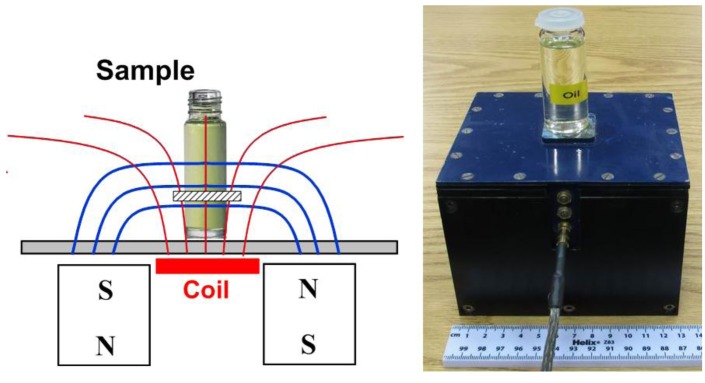
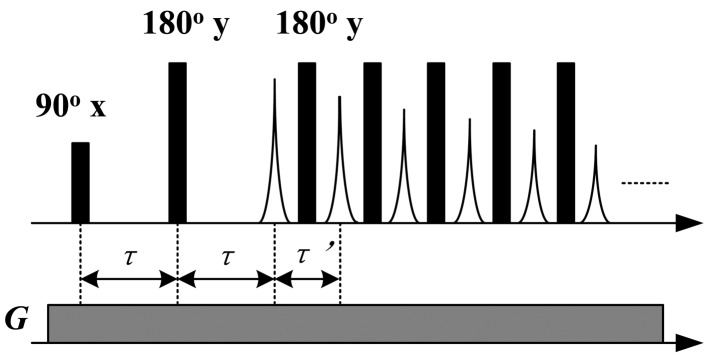
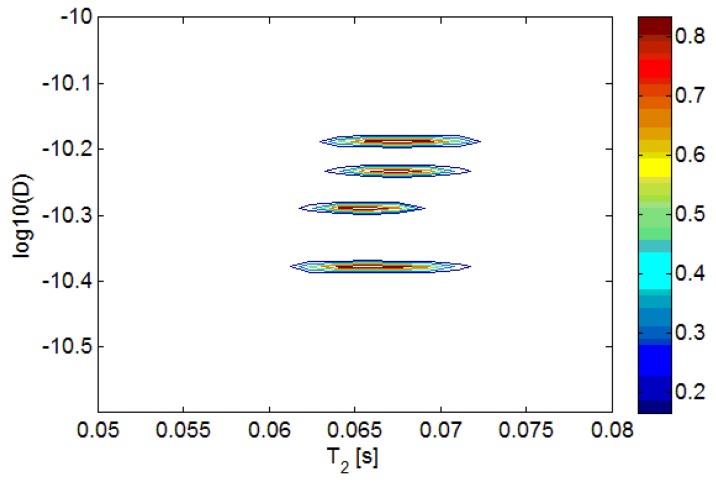
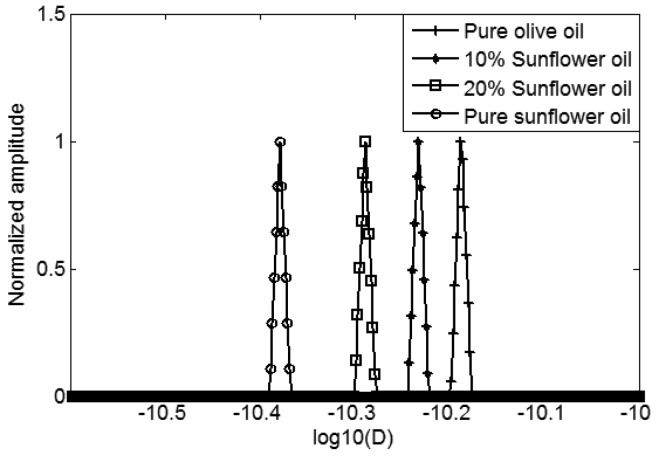
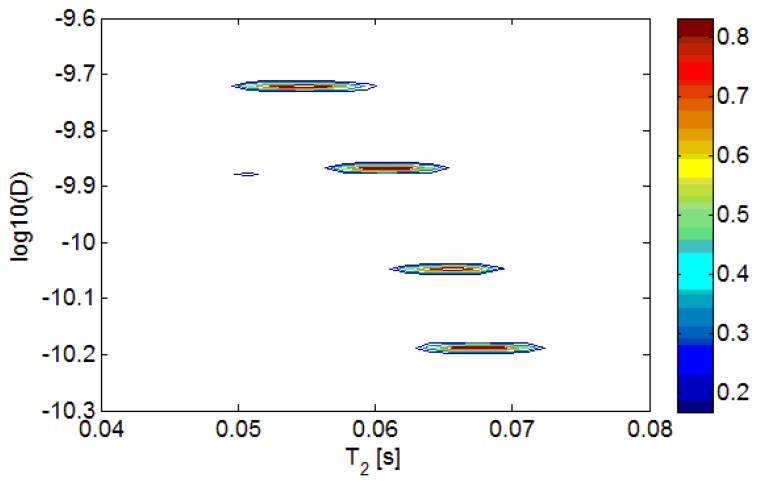
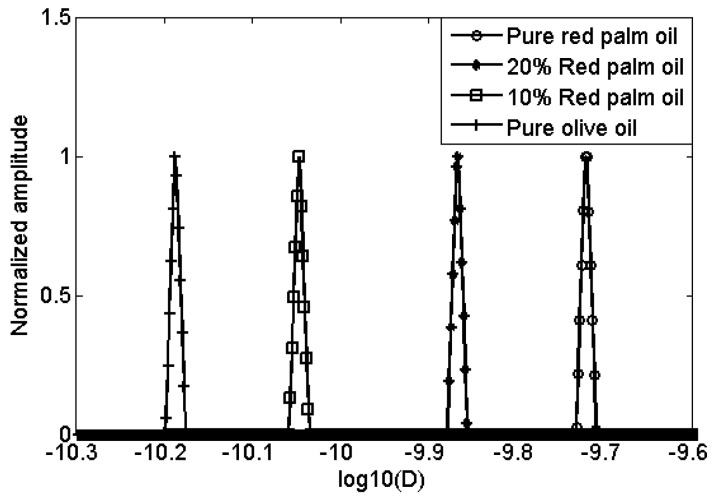
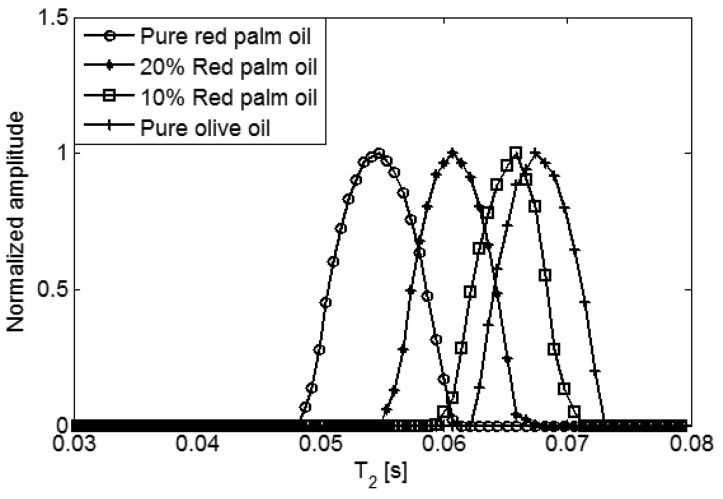
The detection of adulteration in edible oils is a concern in the food industry, especially for the higher priced virgin olive oils. This article presents a low field unilateral nuclear magnetic resonance (NMR) method for the detection of the adulteration of virgin olive oil that can be performed through sealed bottles providing a non-destructive screening technique. Adulterations of an extra virgin olive oil with different percentages of sunflower oil and red palm oil were measured with a commercial unilateral instrument, the profile NMR-Mouse. The NMR signal was processed using a 2-dimensional Inverse Laplace transformation to analyze the transverse relaxation and self-diffusion behaviors of different oils. The obtained results demonstrated the feasibility of detecting adulterations of olive oil with percentages of at least 10% of sunflower and red palm oils.
Figures
References
-
- Aparicio R., Harwood J. Handbook of Olive Oil. 2nd ed. Springer; New York, NY, USA: 2013. pp. 163–395.
-
- Ellis D.I., Brewster V.L., Dunn W.B., Allwood J.W., Golovanov A.P., Goodacre R. Fingerprinting food current technologies for the detection of food adulteration and contamination. Chem. Soc. Rev. 2012;41:5706–5727. - PubMed
-
- Frankel E.N. Chemistry of Extra Virgin Olive Oil: Adulteration, Oxidative Stability, and Antioxidants. J. Agric. Food Chem. 2010;58:5991–6006. - PubMed
-
- Flores G., del Castill M.L.R., Herraiz M., Blanch G.P. Study of the adulteration of olive oil withhazelnut oil byon-line coupled high performance liquid chromatographic and gas chromatographic analysis of filbertone. Food Chem. 2006;97:742–749.
-
- Pena F., Cardenas S., Gallego M., Valcarcel M. Detection of adulteration of olive oil with hazelnut oil by direct coupling of headspace and mass spectrometry. J. Chromatogr. A. 2005;1027:215–221. - PubMed
Publication types
MeSH terms
Substances
LinkOut - more resources
Full Text Sources
Other Literature Sources
