


Hyaluronan synthase 3 variant and anthracycline-related cardiomyopathy: a report from the children's oncology group
- PMID: 24470002
- PMCID: PMC3927733
- DOI: 10.1200/JCO.2013.50.3557
Hyaluronan synthase 3 variant and anthracycline-related cardiomyopathy: a report from the children's oncology group
Abstract
Purpose: The strong dose-dependent association between anthracyclines and cardiomyopathy is further exacerbated by the co-occurrence of cardiovascular risk factors (diabetes and hypertension). The high morbidity associated with cardiomyopathy necessitates an understanding of the underlying pathogenesis so that targeted interventions can be developed.
Patients and methods: By using a two-stage design, we investigated host susceptibility to anthracycline-related cardiomyopathy by using the ITMAT/Broad CARe cardiovascular single nucleotide polymorphism (SNP) array to profile common SNPs in 2,100 genes considered relevant to de novo cardiovascular disease.
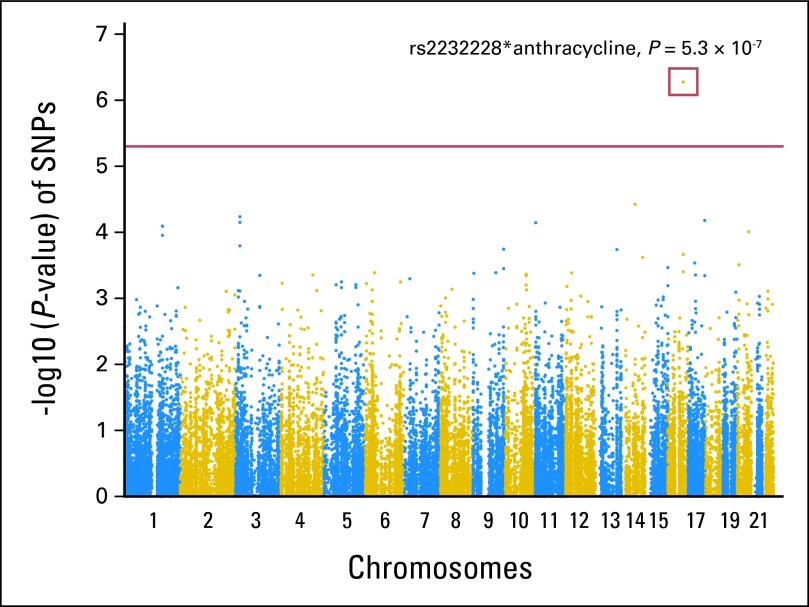
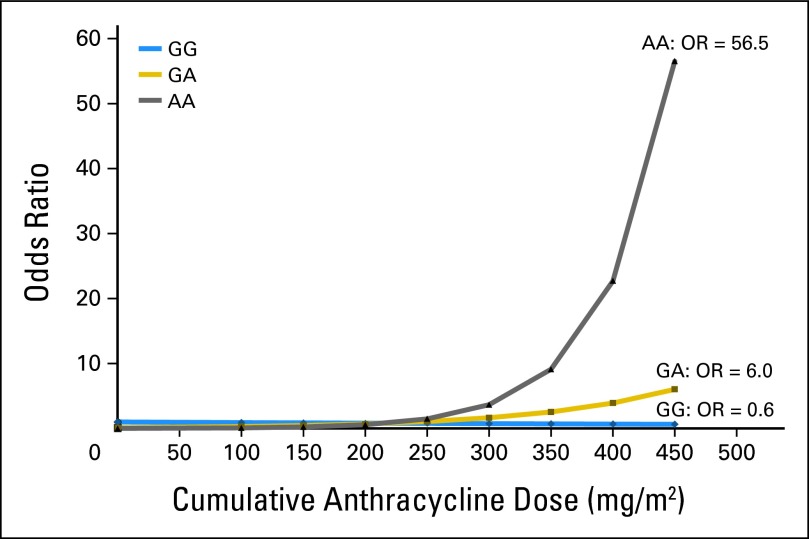
Results: By using a matched case-control design (93 cases, 194 controls), we identified a common SNP, rs2232228, in the hyaluronan synthase 3 (HAS3) gene that exerts a modifying effect on anthracycline dose-dependent cardiomyopathy risk (P = 5.3 × 10(-7)). Among individuals with rs2232228 GG genotype, cardiomyopathy was infrequent and not dose related. However, in individuals exposed to high-dose (> 250 mg/m(2)) anthracyclines, the rs2232228 AA genotype conferred an 8.9-fold (95% CI, 2.1- to 37.5-fold; P = .003) increased cardiomyopathy risk compared with the GG genotype. This gene-environment interaction was successfully replicated in an independent set of 76 patients with anthracycline-related cardiomyopathy. Relative HAS3 mRNA levels measured in healthy hearts tended to be lower among individuals with AA compared with GA genotypes (P = .09).
Conclusion: Hyaluronan (HA) produced by HAS3 is a ubiquitous component of the extracellular matrix and plays an active role in tissue remodeling. In addition, HA is known to reduce reactive oxygen species (ROS) -induced cardiac injury. The high cardiomyopathy risk associated with AA genotype could be due to inadequate remodeling and/or inadequate protection of the heart from ROS-mediated injury on high anthracycline exposure.
Conflict of interest statement
Authors' disclosures of potential conflicts of interest and author contributions are found at the end of this article.
Figures
References
-
- Grenier MA, Lipshultz SE. Epidemiology of anthracycline cardiotoxicity in children and adults. Semin Oncol. 1998;25:72–85. - PubMed
-
- Barry EV, Lipshultz SE, Sallan SE. Anthracycline-induced cardiotoxicity: Natural history, risk factors, and prevention. Presented at 44th Annual Meeting Am Soc Clin Oncol meeting; May 30-June 3, 2008; Chicago, IL.
-
- Puma N, Ruggiero A, Ridola V, et al. Anthracycline-related cardiotoxicity: Risk factors and therapeutic options in childhood cancers. SIGNA VITAE. 2008;3:30–34.
Publication types
MeSH terms
Substances
Grants and funding
LinkOut - more resources
Full Text Sources
Other Literature Sources
Medical
Molecular Biology Databases
