


Current status on biochemistry and molecular biology of microbial degradation of nicotine
- PMID: 24470788
- PMCID: PMC3891541
- DOI: 10.1155/2013/125385
Current status on biochemistry and molecular biology of microbial degradation of nicotine
Abstract
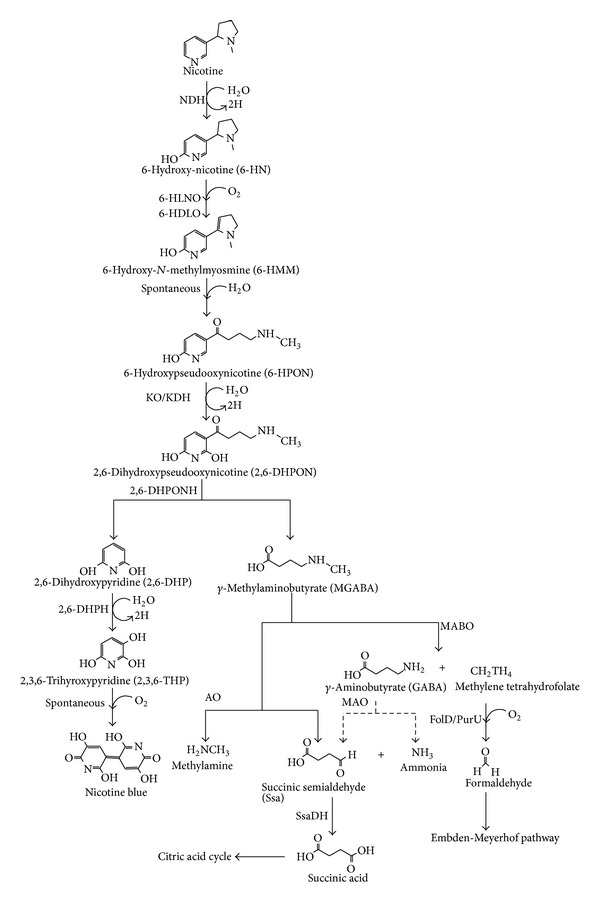
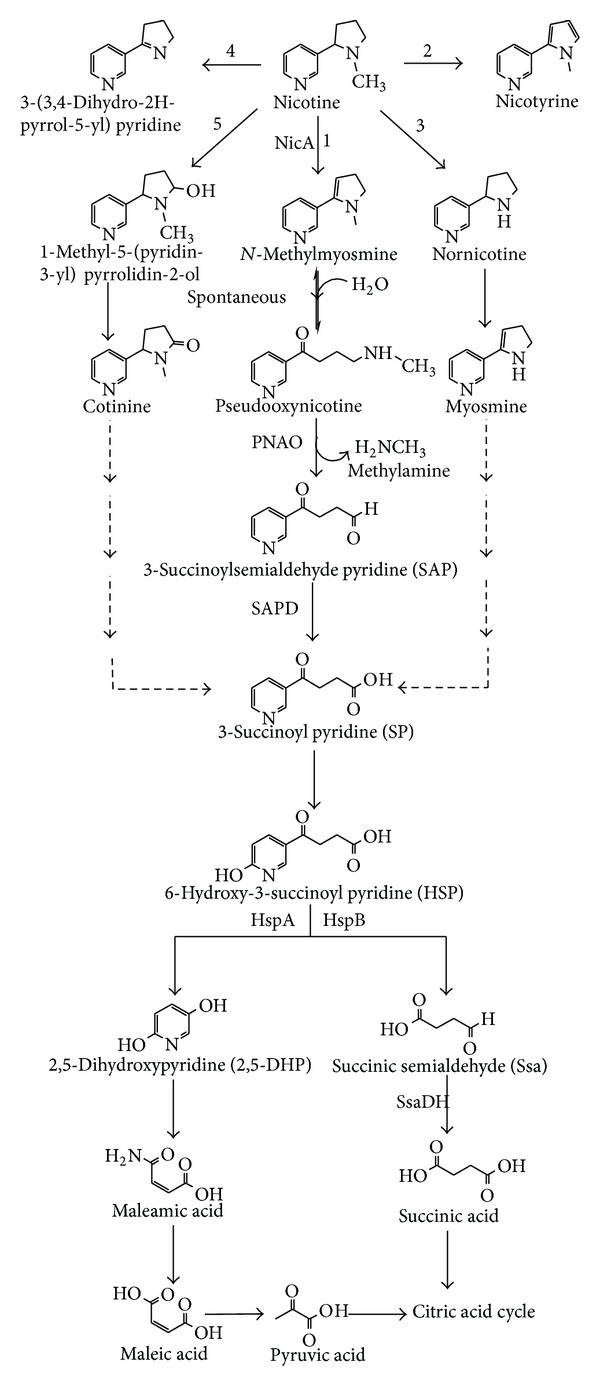
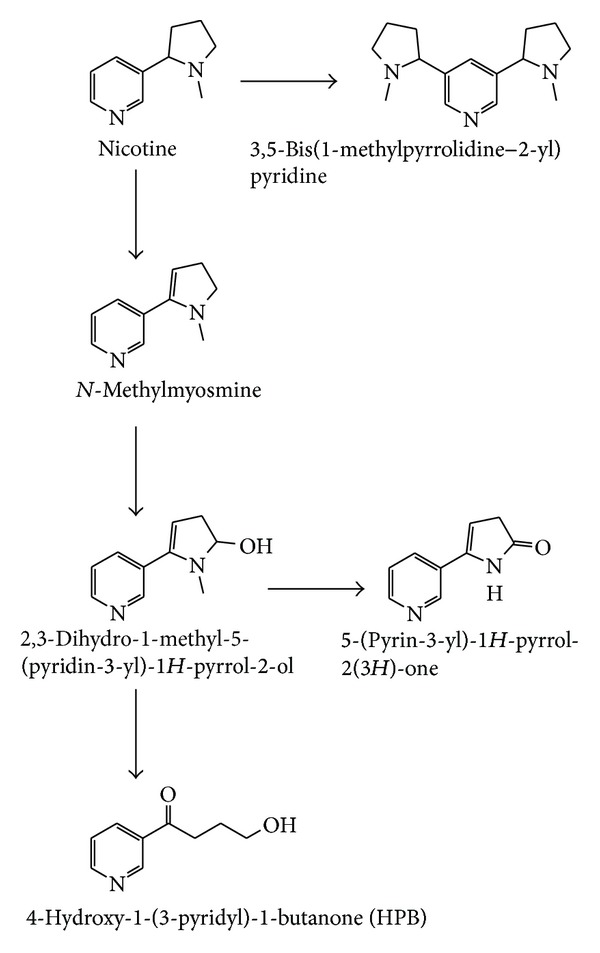
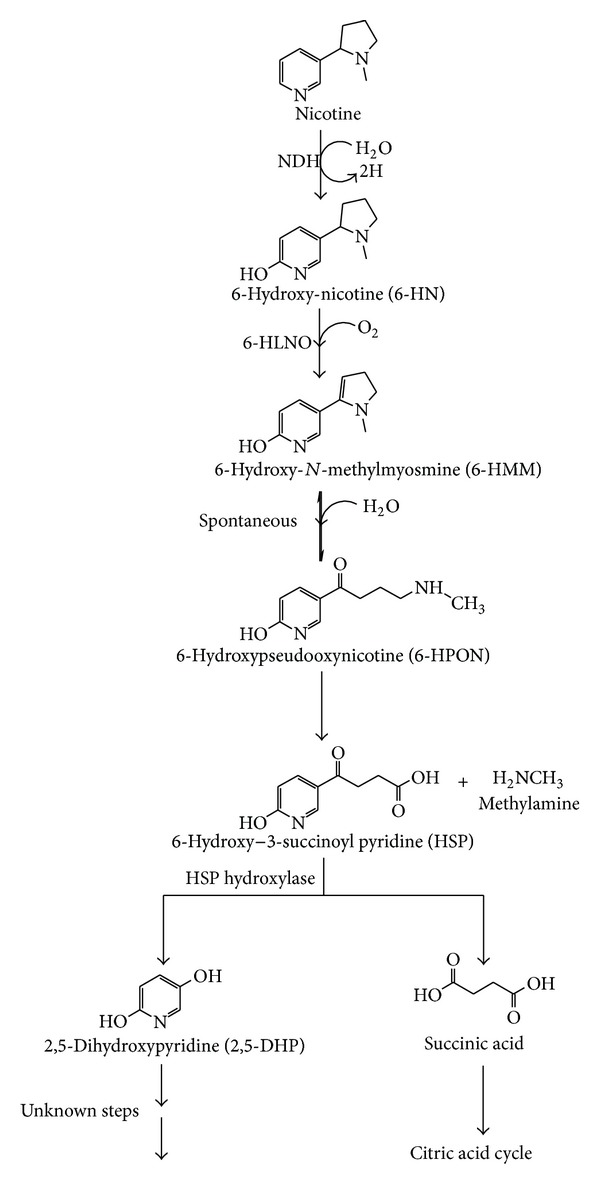
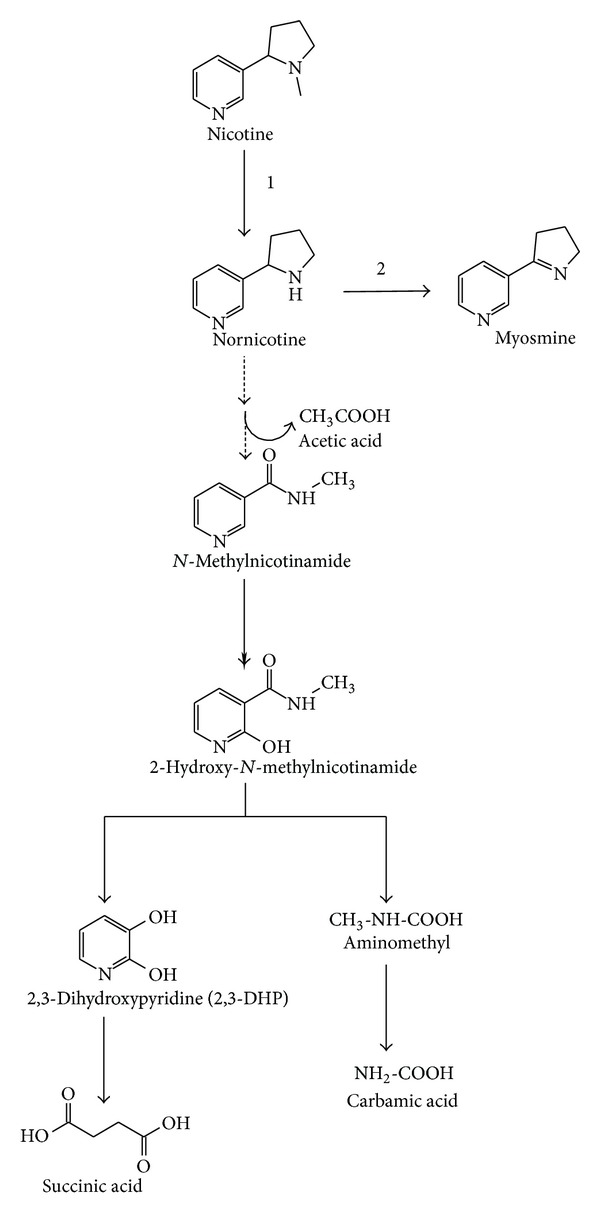
Bioremediation is one of the most promising methods to clean up polluted environments using highly efficient potent microbes. Microbes with specific enzymes and biochemical pathways are capable of degrading the tobacco alkaloids including highly toxic heterocyclic compound, nicotine. After the metabolic conversion, these nicotinophilic microbes use nicotine as the sole carbon, nitrogen, and energy source for their growth. Various nicotine degradation pathways such as demethylation pathway in fungi, pyridine pathway in Gram-positive bacteria, pyrrolidine pathway, and variant of pyridine and pyrrolidine pathways in Gram-negative bacteria have been reported. In this review, we discussed the nicotine-degrading pathways of microbes and their enzymes and biotechnological applications of nicotine intermediate metabolites.
Figures
References
-
- ERC Statistics International PLC. World Cigarettes 2005. Newmarket, UK: ERC Statistics International PLC; 2005.
-
- Raman G, Mohan K, Manohar V, Sakthivel N. Biodegradation of nicotine by a novel nicotine-degrading bacterium, Pseudomonas plecoglossicida TND35 and its new biotransformation intermediates. Biodegradation. 2013 - PubMed
-
- Dani JA, Ji D, Zhou F. Synaptic plasticity and nicotine addiction. Neuron. 2001;31(3):349–352. - PubMed
-
- Bush L, Hempfling WP, Burton H. Biosynthesis of nicotine and related compounds. In: Gorrod JW, Jacob P III, editors. Analytical Determination of Nicotine and Related Compounds and Their Metabolites. Amsterdam, The Netherlans: Elsevier; 1999. pp. 13–44.
-
- Sloan FA, Gelband H. Cancer Control Opportunities in Low- and Middle-Income Countries. Washington, DC, USA: Institute of Medicine (U. S.) Committee on Cancer Control in Low- and Middle-Income Countries, National Academies Press; - PubMed
Publication types
MeSH terms
Substances
LinkOut - more resources
Full Text Sources
Other Literature Sources
