Interventions to increase medication adherence in African-American and Latino populations: a literature review
- PMID: 24470982
- PMCID: PMC3901167
Interventions to increase medication adherence in African-American and Latino populations: a literature review
Abstract
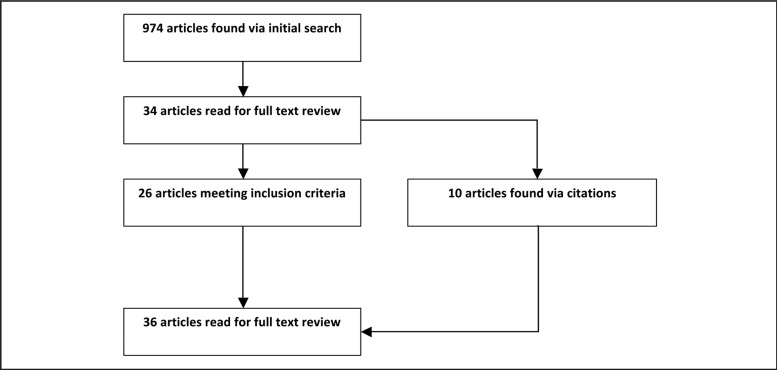
The objective of this systematic review was to investigate the effectiveness of interventions to improve medication adherence in ethnic minority populations. A literature search from January 2000 to August 2012 was conducted through PubMed/Medline, Web of Science, The Cochrane Library, and Google Scholar. Search terms used included: medication (MeSH), adherence, medication adherence (MeSH), compliance (MeSH), persistence, race, ethnicity, ethnic groups (MeSH), minority, African-American, Hispanic, Latino, Asian, Pacific Islander, and intervention. Studies which did not have ≥75% of the sample population comprised of individuals of any one ethnic background were excluded, unless the authors performed sub-group analyses by race/ethnicity. Of the 36 studies identified, 20 studies showed significant post-intervention differences. Sample population sizes ranged from 10 to 520, with a median of 126.5. The studies in this review were conducted with patients of mainly African-American and Latino descent. No studies were identified which focused on Asians, Pacific Islanders, or Native Americans. Interventions demonstrating mixed results included motivational interviewing, reminder devices, community health worker (CHW) delivered interventions, and pharmacist-delivered interventions. Directly observed therapy (DOT) was a successful intervention in two studies. Interventions which did not involve human contact with patients were ineffective. In this literature review, studies varied significantly in their methods and design as well as the populations studied. There was a lack of congruence among studies in the way adherence was measured and reported. No single intervention has been seen to be universally successful, particularly for patients from ethnic minority backgrounds.
Keywords: Medication adherence; compliance; ethnic minority; intervention.
Figures
References
-
- Centers for Disease Control, author. Health, United States 2012: With Special Feature on Emergency Care. [July 28, 2013]. Available at: http://www.cdc.gov/nchs/data/hus/hus12.pdf.
-
- World Health Organization, author. Adherence to long-term therapies: Evidence for action, 2003. [September 25, 2012]. Available at: http://www.who.int/topics/patient_adherence/en/
-
- Lee JK, Grace KA, Taylor AJ. Effect of a Pharmacy Care Program on Medication Adherence and Persistence, Blood Pressure, and Low-Density Lipoprotein Cholesterol: A Randomized Controlled Trial. JAMA. 2006;296:2563–2571. - PubMed
Publication types
MeSH terms
Grants and funding
LinkOut - more resources
Full Text Sources