


Sexual dimorphism in bite performance drives morphological variation in chameleons
- PMID: 24475183
- PMCID: PMC3903609
- DOI: 10.1371/journal.pone.0086846
Sexual dimorphism in bite performance drives morphological variation in chameleons
Abstract
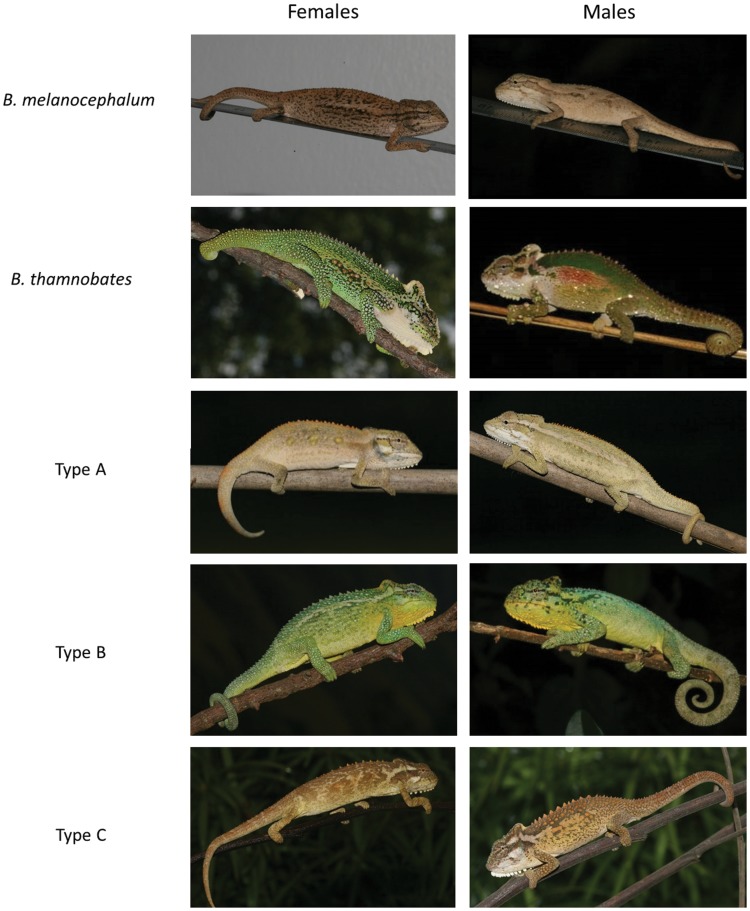
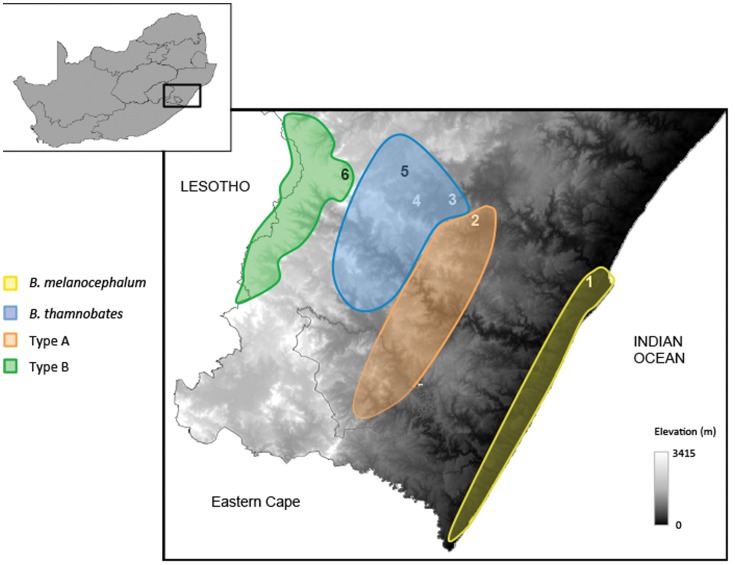
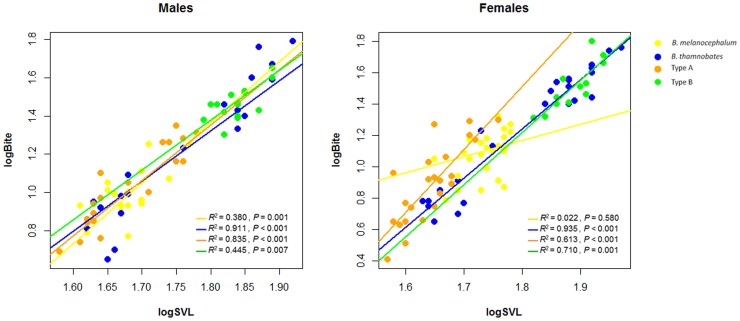
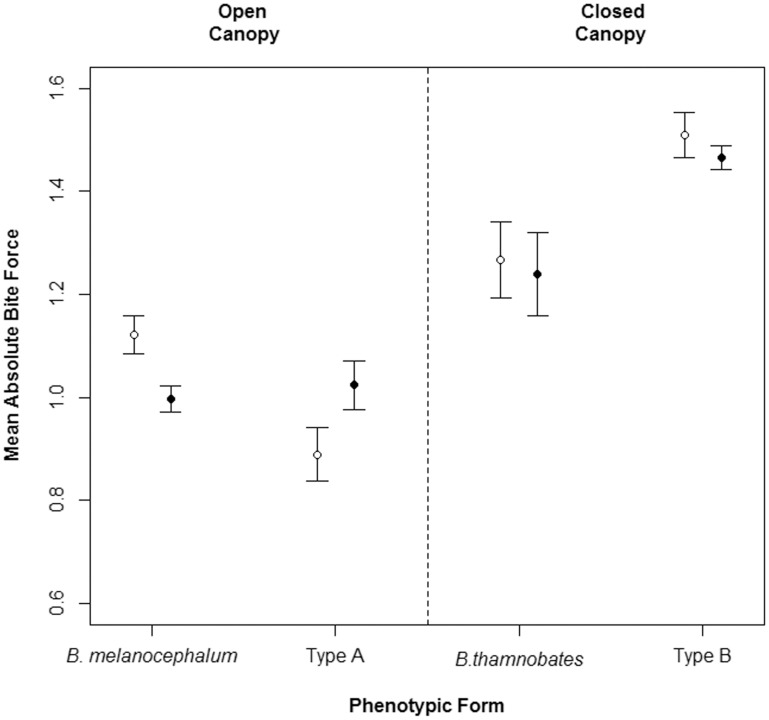
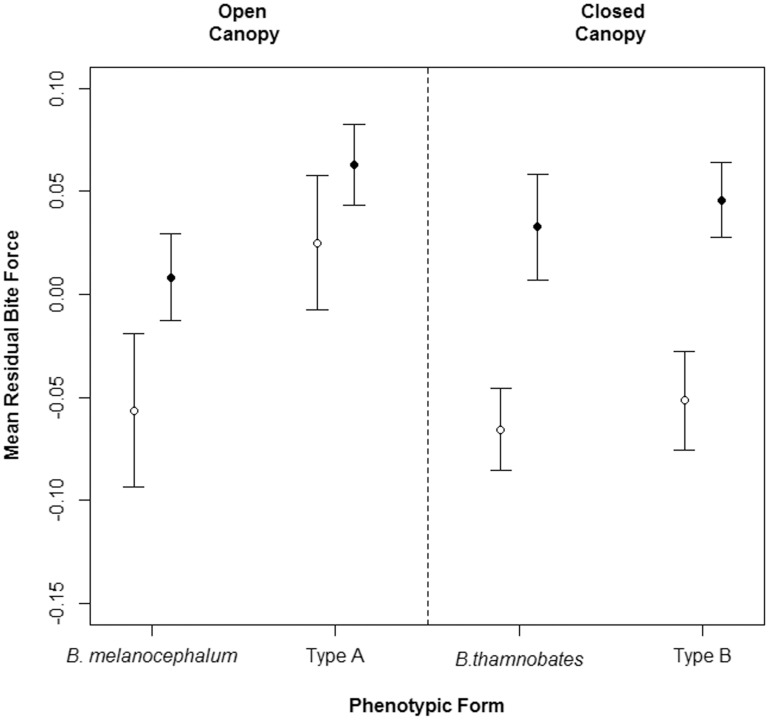
Phenotypic performance in different environments is central to understanding the evolutionary and ecological processes that drive adaptive divergence and, ultimately, speciation. Because habitat structure can affect an animal's foraging behaviour, anti-predator defences, and communication behaviour, it can influence both natural and sexual selection pressures. These selective pressures, in turn, act upon morphological traits to maximize an animal's performance. For performance traits involved in both social and ecological activities, such as bite force, natural and sexual selection often interact in complex ways, providing an opportunity to understand the adaptive significance of morphological variation with respect to habitat. Dwarf chameleons within the Bradypodion melanocephalum-Bradypodion thamnobates species complex have multiple phenotypic forms, each with a specific head morphology that could reflect its use of either open- or closed-canopy habitats. To determine whether these morphological differences represent adaptations to their habitats, we tested for differences in both absolute and relative bite performance. Only absolute differences were found between forms, with the closed-canopy forms biting harder than their open-canopy counterparts. In contrast, sexual dimorphism was found for both absolute and relative bite force, but the relative differences were limited to the closed-canopy forms. These results indicate that both natural and sexual selection are acting within both habitat types, but to varying degrees. Sexual selection seems to be the predominant force within the closed-canopy habitats, which are more protected from aerial predators, enabling chameleons to invest more in ornamentation for communication. In contrast, natural selection is likely to be the predominant force in the open-canopy habitats, inhibiting the development of conspicuous secondary sexual characteristics and, ultimately, enforcing their overall diminutive body size and constraining performance.
Conflict of interest statement
Figures
References
-
- Schluter D (2000) The Ecology of Adaptive Radiation; Harvey PH, May RM, editors. New York: Oxford University Press.
-
- Leal M, Fleishman LJ (2004) Differences in visual signal design and detectability between allopatric populations of Anolis lizards. American Naturalist 163: 26–39. - PubMed
-
- Herrel A, Spithoven L, Van Damme R, De Vree F (1999) Sexual dimorphism of head size in Gallotia galloti: testing the niche divergence hypothesis by functional analysis. Functional Ecology 13: 289–297.
-
- Measey GJ, Hopkins K, Tolley KA (2009) Morphology, ornaments and performance in two chameleon ecomorphs: is the casque bigger than the bite? Zoology 112: 217–226. - PubMed
Publication types
MeSH terms
LinkOut - more resources
Full Text Sources
Other Literature Sources
