


Active immunotherapy options for Alzheimer's disease
- PMID: 24476230
- PMCID: PMC3979042
- DOI: 10.1186/alzrt237
Active immunotherapy options for Alzheimer's disease
Abstract
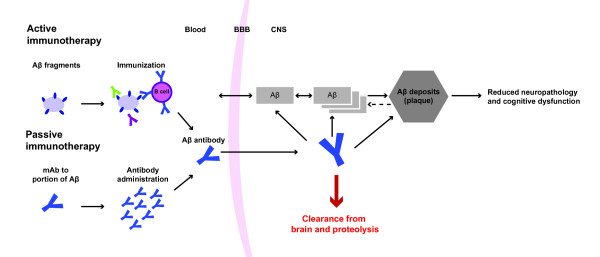
Alzheimer's disease (AD) is the most common cause of dementia and a major contributor to disability and dependency among older people. AD pathogenesis is associated with the accumulation of amyloid-beta protein (Aβ) and/or hyperphosphorylated tau protein in the brain. At present, current therapies provide temporary symptomatic benefit, but do not treat the underlying disease. Recent research has thus focused on investigating the molecular and cellular pathways and processes involved in AD pathogenesis to support the development of effective disease-modifying agents. In accordance with the existing Aβ-cascade hypothesis for AD pathogenesis, immunotherapy has been the most extensively studied approach in Aβ-targeted therapy. Both passive and active immunotherapies have been shown to effectively reduce Aβ accumulation and prevent downstream pathology in preclinical models. Following AN1792, second-generation active immunotherapies have shown promising results in terms of antibody response and safety. Comparatively, tau immunotherapy is not as advanced, but preclinical data support its development into clinical trials. Results from active amyloid-based immunotherapy studies in preclinical models indicate that intervention appears to be more effective in early stages of amyloid accumulation, highlighting the importance of diagnosing AD as early as possible and undertaking clinical trials at this stage. This strategy, combined with improving our understanding of the complex AD pathogenesis, is imperative to the successful development of these disease-modifying agents. This paper will review the active immunotherapies currently in development, including the benefits and challenges associated with this approach.
Figures
References
-
- Dementia Fact Sheet No. 362. http://www.who.int/mediacentre/factsheets/fs362/en/
-
- McKhann G, Drachman D, Folstein M, Katzman R, Price D, Stadlan EM. Clinical diagnosis of alzheimer’s disease: report of the NINCDS-adrda work group under the auspices of department of health and human services task force on alzheimer’s disease. Neurology. 1984;6:939–944. doi: 10.1212/WNL.34.7.939. - DOI - PubMed
Publication types
LinkOut - more resources
Full Text Sources
Other Literature Sources
