


Why model?
- PMID: 24478728
- PMCID: PMC3904180
- DOI: 10.3389/fphys.2014.00021
Why model?
Abstract
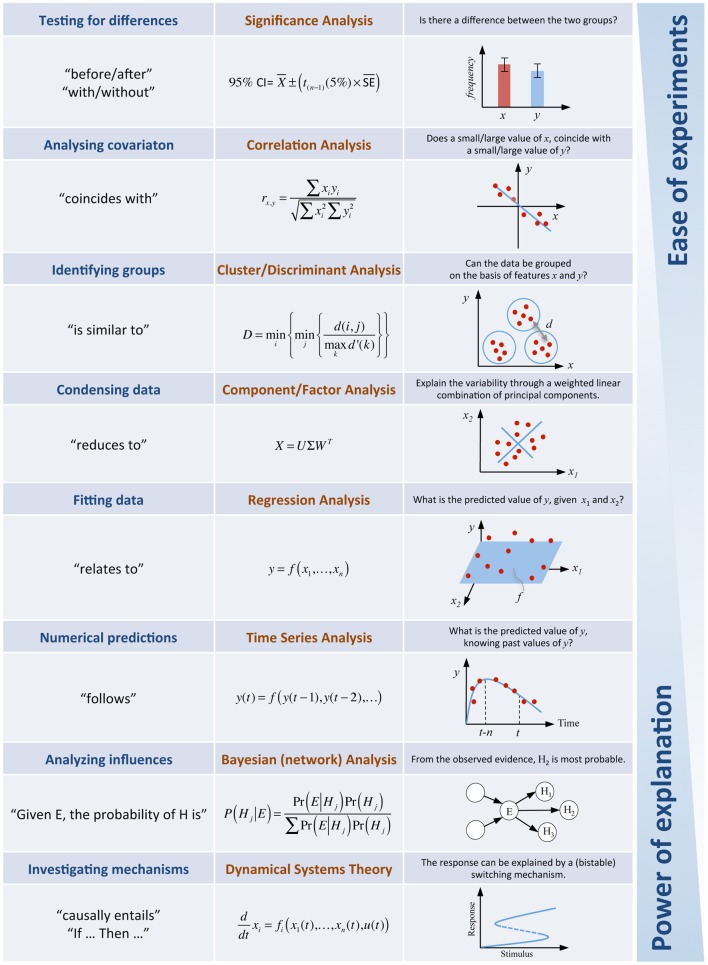
Next generation sequencing technologies are bringing about a renaissance of mining approaches. A comprehensive picture of the genetic landscape of an individual patient will be useful, for example, to identify groups of patients that do or do not respond to certain therapies. The high expectations may however not be satisfied if the number of patient groups with similar characteristics is going to be very large. I therefore doubt that mining sequence data will give us an understanding of why and when therapies work. For understanding the mechanisms underlying diseases, an alternative approach is to model small networks in quantitative mechanistic detail, to elucidate the role of gene and proteins in dynamically changing the functioning of cells. Here an obvious critique is that these models consider too few components, compared to what might be relevant for any particular cell function. I show here that mining approaches and dynamical systems theory are two ends of a spectrum of methodologies to choose from. Drawing upon personal experience in numerous interdisciplinary collaborations, I provide guidance on how to model by discussing the question "Why model?"
Keywords: cell biology; mathematical modeling; systems biology; systems medicine.
Figures
References
-
- Basanta D., Strand D. W., Lukner R. B., Franco O. E., Cliffel D. E., Ayala G. E., et al. (2009). The role of transforming growth factor-beta-mediated tumor-stroma interactions in prostate cancer progression: an integrative approach. Cancer Res. 69, 7111–7120 10.1158/0008-5472.CAN-08-3957 - DOI - PMC - PubMed
-
- Epstein J. M. (2008). Why model? J. Artif. Soc. Soc. Simul. 11, 12 Available online at: http://jasss.soc.surrey.ac.uk/11/4/12.html
Publication types
LinkOut - more resources
Full Text Sources
Other Literature Sources
