Seroprevalence of chikungunya in southern odisha
- PMID: 24479040
- PMCID: PMC3894024
- DOI: 10.4103/2249-4863.109939
Seroprevalence of chikungunya in southern odisha
Abstract
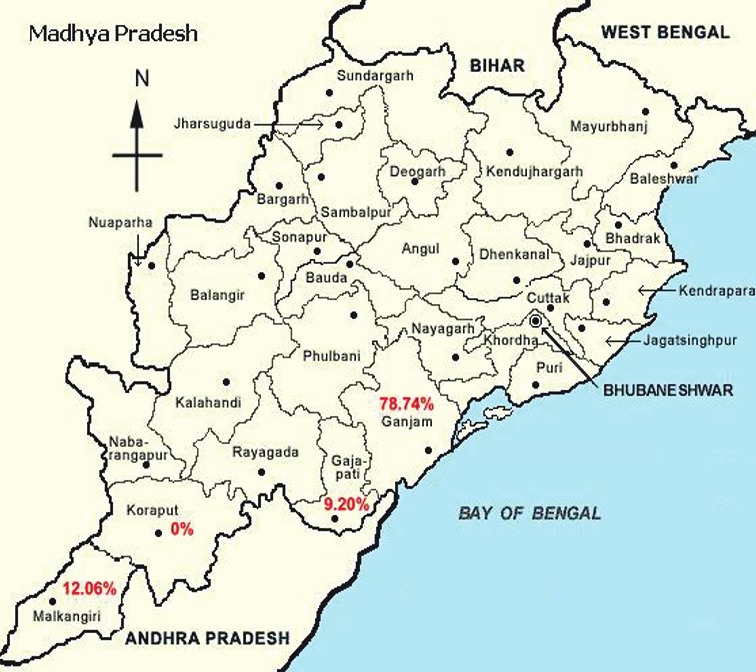
Background: The emergence of chikungunya (CHIK) infection was observed in Odisha, India in 2006. Thereafter many cases with symptoms suggestive of CHIK were reported from different districts of Southern-Odisha. This study was aimed to know the seroprevalence, clinical presentations and seasonal trends of CHIK infection in this region.
Materials and methods: This study was conducted in a tertiary hospital of this region. Serum samples received in the Department of Microbiology from various districts of Southern-Odisha from April 2011 to March 2012 were included in the study. The samples were tested for CHIK and dengue Immunoglobin M (IgM) antibodies by enzyme-linked immunosorbent assay and malaria parasite by immunochromatographic test (ICT) method.
Results: Out of the 678 serum samples tested, 174 were positive for CHIK, 15 for dengue and two samples were positive for both CHIK and dengue IgM antibodies. The most affected age group was 16-45 years. Females were more affected than males.
Conclusion: The seroprevalence of CHIK among the suspected cases was 25.7%. Co-infection with CHIK and dengue was found to be 1.15%. The infection had spread to new areas during this outbreak.
Keywords: Chikungunya; IgM antibodies; seroprevalence.
Conflict of interest statement
Figures
References
LinkOut - more resources
Full Text Sources
Other Literature Sources
Miscellaneous