


Depression severity is associated with increased risk behaviors and decreased CD4 cell counts
- PMID: 24479743
- PMCID: PMC4349330
- DOI: 10.1080/09540121.2014.880399
Depression severity is associated with increased risk behaviors and decreased CD4 cell counts
Abstract
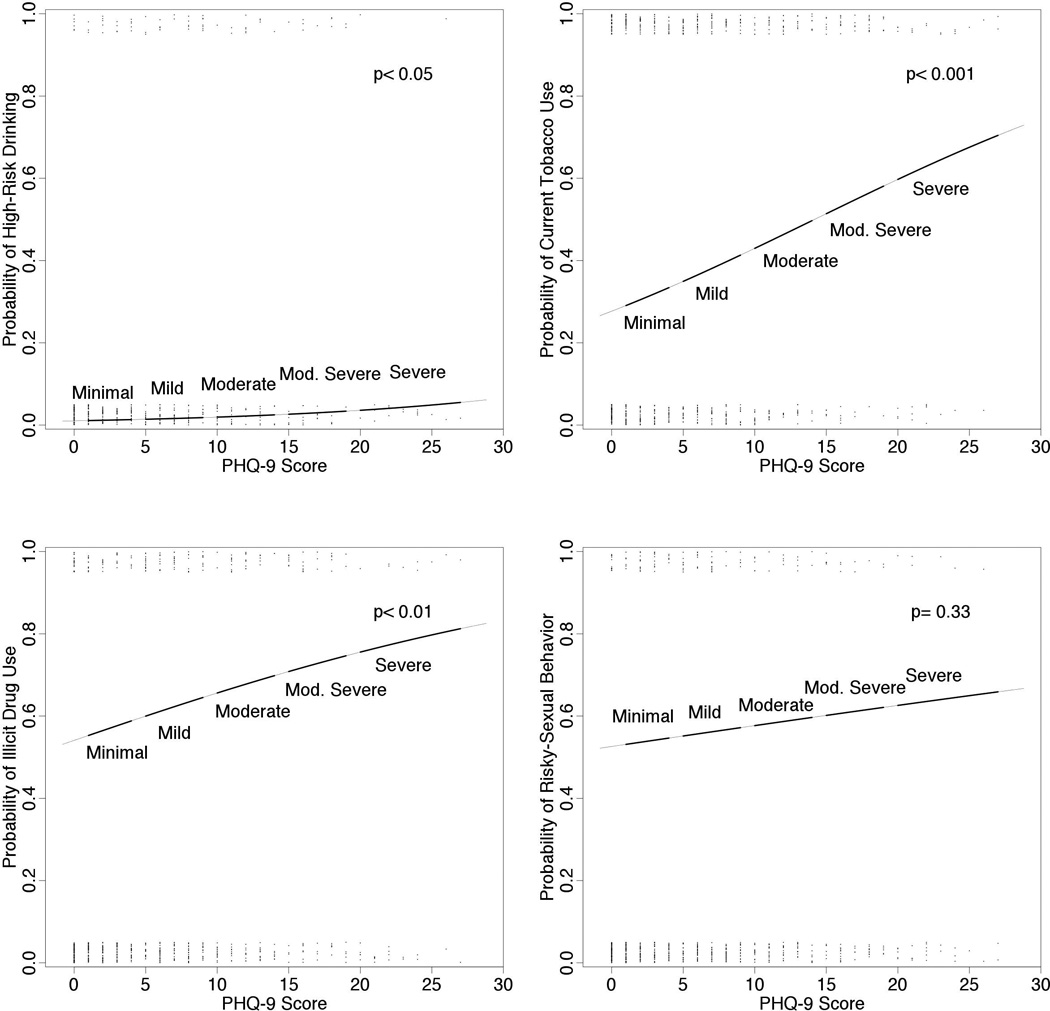
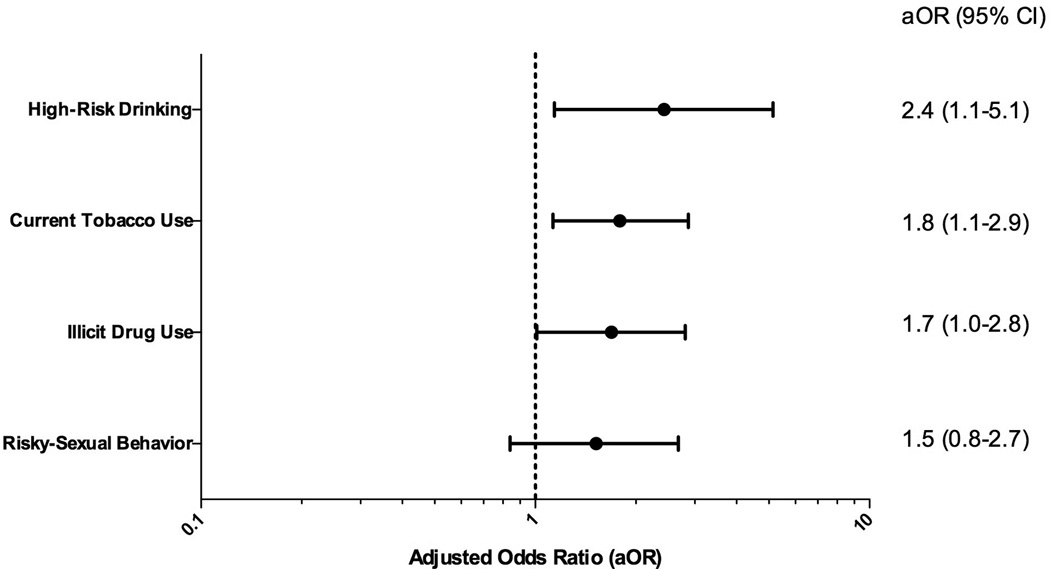
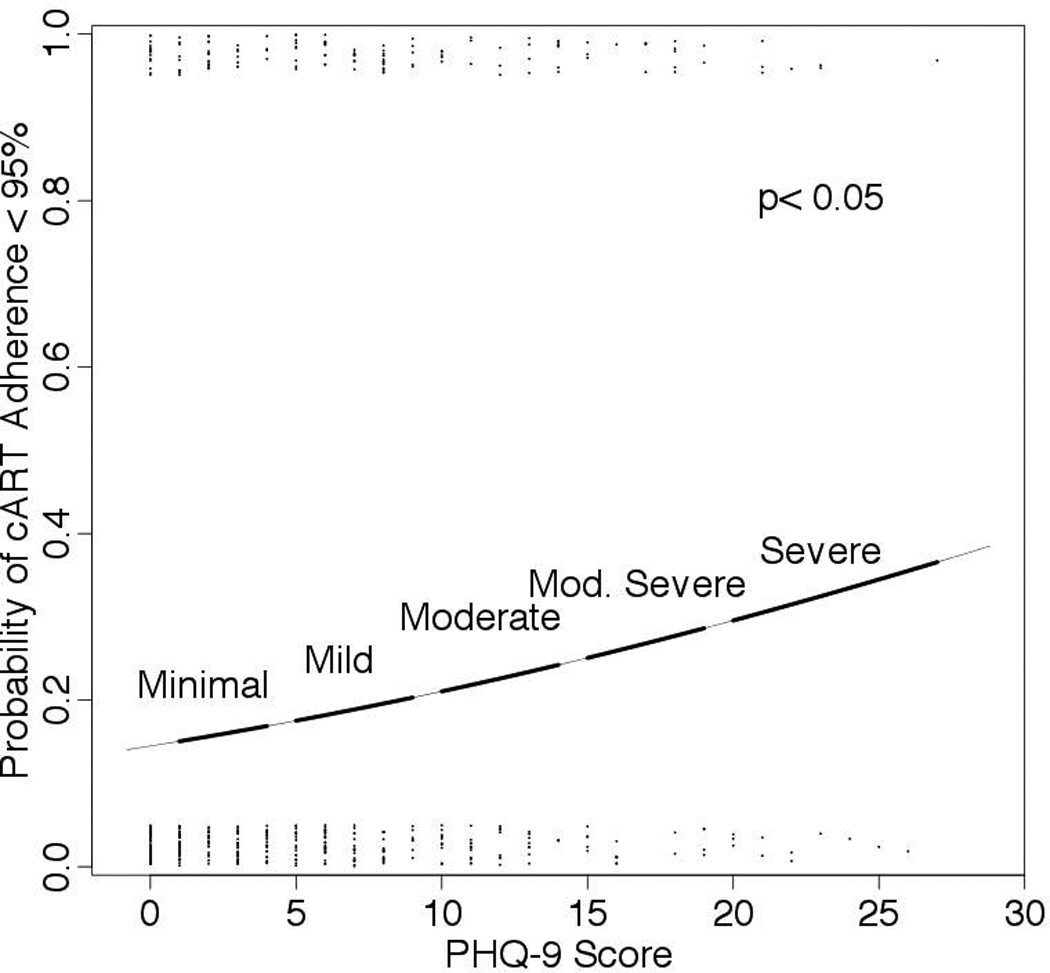
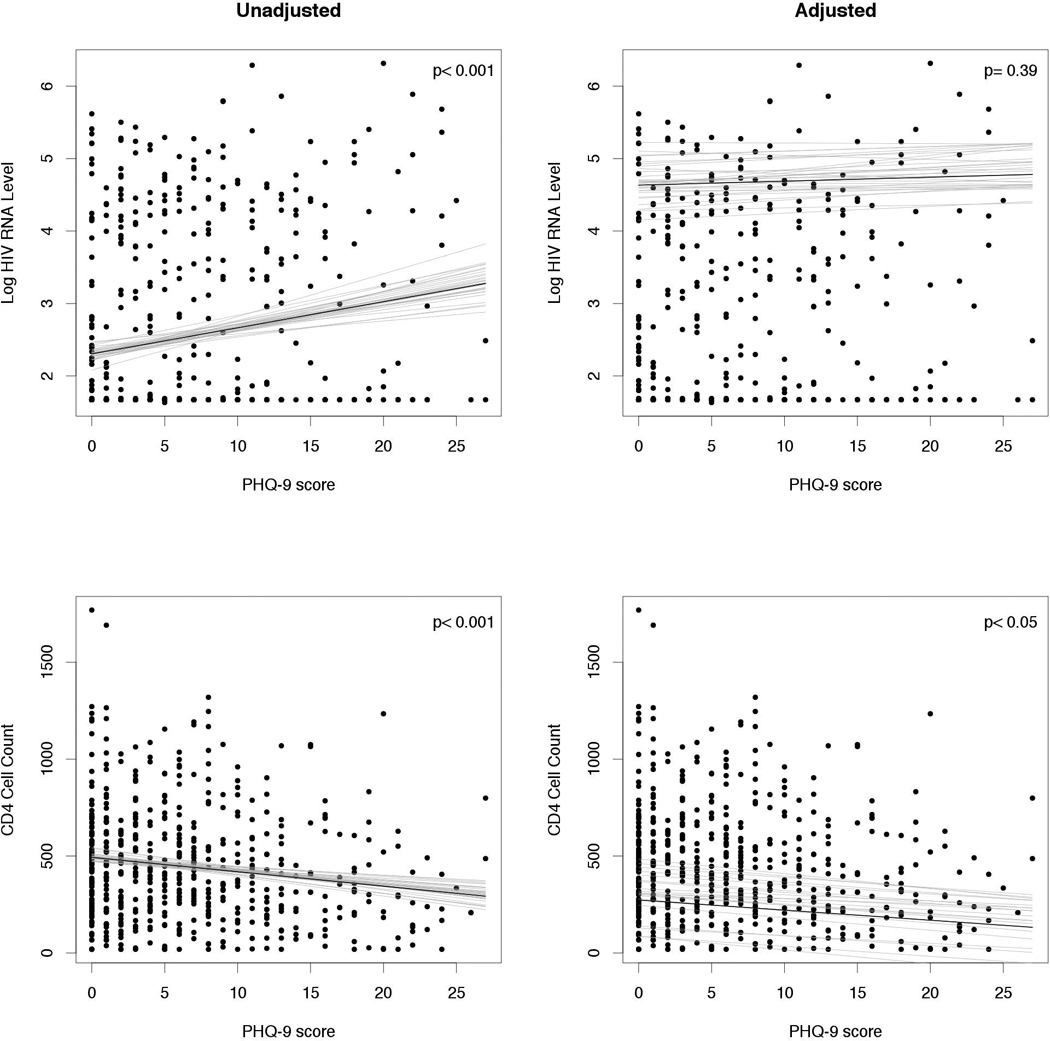
Depression is a common comorbidity among HIV-infected individuals. We studied the relationship between depressive symptoms, risk behaviors (risky-sexual behavior, tobacco, alcohol, and illicit drug use) and HIV outcomes. This cross-sectional study conducted in 2009 at the Washington University HIV Clinic included screening for depression with patient health questionnaire, survey of sexual behavior, illicit drug, alcohol, and tobacco use within 30 days. Sociodemographics, plasma HIV RNA levels, CD4 cell counts, and sexually transmitted disease test results were obtained from medical records. Multivariate logistic and linear regression models were used to assess the association between depressive symptoms severity and risk behaviors, HIV outcomes and combination antiretroviral therapy (cART) adherence. A total of 624 persons completed the assessment of whom 432 (69%) were male and 426 (68%) African-American. The median CD4 cell count was 410 cells/mm(3) and 479 persons (77%) were on cART of whom 112 (23%) had HIV RNA level > 400 copies/mL. Overall, 96 (15%) had symptoms of major depressive disorder. Depressive symptom severity was associated with increased likelihood of high-risk drinking (odds ratio [OR], 2.4; 95% confidence interval [CI], 1.1-5.1), current tobacco use (OR, 1.8; 95% CI, 1.1-2.9), illicit drug use (OR, 1.7; 95% CI, 1.0-2.8), and risky-sexual behavior (OR, 1.5; 95% CI, 0.8-2.7). Suboptimal cART adherence (visual analog scale < 95%) was also associated with depressive symptoms severity (p < 0.05). After adjustment for age, sex, race, receipt of cART, and cART adherence, depressive symptoms severity was independently associated with lower CD4 cell count (p < 0.05) but not with higher HIV RNA level (p = 0.39). Depression adversely affects HIV-infected individuals, requiring greater effort at utilizing multidisciplinary interventions.
Keywords: HIV; adherence; antiretroviral therapy; depression; risk behaviors.
Figures
References
-
- Benton TD. Depression and HIV/AIDS. Current Psychiatry Reports. 2008;10(3):280–285. - PubMed
-
- Berger-Greenstein JA, Cuevas CA, Brady SM, Trezza G, Richardson MA, Keane TM. Major depression in patients with HIV/AIDS and substance abuse. AIDS Patient Care and STDs. 2007;21(12):942–955. - PubMed
-
- Bing EG, Burnam MA, Longshore D, Fleishman JA, Sherbourne CD, London AS, Shapiro M. Psychiatric disorders and drug use among human immunodeficiency virus-infected adults in the United States. Archives of General Psychiatry. 2001;58(8):721–728. - PubMed
-
- Bradley MV, Remien RH, Dolezal C. Depression symptoms and sexual HIV risk behavior among serodiscordant couples. Psychosomatic Medicine. 2008;70(2):186–191. - PubMed
-
- Ciesla JA, Roberts JE. Meta-analysis of the relationship between HIV infection and risk for depressive disorders. The American Journal of Psychiatry. 2001;158(5):725–730. - PubMed
Publication types
MeSH terms
Substances
Grants and funding
LinkOut - more resources
Full Text Sources
Other Literature Sources
Medical
Research Materials
