


Photodissociation mass spectrometry: new tools for characterization of biological molecules
- PMID: 24481009
- PMCID: PMC3966968
- DOI: 10.1039/c3cs60444f
Photodissociation mass spectrometry: new tools for characterization of biological molecules
Abstract
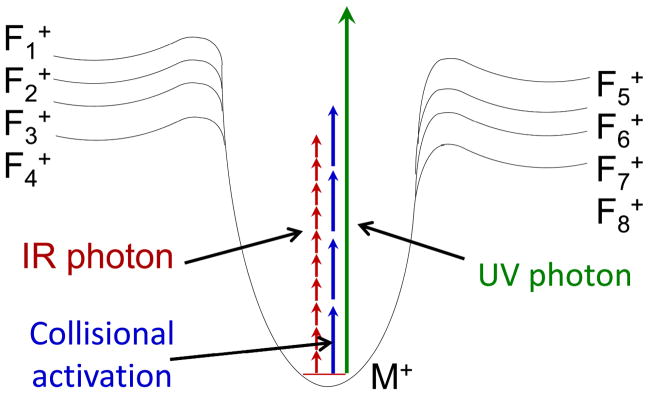
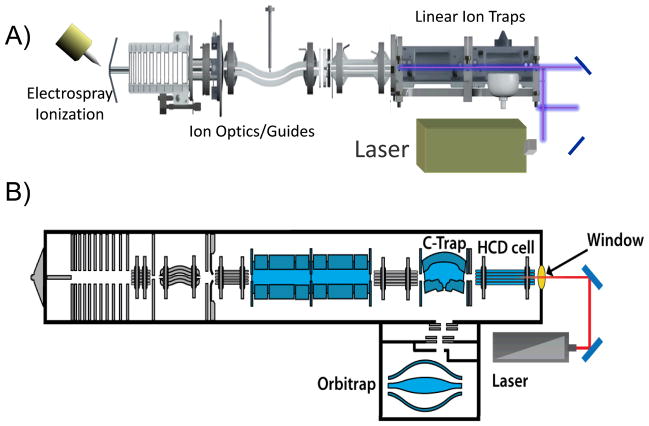
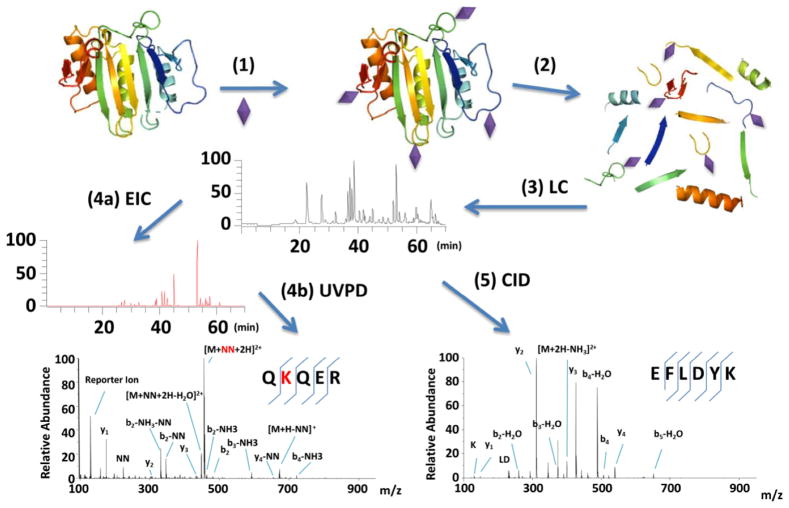
Photodissociation mass spectrometry combines the ability to activate and fragment ions using photons with the sensitive detection of the resulting product ions by mass spectrometry. This combination affords a versatile tool for characterization of biological molecules. The scope and breadth of photodissociation mass spectrometry have increased substantially over the past decade as new research groups have entered the field and developed a number of innovative applications that illustrate the ability of photodissociation to produce rich fragmentation patterns, to cleave bonds selectively, and to target specific molecules based on incorporation of chromophores. This review focuses on many of the key developments in photodissociation mass spectrometry over the past decade with a particular emphasis on its applications to biological molecules.
Figures
References
-
- Griffiths WJ, Wang Y. Chem Soc Rev. 2009;38:1882–1896. - PubMed
-
- Yates JR, Ruse CI, Nakorchevsky A. Annu Rev Biomed Eng. 2009;11:49–79. - PubMed
-
- Robinson CV. Cold Spring Harbor Protocols. 2009 pdb prot5180. - PubMed
-
- Beglarek U, Leichtle A, Brugel M, Kortz L, Brauer R, Bresler K, Thiery J, Fiedler GM. Mol Cellularl Endocrinology. 2009;301:266–271. - PubMed
Publication types
MeSH terms
Substances
Grants and funding
LinkOut - more resources
Full Text Sources
Other Literature Sources
Miscellaneous
