


IFN-alpha-induced cortical and subcortical glutamate changes assessed by magnetic resonance spectroscopy
- PMID: 24481242
- PMCID: PMC4023151
- DOI: 10.1038/npp.2014.25
IFN-alpha-induced cortical and subcortical glutamate changes assessed by magnetic resonance spectroscopy
Abstract
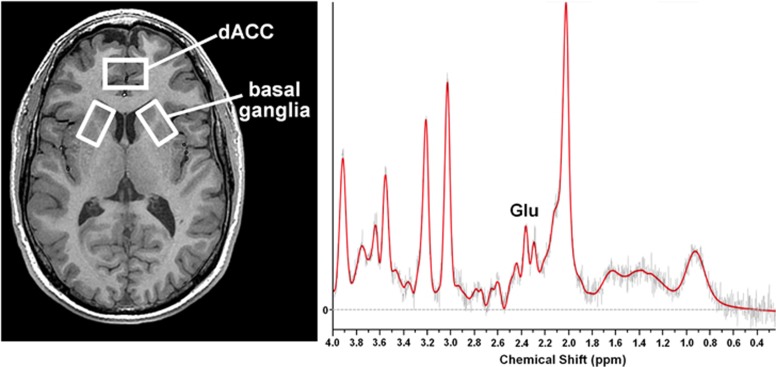
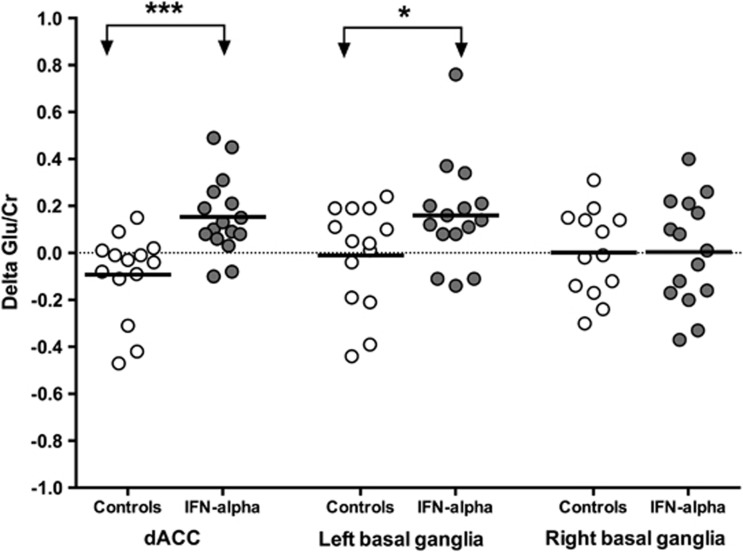
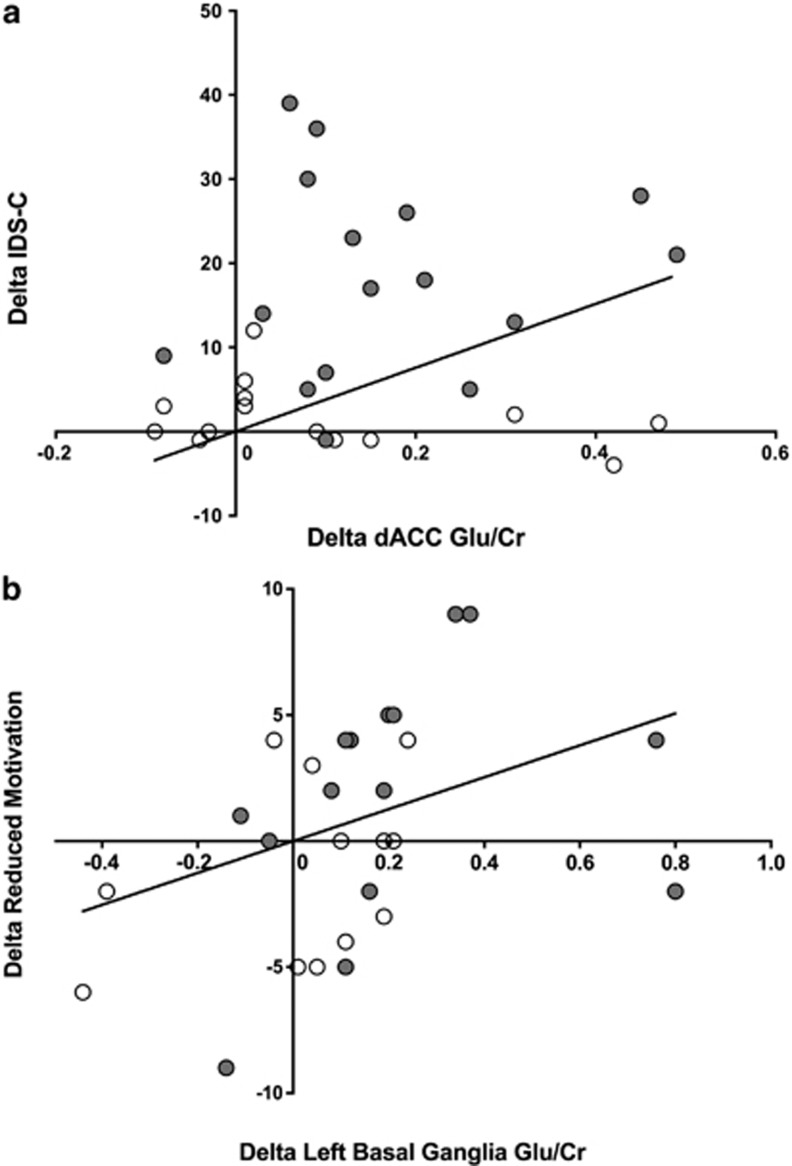
Cytokine effects on behavior may be related to alterations in glutamate metabolism. We therefore measured glutamate concentrations in brain regions shown to be affected by inflammatory stimuli including the cytokine interferon (IFN)-alpha. IFN-alpha is known to alter neural activity in the dorsal anterior cingulate cortex (dACC) and basal ganglia in association with symptoms of depression and increases in peripheral cytokines including the tumor necrosis factor (TNF) and its soluble receptor. Single-voxel magnetic resonance spectroscopy (MRS) was employed to measure glutamate concentrations normalized to creatine (Glu/Cr) in dACC and basal ganglia of 31 patients with hepatitis C before and after ∼ 1 month of either no treatment (n = 14) or treatment with IFN-alpha (n = 17). Depressive symptoms were measured at each visit using the Inventory of Depressive Symptoms-Clinician Rating (IDS-C) and the Multidimensional Fatigue Inventory. IFN-alpha was associated with a significant increase in Glu/Cr in dACC and left basal ganglia. Increases in dACC Glu/Cr were positively correlated with scores on the IDS-C in the group as a whole, but not in either group alone. Glu/Cr increases in left basal ganglia were correlated with decreased motivation in the group as a whole and in IFN-alpha-treated subjects alone. No Glu/Cr changes were found in the right basal ganglia, and no significant correlations were found between Glu/Cr and the inflammatory markers. IFN-alpha-induced increases in glutamate in dACC and basal ganglia are consistent with MRS findings in bipolar depression and suggest that inflammatory cytokines may contribute to glutamate alterations in patients with mood disorders and increased inflammation.
Figures
References
-
- Ajilore O, Haroon E, Darwin C, Binesh N, Thomas A, Kumaran S, et al. Measurement of brain betabolites in type 2 diabetes and depression using proton magnetic resonance spectroscopy. Neuropsychopharmacology. 2005;30:S94. - PubMed
-
- Ajilore O, Haroon E, Kumaran S, Darwin C, Binesh N, Mintz J, et al. Measurement of brain metabolites in patients with type 2 diabetes and major depression using proton magnetic resonance spectroscopy. Neuropsychopharmacology. 2007;32:1224–1231. - PubMed
-
- Bottomley PA. Spatial localization in NMR spectroscopy in vivo. Ann N Y Acad Sci. 1987;508:333–348. - PubMed
Publication types
MeSH terms
Substances
Grants and funding
LinkOut - more resources
Full Text Sources
Other Literature Sources
Medical
