doi: 10.1007/978-1-62703-989-5_21.
Bone marrow stromal cell assays: in vitro and in vivo
Affiliations
- PMID: 24482181
- PMCID: PMC4152770
- DOI: 10.1007/978-1-62703-989-5_21
Item in Clipboard
Bone marrow stromal cell assays: in vitro and in vivo
Methods Mol Biol.
2014.
Erratum in
- Methods Mol Biol. 2014;1130:E3
Abstract
Populations of bone marrow stromal cells (BMSCs, also known as bone marrow-derived "mesenchymal stem cells") contain a subset of cells that are able to recapitulate the formation of a bone/marrow organ (skeletal stem cells, SSCs). The biological properties of BMSC cultures are assessed by a variety of assays, both in vitro and in vivo. Application of these assays in an appropriate fashion provides a great deal of information on the role of BMSCs, and the subset of SSCs, in health and in disease.
Figures
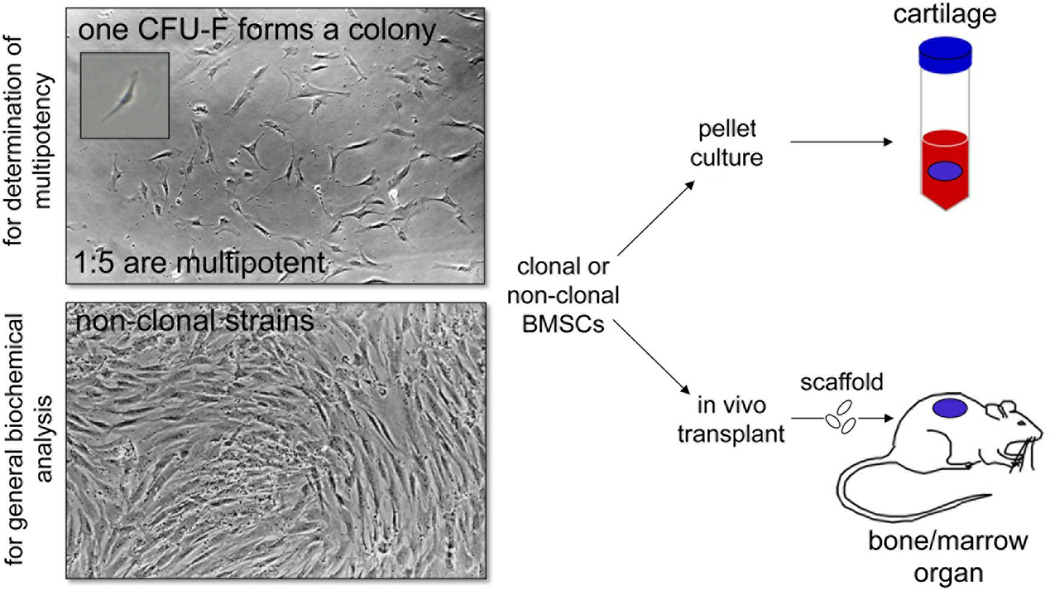
Establishment of clonal and non-clonal cultures of BMSCs. Clonal cultures are essential in order to determine the multipotency of the SSC subset of cells within the population. Single cells of bone marrow are plated at clonal density, and a single CFU-F adheres, and proliferates to form a colony. When bone marrow cells are plated at high density, non-clonal BMSC cultures are generated that can be used for general biochemical analysis. When both types of cultures near confluency, they are assessed for cartilage formation by pellet cultures, or for the ability to support the formation of a bone/marrow organ upon in vivo transplantation with appropriate scaffolds.
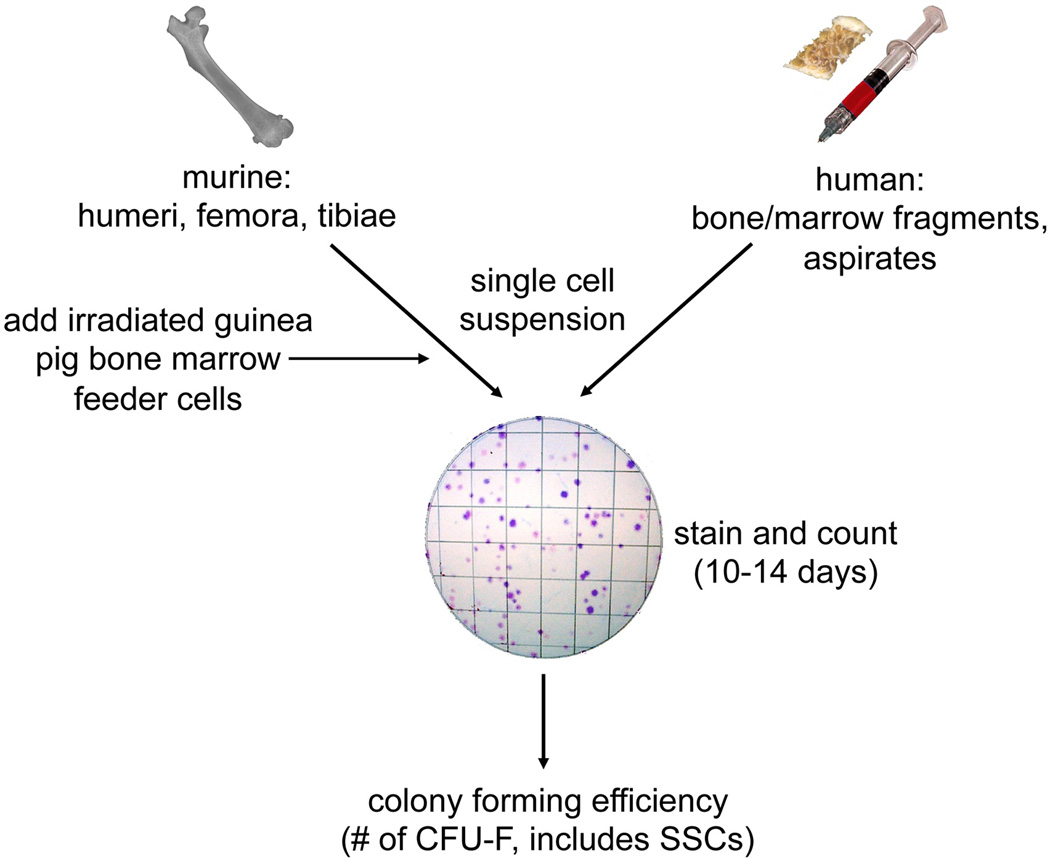
Colony forming efficiency assay (CFE). Bone marrow is collected from the long bones of mice, and from bone fragments with marrow or aspirates from humans. Single cell suspensions are plated at clonal density. For murine cultures, irradiated guinea pig bone marrow cells are added as feeders to optimize colony forming efficiency. After 10–14 days, colonies with greater than 50 cells (see page 11) are counted and the (CFE is determined as the number of colonies/100,000 bone marrow nucleated cells. To date, the CFE is the closest approximation to the number of SSCs in the BMSC population.
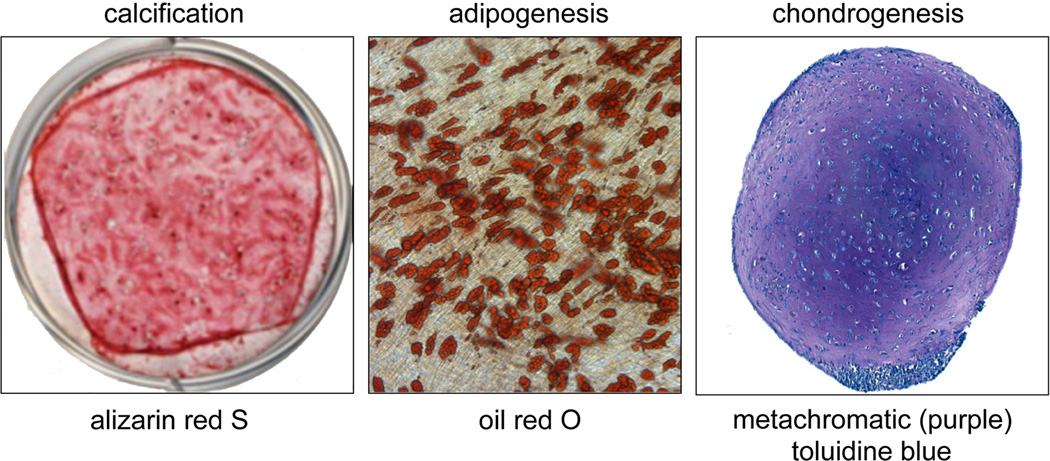
In vitro differentiaton assays. The osteogenic and adipogenic in vitro differentiation assays are highly prone to artifact, but are often used. Cells plated in SM, and then switched to OM prior to confluence will begin to calcify, as shown by alizarin red S staining. Cells plated in SM and switched to AM prior to confluence will form multilocular fat droplets within their cytoplasm as shown by staining with oil red O. On the other hand, chondrogenic differentiation is best done in vitro, by forming a high density pellet culture. If successful, chondrocytes will be seen lying in lacunae, surround by a matrix that stains purple with toluidine blue.
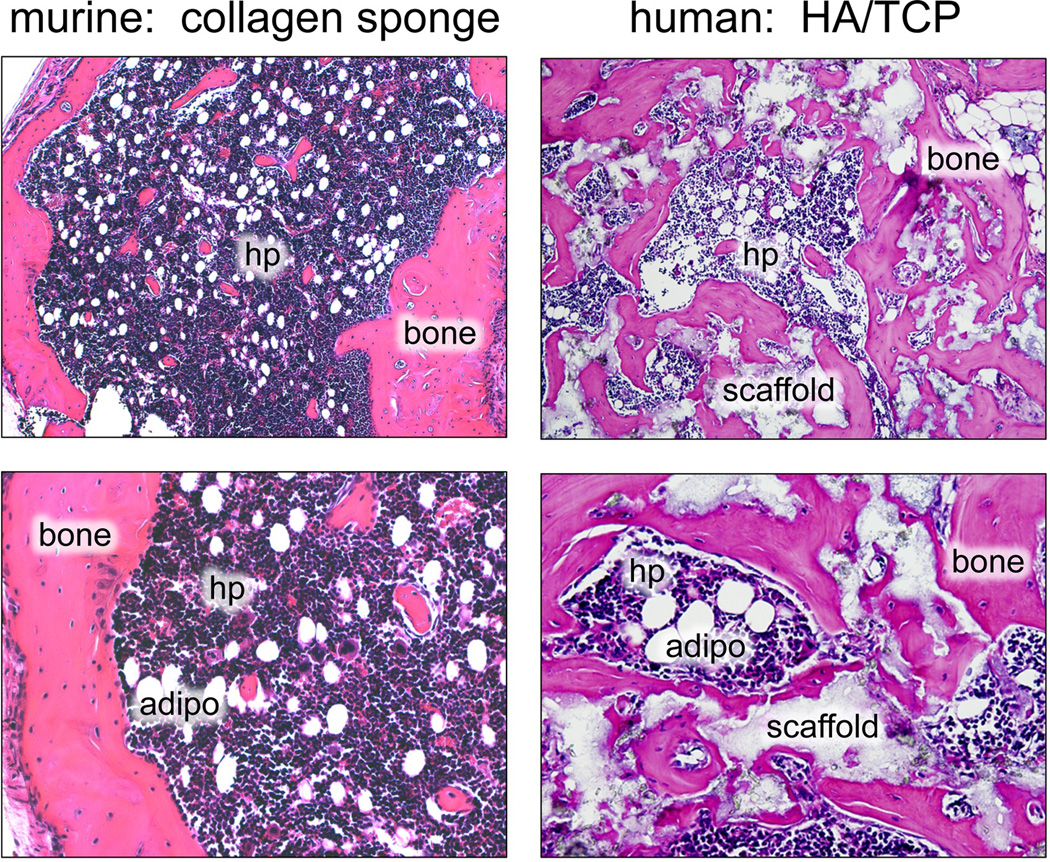
In vivo differentiation assays. Murine BMSCs will form a bone/marrow organ (bone, hematopoiesis supportive stroma, marrow adipocytes (adipo) of donor origin, with hematopoiesis (hp) of recipient origin) when transplanted in conjunction with collagen sponges (A,B), and with hydroxyapatite/tricalcium phosphate (HA/TCP, s - scaffold) (data not shown). On the other hand, human BMSCs will only form a bone/marrow organ with HA/TCP (C, D).
References
-
- Owen M, Friedenstein AJ. Stromal stem cells: marrow-derived osteogenic precursors. Ciba Found Symp. 1988;136:42–60. - PubMed
-
- Bianco P, Riminucci M, Gronthos S, et al. Bone marrow stromal stem cells: nature, biology, and potential applications. Stem Cells. 2001;19:180–192. - PubMed
-
- Bianco P, Robey PG. Skeletal stem cells. In: Lanza RP, editor. Handbook of Adult and Fetal Stem Cells. San Diego: Academic Press; 2004. pp. 415–424.
-
- Friedenstein AJ. Stromal mechanisms of bone marrow: cloning in vitro and retransplantation in vivo. Hamatol Bluttransfus. 1980;25:19–29. - PubMed
-
- Bianco P, Kuznetsov S, Riminucci M, et al. Postnatal skeletal stem cells. Meth Enzymol. 2006;419:117–148. - PubMed
MeSH terms
Grants and funding
LinkOut - more resources
Full Text Sources
Other Literature Sources