


Results of a randomized phase I gene therapy clinical trial of nononcolytic fowlpox viruses encoding T cell costimulatory molecules
- PMID: 24484178
- PMCID: PMC4027985
- DOI: 10.1089/hum.2013.217
Results of a randomized phase I gene therapy clinical trial of nononcolytic fowlpox viruses encoding T cell costimulatory molecules
Abstract
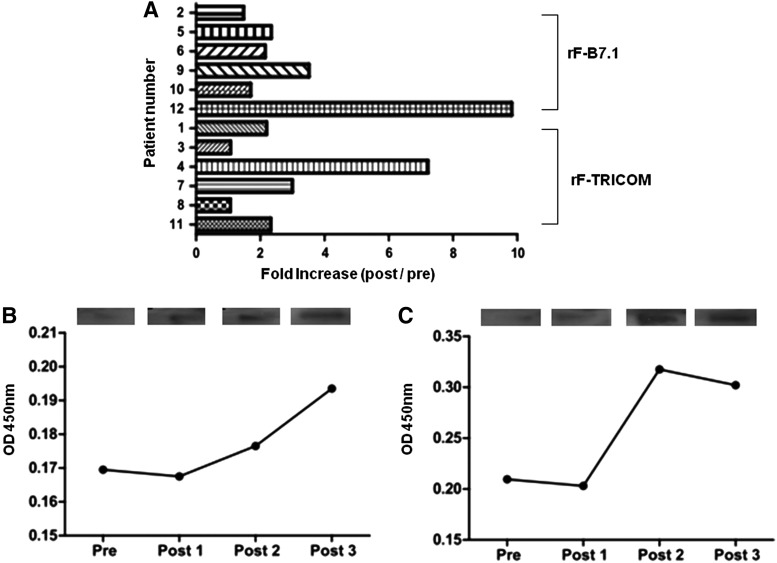
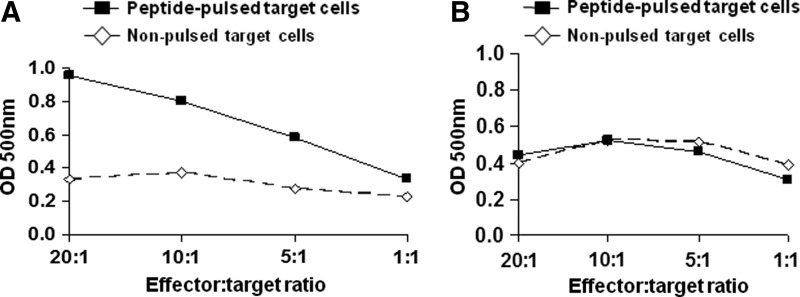
Oncolytic viruses have shown promise as gene delivery vehicles in the treatment of cancer; however, their efficacy may be inhibited by the induction of anti-viral antibody titers. Fowlpox virus is a nonreplicating and nononcolytic vector that has been associated with lesser humoral but greater cell-mediated immunity in animal tumor models. To test whether fowlpox virus gene therapy is safe and can elicit immune responses in patients with cancer, we conducted a randomized phase I clinical trial of two recombinant fowlpox viruses encoding human B7.1 or a triad of costimulatory molecules (B7.1, ICAM-1, and LFA-3; TRICOM). Twelve patients (10 with melanoma and 2 with colon adenocarcinoma) enrolled in the trial and were randomized to rF-B7.1 or rF-TRICOM administered in a dose escalation manner (~3.7×10(7) or ~3.7×10(8) plaque-forming units) by intralesional injection every 4 weeks. The therapy was well tolerated, with only four patients experiencing grade 1 fever or injection site pain, and there were no serious adverse events. All patients developed anti-viral antibody titers after vector delivery, and posttreatment anti-carcinoembryonic antigen antibody titers were detected in the two patients with colon cancer. All patients developed CD8(+) T cell responses against fowlpox virus, but few responses against defined tumor-associated antigens were observed. This is the first clinical trial of direct (intratumoral) gene therapy with a nononcolytic fowlpox virus. Treatment was well tolerated in patients with metastatic cancer; all subjects exhibited anti-viral antibody responses, but limited tumor-specific T cell responses were detected. Nononcolytic fowlpox viruses are safe and induce limited T cell responses in patients with cancer. Further development may include prime-boost strategies using oncolytic viruses for initial priming.
Figures
References
-
- Grupp K., Diebel F., Sirma H., et al. (2013a). SPINK1 expression is tightly linked to 6q15- and 5q21-deleted ERG-fusion negative prostate cancers but unrelated to PSA recurrence. Prostate 73, 1690–1698 - PubMed
-
- Grupp K., Hohne T.S., Prien K., et al. (2013b). Reduced CD147 expression is linked to ERG fusion-positive prostate cancers but lacks substantial impact on PSA recurrence in patients treated by radical prostatectomy. Exp. Mol. Pathol 95, 227– 234 - PubMed
Publication types
MeSH terms
Substances
Grants and funding
LinkOut - more resources
Full Text Sources
Other Literature Sources
Medical
Research Materials
Miscellaneous
