


Assessment of maxillofacial trauma in emergency department
- PMID: 24484727
- PMCID: PMC3912899
- DOI: 10.1186/1749-7922-9-13
Assessment of maxillofacial trauma in emergency department
Abstract
Introduction: The incidence and epidemiological causes of maxillofacial (MF) trauma varies widely. The objective of this study is to point out maxillofacial trauma patients' epidemiological properties and trauma patterns with simultaneous injuries in different areas of the body that may help emergency physicians to deliver more accurate diagnosis and decisions.
Methods: In this study we analyze etiology and pattern of MF trauma and coexisting injuries if any, in patients whose maxillofacial CT scans was obtained in a three year period, retrospectively.
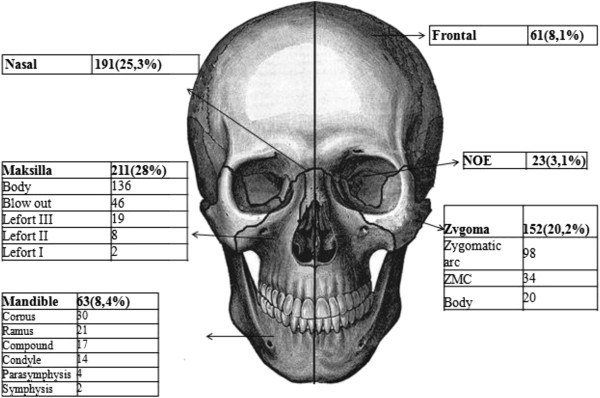
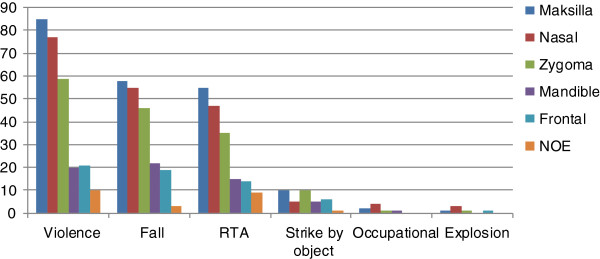
Results: 754 patients included in the study consisting of 73.7% male and 26.3% female, and the male-to-female ratio was 2.8:1. Mean age was 40.3 ± 17.2 years with a range of 18 to 97. 57.4% of the patients were between the ages of 18-39 years and predominantly male. Above 60 years of age, referrals were mostly woman. The most common cause of injuries were violence, accounting for 39.7% of the sample, followed by falls 27.9% and road traffic accidents 27.2%. The primary cause of injuries were violence between ages 20 and 49 and falls after 50. Bone fractures found in 56,0% of individuals. Of the total of 701 fractured bones in 422 patients the most frequent was maxillary bone 28,0% followed by nasal bone 25,3%, zygoma 20,2%, mandible 8,4%, frontal bone 8,1% and nasoethmoidoorbital bone 3,1%. Fractures to maxillary bone were uppermost in each age group.8, 9% of the patients had brain injury and only frontal fractures is significantly associated to TBI (p < 0.05) if coexisting facial bone fracture occurred. Male gender has statistically stronger association for suffering TBI than female (p < 0, 05). Most common cause of TBI in MF trauma patients was violence (47, 8%).158 of the 754 patients had consumed alcohol before trauma. No statistically significant data were revealed between alcohol consumption gender and presence of fracture. Violence is statistically significant (p < 0.05) in these patients.
Conclusion: Studies subjected maxillofacial traumas yield various etiologic factors, demographic properties and fracture patterns probably due to social, cultural and governmental differences. Young males subjected to maxillofacial trauma more commonly as a result of interpersonal violence.
Figures
References
LinkOut - more resources
Full Text Sources
Other Literature Sources
