


Live attenuated influenza vaccine strains elicit a greater innate immune response than antigenically-matched seasonal influenza viruses during infection of human nasal epithelial cell cultures
- PMID: 24486351
- PMCID: PMC3979967
- DOI: 10.1016/j.vaccine.2013.12.069
Live attenuated influenza vaccine strains elicit a greater innate immune response than antigenically-matched seasonal influenza viruses during infection of human nasal epithelial cell cultures
Abstract
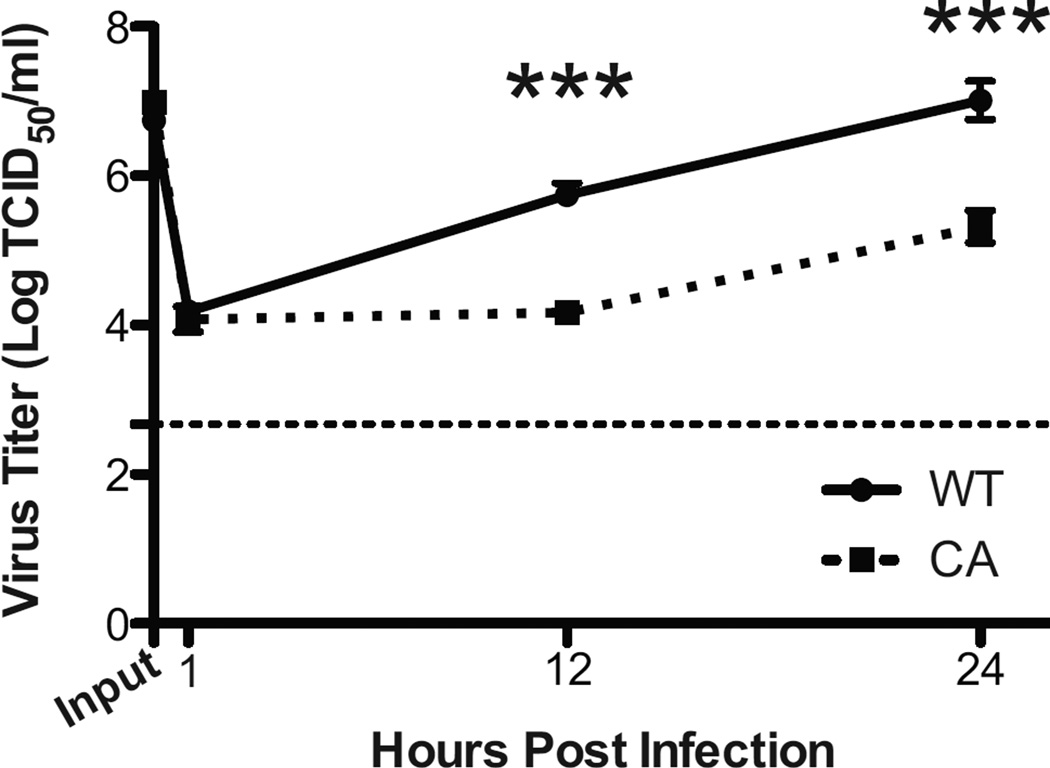
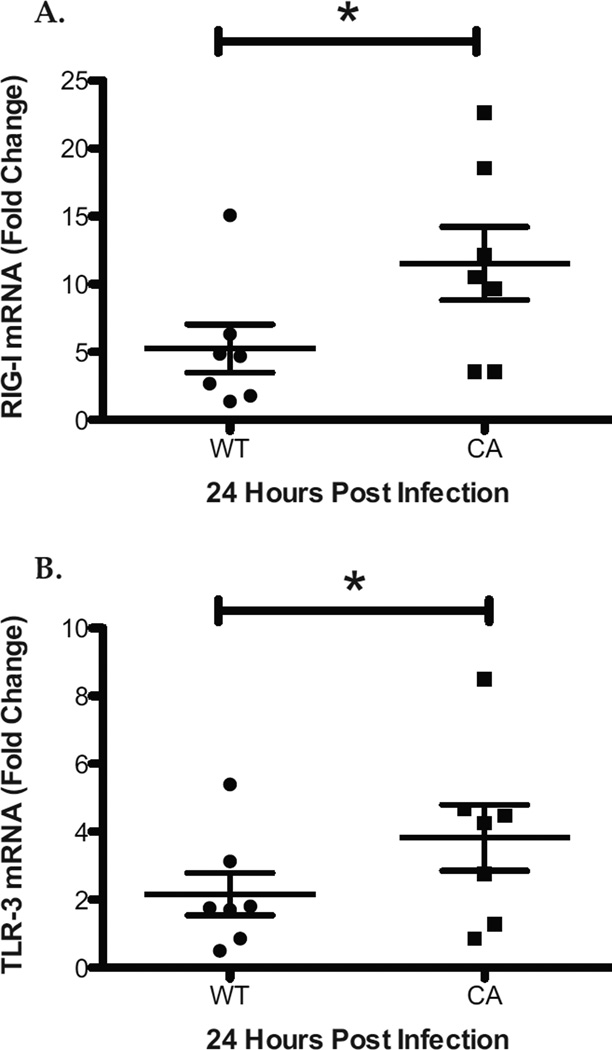
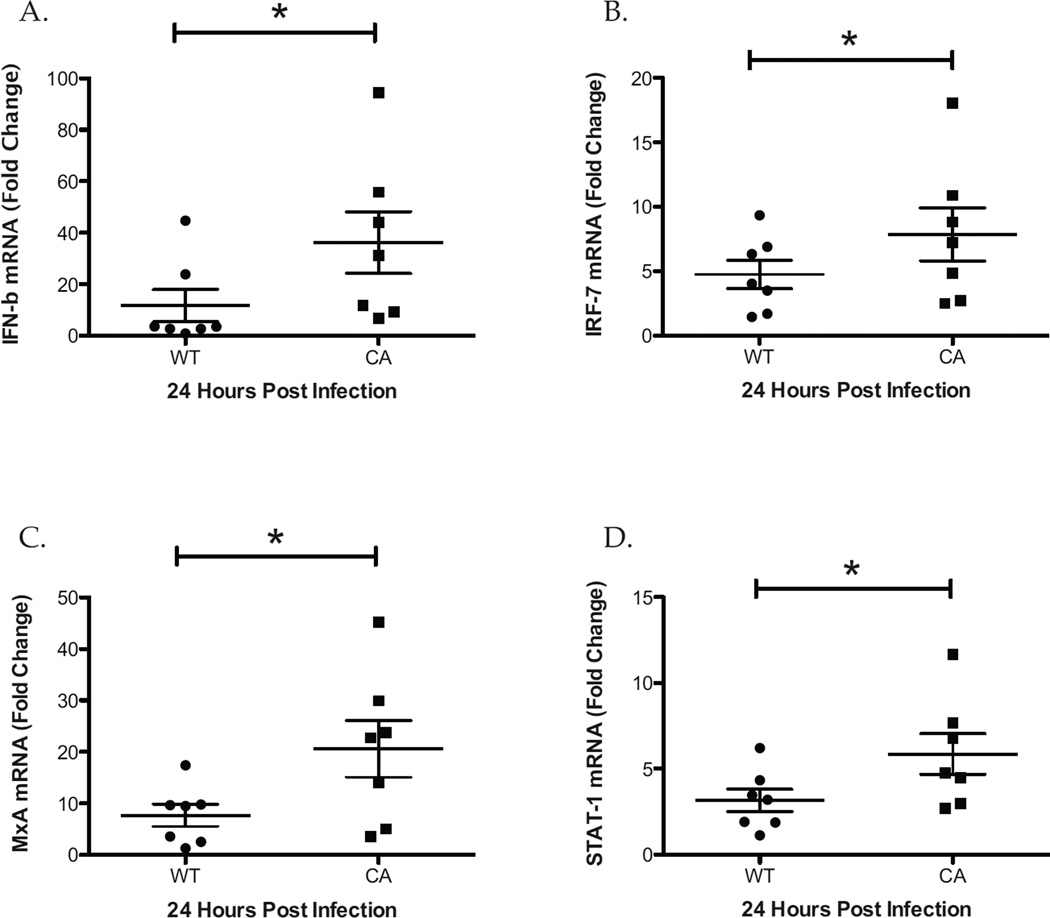
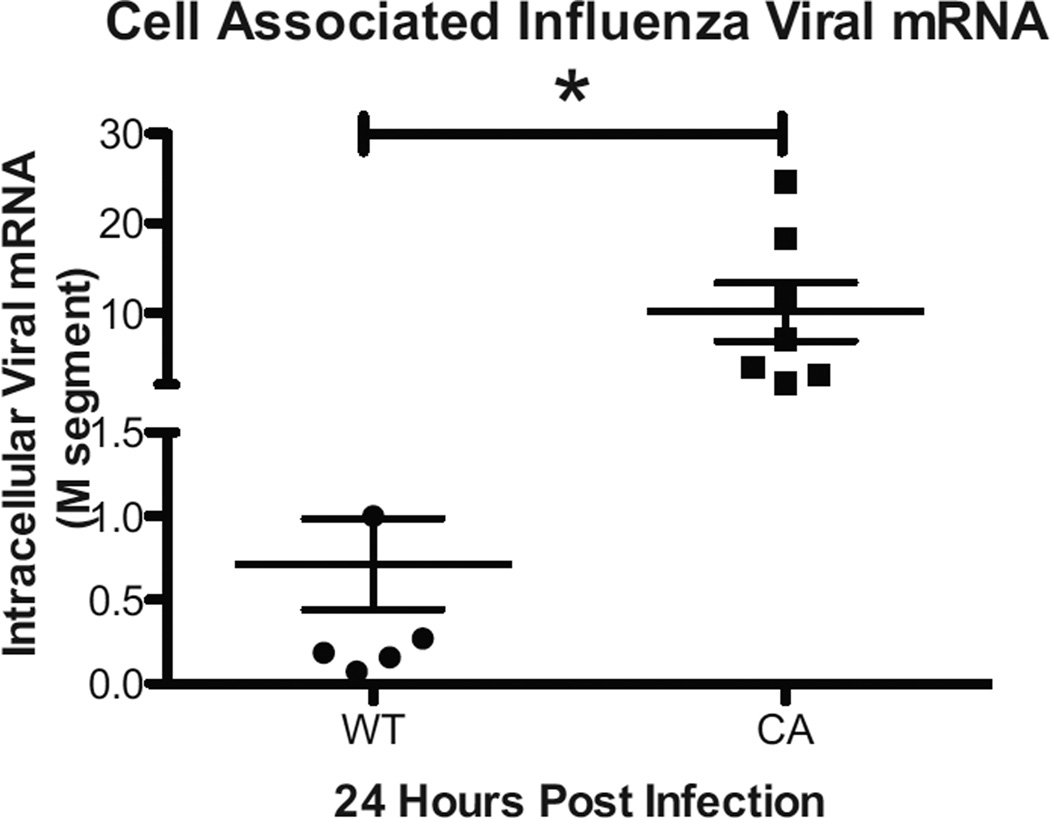
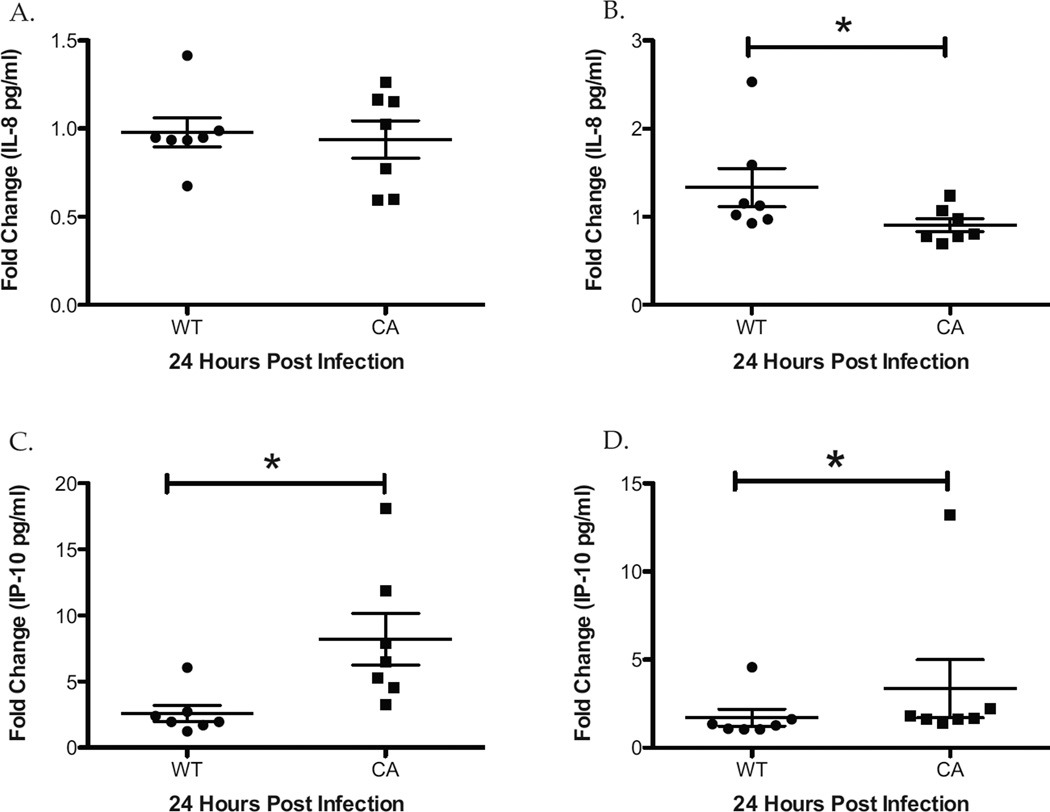
Influenza viruses are global pathogens that infect approximately 10-20% of the world's population each year. Vaccines, including the live attenuated influenza vaccine (LAIV), are the best defense against influenza infections. The LAIV is a novel vaccine that actively replicates in the human nasal epithelium and elicits both mucosal and systemic protective immune responses. The differences in replication and innate immune responses following infection of human nasal epithelium with influenza seasonal wild type (WT) and LAIV viruses remain unknown. Using a model of primary differentiated human nasal epithelial cell (hNECs) cultures, we compared influenza WT and antigenically-matched cold adapted (CA) LAIV virus replication and the subsequent innate immune response including host cellular pattern recognition protein expression, host innate immune gene expression, secreted pro-inflammatory cytokine production, and intracellular viral RNA levels. Growth curves comparing virus replication between WT and LAIV strains revealed significantly less infectious virus production during LAIV compared with WT infection. Despite this disparity in infectious virus production the LAIV strains elicited a more robust innate immune response with increased expression of RIG-I, TLR-3, IFNβ, STAT-1, IRF-7, MxA, and IP-10. There were no differences in cytotoxicity between hNEC cultures infected with WT and LAIV strains as measured by basolateral levels of LDH. Elevated levels of intracellular viral RNA during LAIV as compared with WT virus infection of hNEC cultures at 33°C may explain the augmented innate immune response via the up-regulation of pattern recognition receptors and down-stream type I IFN expression. Taken together our results suggest that the decreased replication of LAIV strains in human nasal epithelial cells is associated with a robust innate immune response that differs from infection with seasonal influenza viruses, limits LAIV shedding and plays a role in the silent clinical phenotype seen in human LAIV inoculation.
Keywords: Human nasal epithelial cells; Influenza; Innate immune response; Live attenuated influenza vaccine (LAIV).
Copyright © 2014 Elsevier Ltd. All rights reserved.
Conflict of interest statement
Financial/nonfinancial disclosures:
Dr. Fischer has no conflicts of interest. Dr. Jaspers has no conflicts of interest. Ms. Brighton has no conflicts of interest
Figures
References
-
- Fischer WF, Hayden F. Novel Antiviral Agents and Approaches in Pandemic Influenza. Humana Press; 2008.
-
- Maassab HF. Adaptation and growth characteristics of influenza virus at 25 degrees c. Nature. 1967;213(5076):612–614. Epub 1967/02/11. PubMed PMID: 6040602. - PubMed
-
- Murphy BR, Coelingh K. Principles underlying the development and use of live attenuated cold-adapted influenza A and B virus vaccines. Viral Immunol. 2002;15(2):295–323. Epub 2002/06/26. doi: 10.1089/08828240260066242. PubMed PMID 12081014. - PubMed
Publication types
MeSH terms
Substances
Grants and funding
LinkOut - more resources
Full Text Sources
Other Literature Sources
Medical
Research Materials
Miscellaneous
