


An excitatory paraventricular nucleus to AgRP neuron circuit that drives hunger
- PMID: 24487620
- PMCID: PMC3955843
- DOI: 10.1038/nature12956
An excitatory paraventricular nucleus to AgRP neuron circuit that drives hunger
Abstract
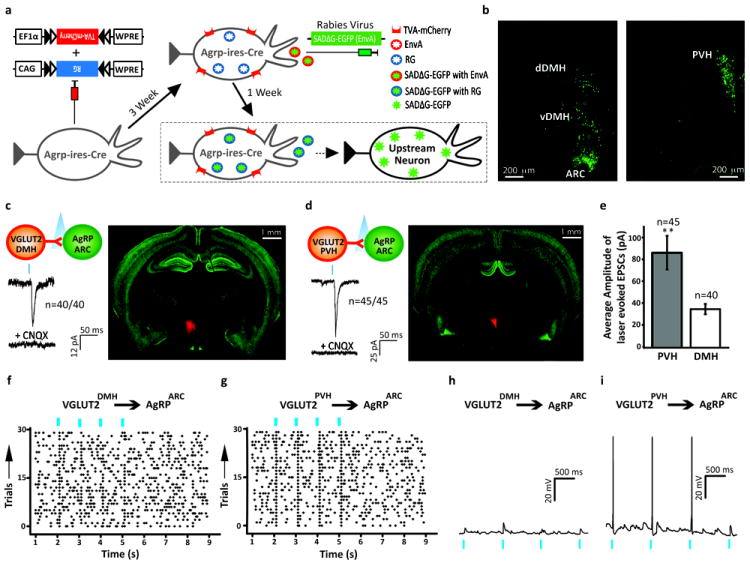
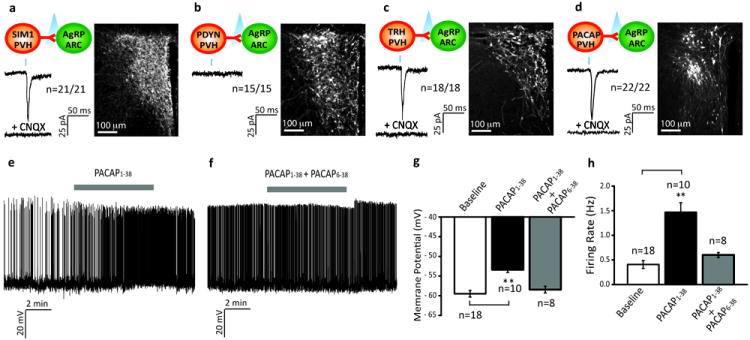
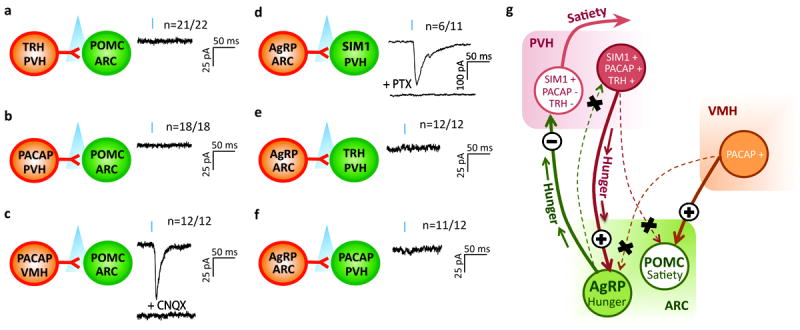
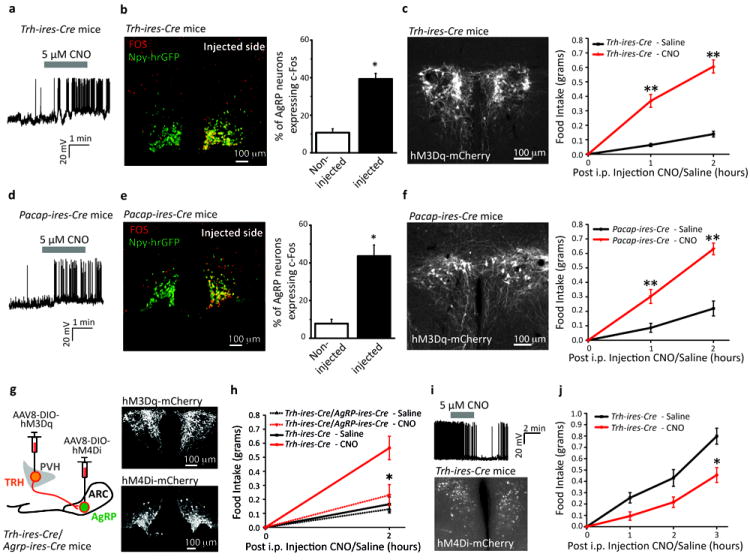
Hunger is a hard-wired motivational state essential for survival. Agouti-related peptide (AgRP)-expressing neurons in the arcuate nucleus (ARC) at the base of the hypothalamus are crucial to the control of hunger. They are activated by caloric deficiency and, when naturally or artificially stimulated, they potently induce intense hunger and subsequent food intake. Consistent with their obligatory role in regulating appetite, genetic ablation or chemogenetic inhibition of AgRP neurons decreases feeding. Excitatory input to AgRP neurons is important in caloric-deficiency-induced activation, and is notable for its remarkable degree of caloric-state-dependent synaptic plasticity. Despite the important role of excitatory input, its source(s) has been unknown. Here, through the use of Cre-recombinase-enabled, cell-specific neuron mapping techniques in mice, we have discovered strong excitatory drive that, unexpectedly, emanates from the hypothalamic paraventricular nucleus, specifically from subsets of neurons expressing thyrotropin-releasing hormone (TRH) and pituitary adenylate cyclase-activating polypeptide (PACAP, also known as ADCYAP1). Chemogenetic stimulation of these afferent neurons in sated mice markedly activates AgRP neurons and induces intense feeding. Conversely, acute inhibition in mice with caloric-deficiency-induced hunger decreases feeding. Discovery of these afferent neurons capable of triggering hunger advances understanding of how this intense motivational state is regulated.
Conflict of interest statement
The authors declare no competing financial interests.
Figures
References
-
- Takahashi KA, Cone RD. Fasting induces a large, leptin-dependent increase in the intrinsic action potential frequency of orexigenic arcuate nucleus neuropeptide Y/Agouti-related protein neurons. Endocrinology. 2005;146:1043–1047. - PubMed
Publication types
MeSH terms
Substances
Grants and funding
- R01 DK089044/DK/NIDDK NIH HHS/United States
- K08 DK071561/DK/NIDDK NIH HHS/United States
- R01 DK071051/DK/NIDDK NIH HHS/United States
- P30 DK046200/DK/NIDDK NIH HHS/United States
- P30 HD018655/HD/NICHD NIH HHS/United States
- F32 DK078478/DK/NIDDK NIH HHS/United States
- F32 DK089710/DK/NIDDK NIH HHS/United States
- P30 DK020572/DK/NIDDK NIH HHS/United States
- R01 MH095953/MH/NIMH NIH HHS/United States
- R01 DK096010/DK/NIDDK NIH HHS/United States
- R37 DK053477/DK/NIDDK NIH HHS/United States
- P30 DK57521/DK/NIDDK NIH HHS/United States
- P30 DK057521/DK/NIDDK NIH HHS/United States
- R01 DK075632/DK/NIDDK NIH HHS/United States
- R01 MH101207/MH/NIMH NIH HHS/United States
LinkOut - more resources
Full Text Sources
Other Literature Sources
Molecular Biology Databases
