


Negative selection and stringency modulation in phage-assisted continuous evolution
- PMID: 24487694
- PMCID: PMC3977541
- DOI: 10.1038/nchembio.1453
Negative selection and stringency modulation in phage-assisted continuous evolution
Abstract
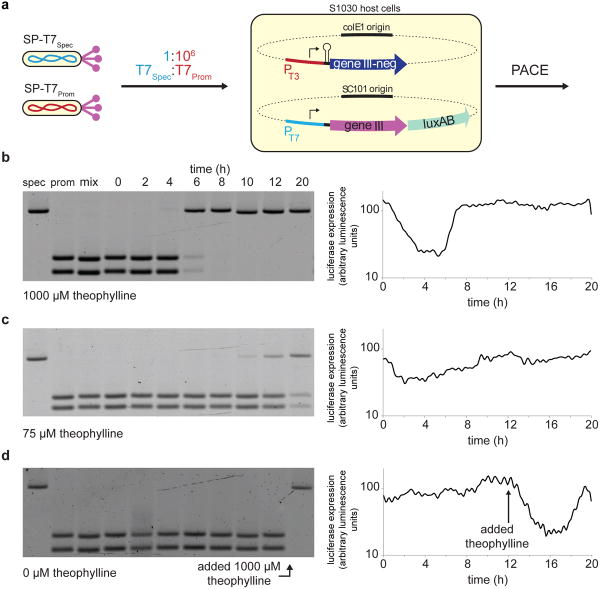
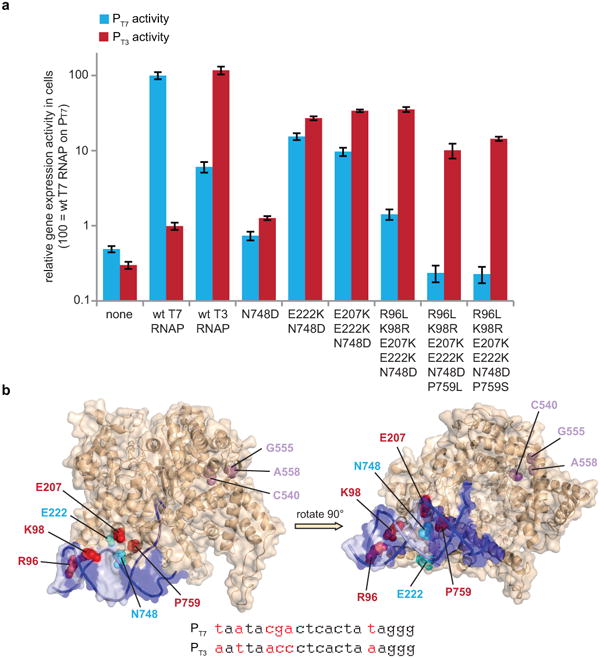
Phage-assisted continuous evolution (PACE) uses a modified filamentous bacteriophage life cycle to substantially accelerate laboratory evolution experiments. In this work, we expand the scope and capabilities of the PACE method with two key advances that enable the evolution of biomolecules with radically altered or highly specific new activities. First, we implemented small molecule-controlled modulation of selection stringency that enables otherwise inaccessible activities to be evolved directly from inactive starting libraries through a period of evolutionary drift. Second, we developed a general negative selection that enables continuous counterselection against undesired activities. We integrated these developments to continuously evolve mutant T7 RNA polymerase enzymes with ∼10,000-fold altered, rather than merely broadened, substrate specificities during a single three-day PACE experiment. The evolved enzymes exhibit specificity for their target substrate that exceeds that of wild-type RNA polymerases for their cognate substrates while maintaining wild type-like levels of activity.
Figures



References
-
- Nelson FK, Friedman SM, Smith GP. Filamentous phage DNA cloning vectors: a noninfective mutant with a nonpolar deletion in gene III. Virology. 1981;108:338–350. - PubMed
-
- Calendar R. The bacteriophages. 1st. Oxford Univ. Press; 2006. pp. 376–455.
Publication types
MeSH terms
Substances
Grants and funding
LinkOut - more resources
Full Text Sources
Other Literature Sources
Research Materials
